What is a Skid Steer?
If you’ve ever visited a construction site, farm, or landscaping job, you’ve likely seen that compact yet powerful machine—agile as it navigates terrain, effortlessly moving dirt, rocks, or pallets. That’s the skid steer loader, an exceptionally versatile piece of equipment.
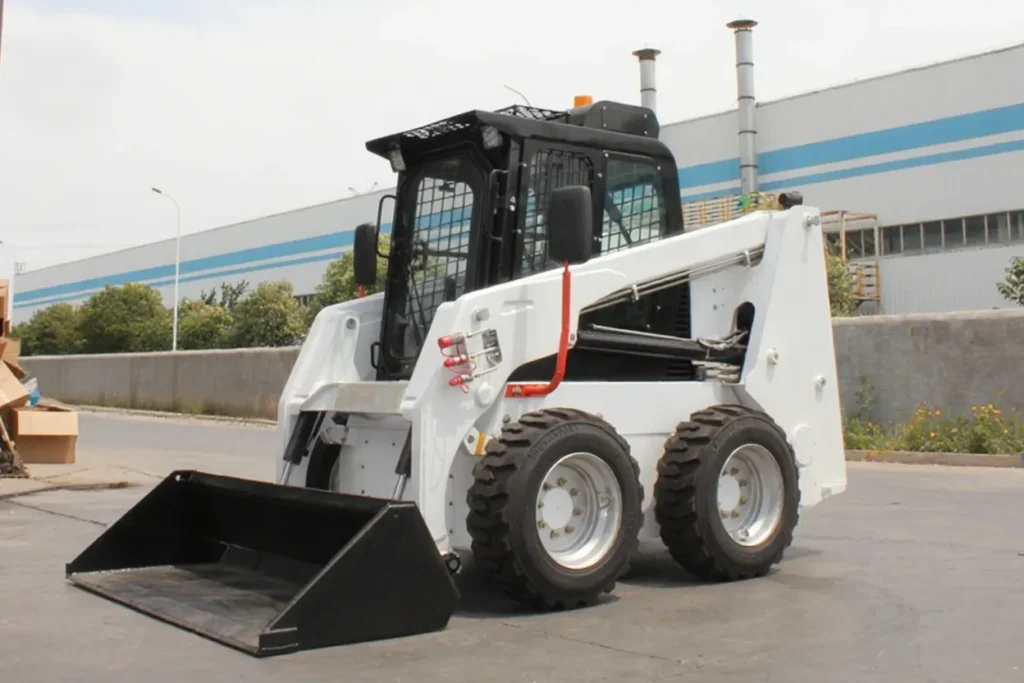
Simply say, a skid steer loader is a compact power machine equipped with a lifting arm that can attach different tools and buckets. It’s called a “skid steer” because its wheels or tracks can turn independently, allowing the machine to pivot on the spot.
Skid steer loaders are renowned for being compact yet powerful. Don’t be fooled by their size—depending on the front-mounted attachments, these machines can dig, lift, level, push earth, and even perform demolition tasks. Whether in construction, agriculture, snow removal, or landscaping, skid steer loaders are indispensable tools that make every job easier.
What Is a Skid Steer Used For?
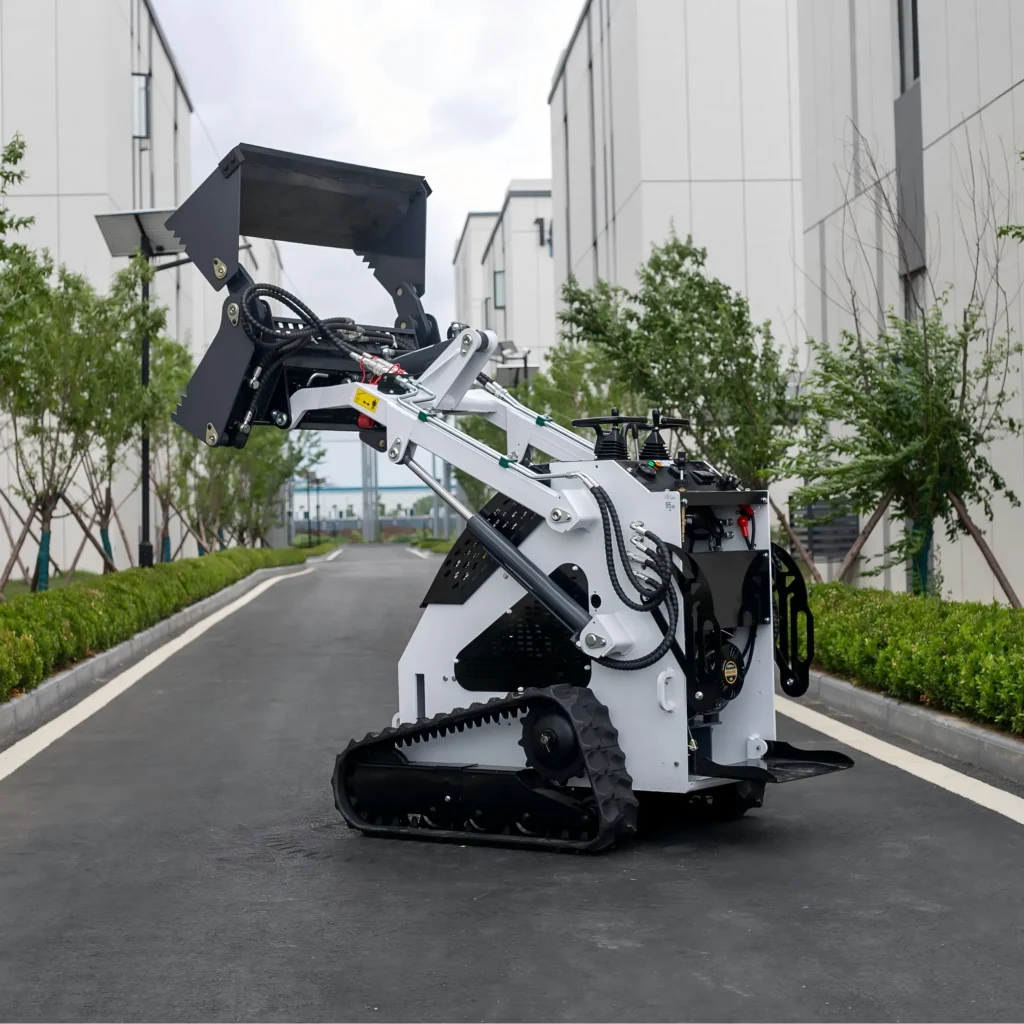
A skid steer is like a small but mighty “workhorse” — just switch the front attachment, and it instantly becomes the machine you need. Below are the most common jobs skid steers handle and why they’re so useful.
- Clearing snow / Snow removal: Pop on a snow blade, snow blower, or a salt spreader and the skid steer clears driveways, parking lots, and walkways fast. It’s great for tight areas where a plow truck can’t go.
- Excavating / Trenching and digging: With an auger, trencher, or small backhoe attachment, a skid steer digs holes and trenches for posts, pipes, or footings. Perfect for jobs that don’t need a big excavator.
- Construction & Roadwork: Move materials, load trucks, and help with paving or patching. Attach a pavement breaker for small concrete jobs or a roller/plate for compacting surfaces.
- Landscaping & Site Prep: From hauling soil and mulch to planting trees or installing fences, use buckets, grapples, and forks. Landscape rakes and grading blades make finishing the surface quick and tidy.
- Grading and leveling: Attach a grading blade or laser-guided tool to level lots or finish grades. Skid steers are great for smoothing and shaping small to medium areas.
- Loading: Use standard buckets or pallet forks to load trucks with gravel, soil, pallets, or debris — saves a ton of time compared to hand-loading.
- Demolition: Equipped with hydraulic breakers, shears, or grapples, a skid steer can break concrete, tear down small structures, and clear the mess afterward.
- Mowing & Vegetation control: Flail mowers or brush cutters turn a skid steer into a powerful mower for fields, roadside trim, or clearing overgrown lots.
- Agricultural work: Move hay bales, clean barns, feed livestock, and handle bulk material — forks, grapples, and buckets make farm chores much faster.
- Material handling: Quick and precise — move gravel, pallets, or bulky debris around the site with forks, grabs, or a general-purpose bucket.
Change the attachment and you’ve got a loader, digger, grader, mower, snow plow, or demolition tool — all in one compact machine. That flexibility is why contractors, landscapers, farmers, and municipalities rely on them so much.

Types of Skid Steers
Not all skid steers are built the same. Depending on the job, the ground conditions, and how high or far you need to lift, there are a few different types to choose from.
1. Radial Lift Skid Steers
A radial lift skid steer has lift arms that move in an arc shape. That means the bucket starts close to the ground, swings out, and then up. It gives you the most power at the middle of the lift, which makes it great for digging, grading, and ground-level work. If your main jobs are landscaping, loading dirt, or leveling ground, a radial lift machine is a solid choice.
2. Vertical Lift Skid Steers
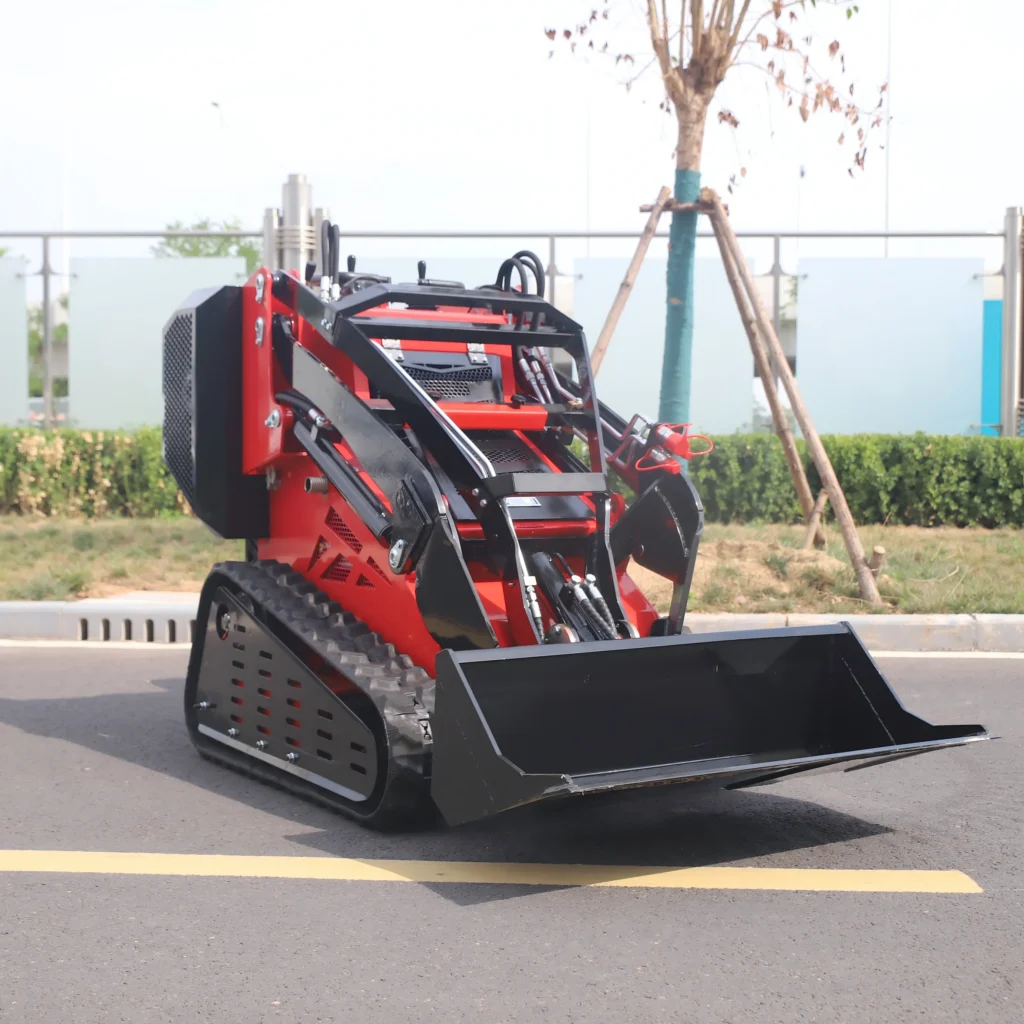
A vertical lift skid steer’s arms move straight up and down instead of arcing out. This gives you more reach at the top of the lift, which is perfect for loading materials into trucks or stacking pallets. If you’re in construction or material handling, you’ll appreciate the extra lift height and stability.
3. Wheel Skid Steers
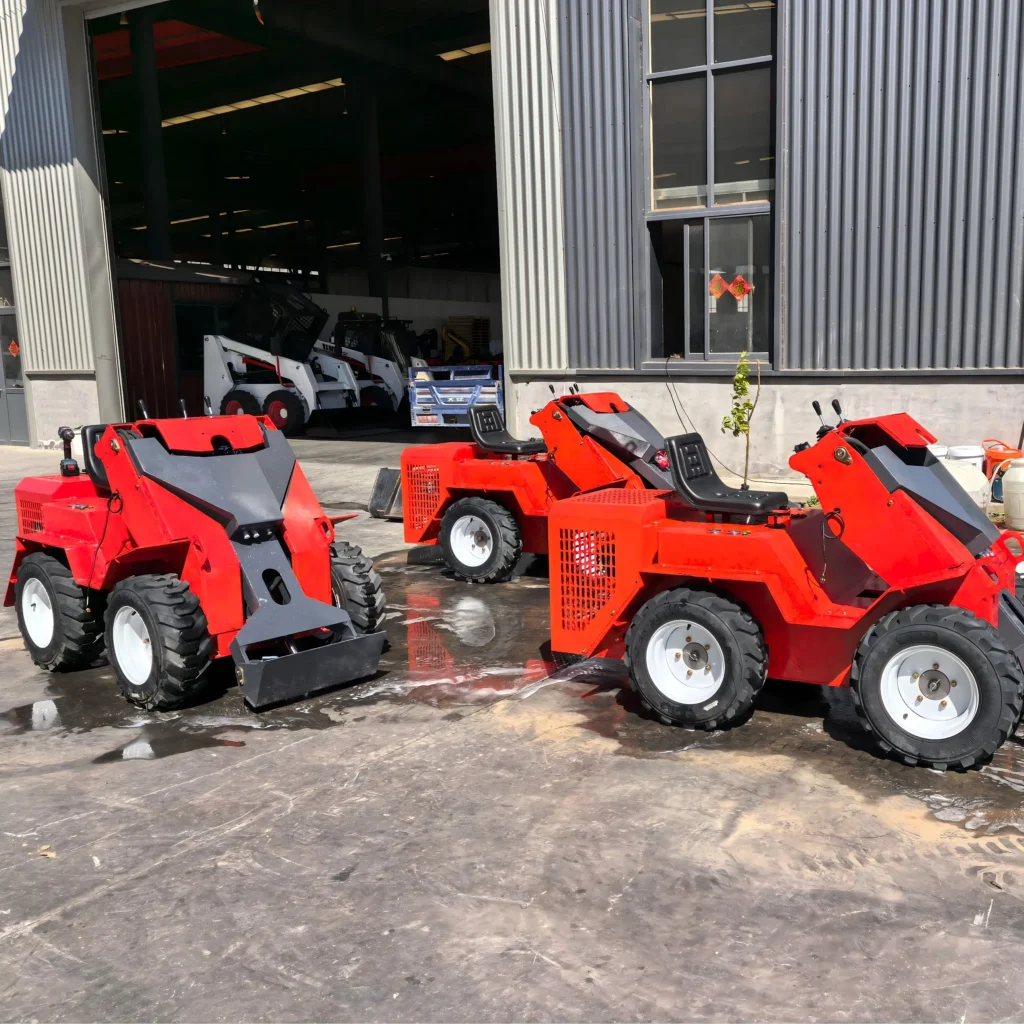
These are the most common type. Wheeled skid steers are fast, smooth on hard surfaces, and cost less to maintain than tracked versions. They work best on firm, dry ground — like concrete or compacted soil.
4. Track Skid Steers (Compact Track Loaders)
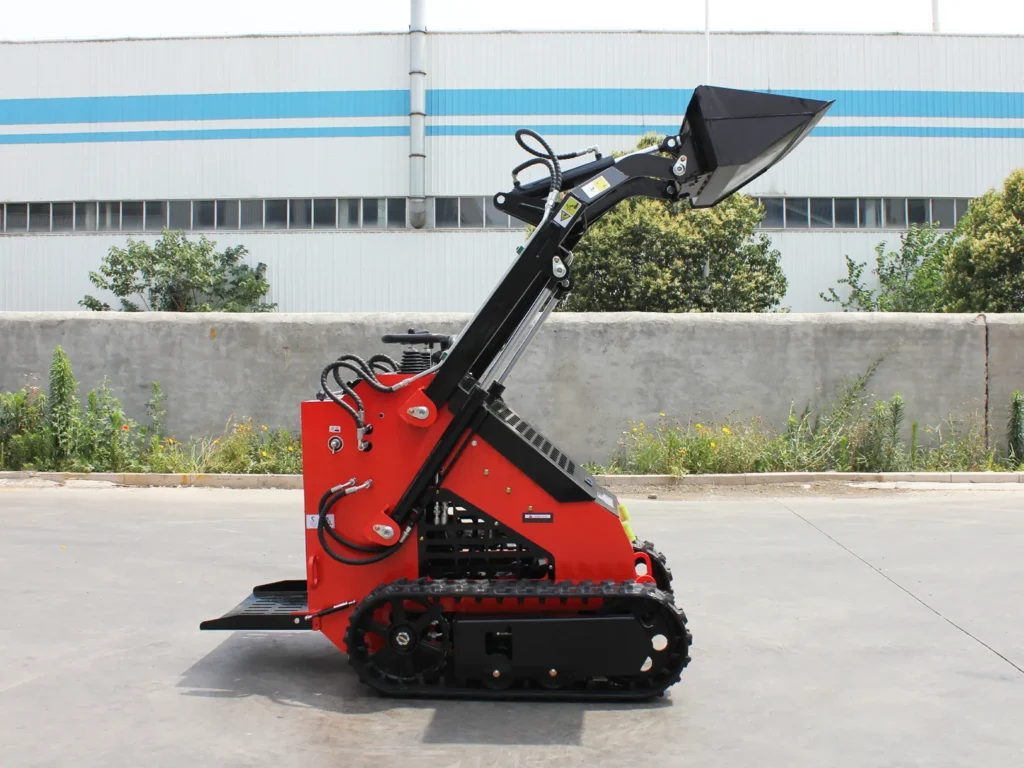
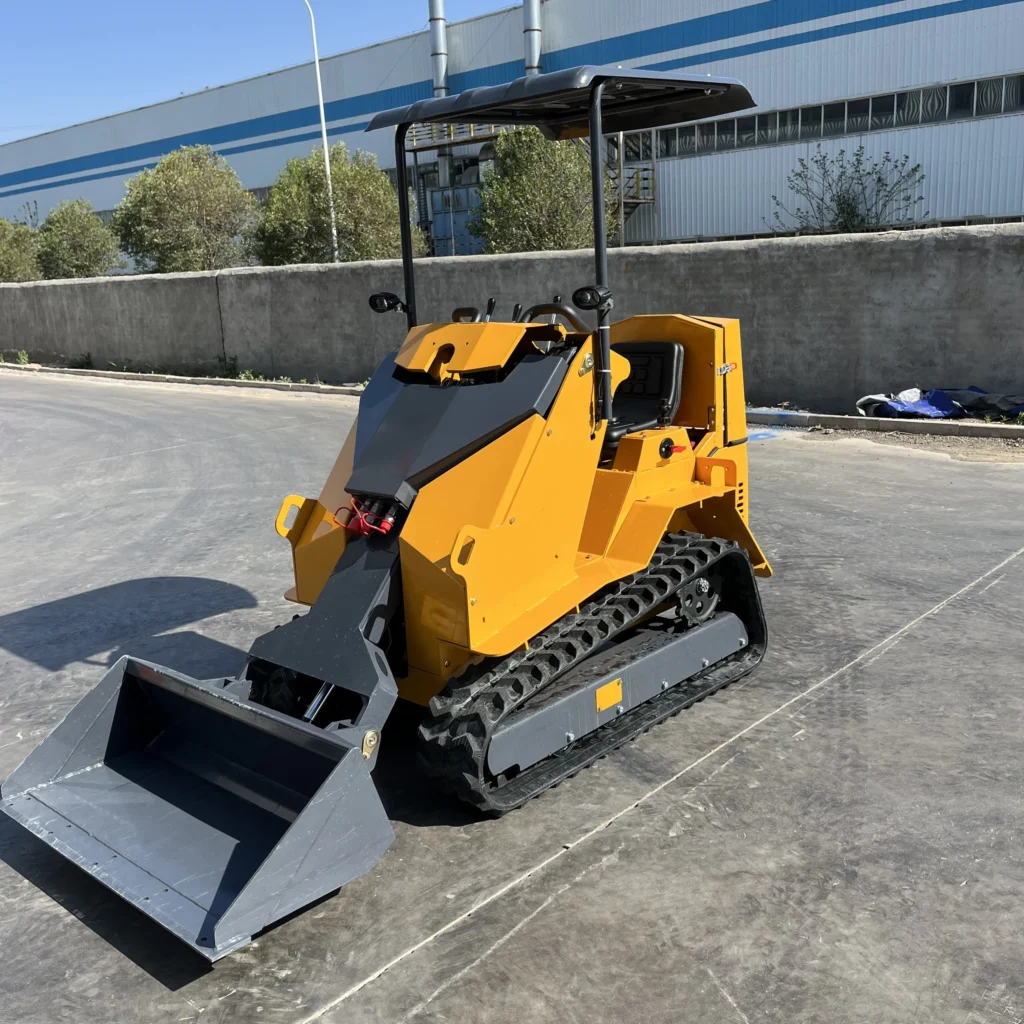
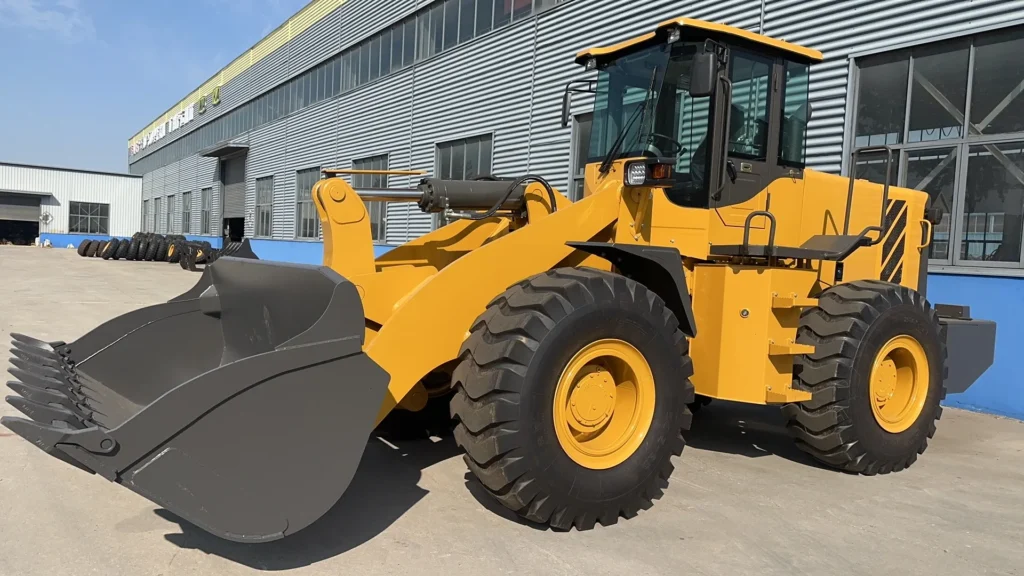
Instead of wheels, these use rubber tracks. Tracked skid steers have better traction and stability on soft, muddy, or uneven ground. They can work where wheeled skid steers might get stuck. They’re great for outdoor construction, forestry, or any rough terrain job — though track maintenance costs a bit more.
5. Stand-On Skid Steers
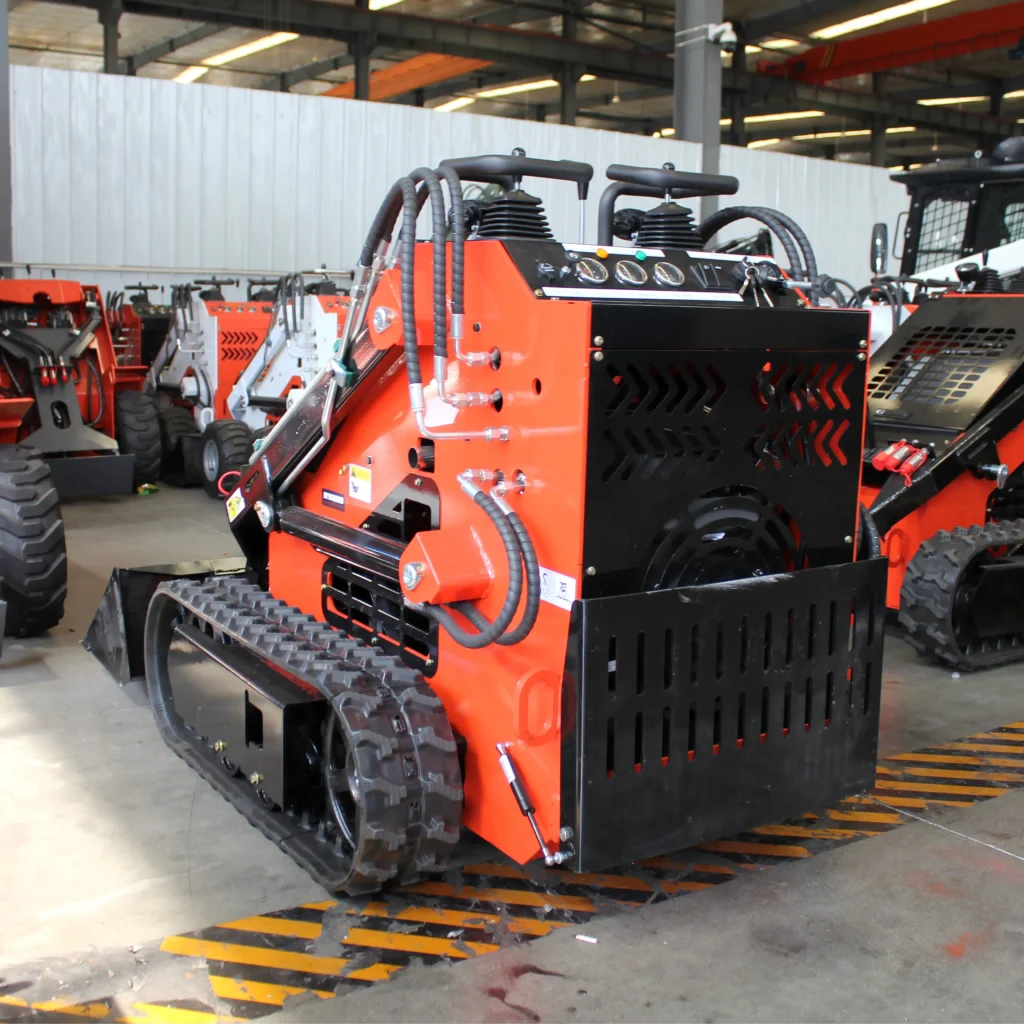
A stand-on skid steer is a smaller machine where the operator stands on a platform at the back instead of sitting in a cab. These are compact, lightweight, and easy to transport. Landscapers love them because they fit through gates and can work in tight residential spaces without tearing up the ground.
6. Mini Skid Steers
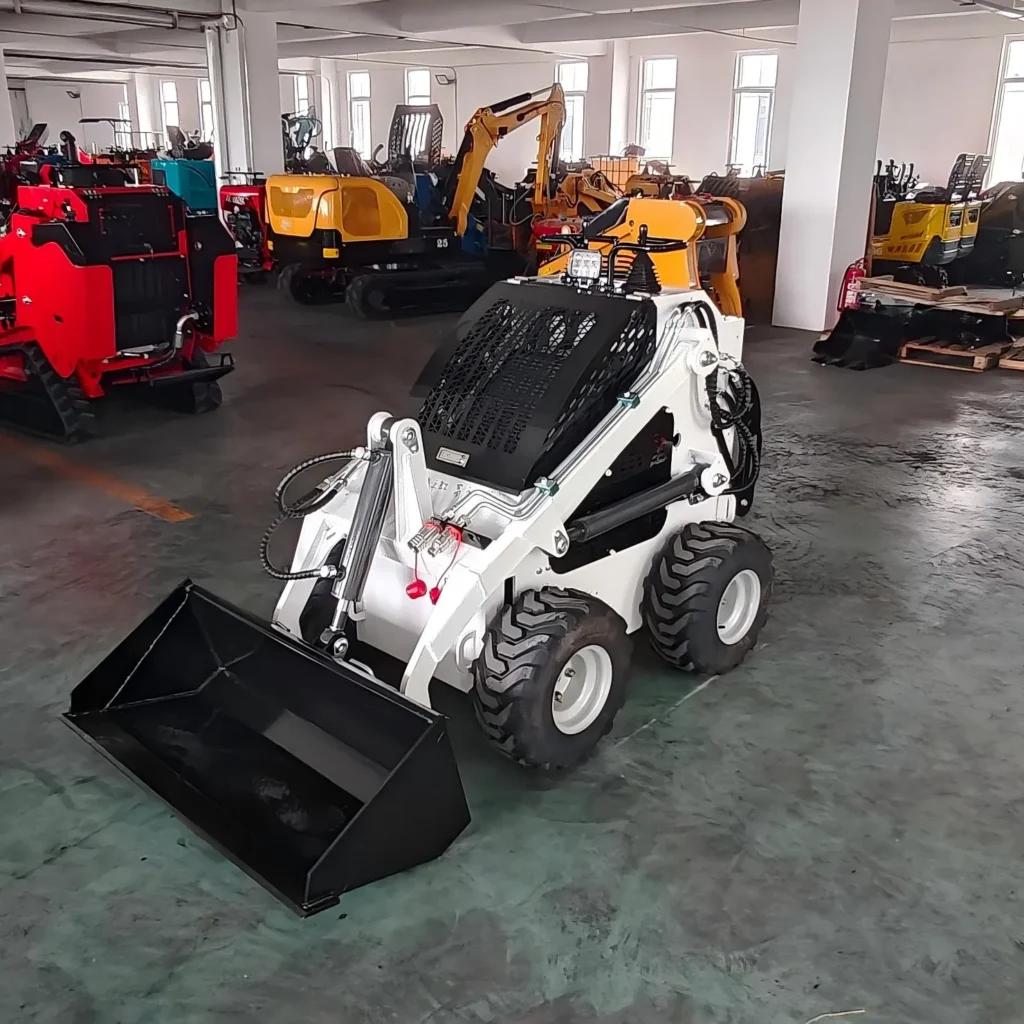
Mini skid steers (sometimes called compact utility loaders) are even smaller than stand-on models. They’re designed for jobs where space is tight — think backyard projects or small construction sites. Don’t let the size fool you though; they still pack plenty of power for digging, hauling, or trenching.
Each type of skid steer has its own strengths. If you need speed and smooth travel, go with a wheeled model. If you’re dealing with rough ground, choose tracks. For small, close-quarter work, a stand-on or mini skid steer is your best friend. The right machine all comes down to where and how you plan to use it.
Advantages of Using a Skid Steer Loader
So, why do so many contractors and operators swear by skid steers? Simple — they’re efficient, versatile, and durable.
- Compact Size, Big Power
Skid steers can do the heavy lifting while fitting into places larger machines can’t. Whether it’s an alley, backyard, or a tight warehouse space, a skid steer gets the job done.
- Versatile and Multi-Purpose
A skid steer can do almost anything. Just switch out the front attachment — use a bucket for loading, forks for lifting pallets, a trencher for digging, or a sweeper for cleaning. One machine can handle dozens of jobs, which means you don’t need a whole fleet of equipment.
- Maneuverability
The zero-turn radius makes skid steers super agile. They can spin in place, which is perfect for tight job sites.
- Ease of Transport
Since they’re smaller and lighter than many other loaders, they’re easier (and cheaper) to haul from site to site.
- Durability
Skid steers are built to last. With proper maintenance, these machines can run for thousands of hours and still perform like champs.
- Low Operating Cost
Fuel-efficient engines, easy servicing, and versatile use mean you get a lot of return on investment.
Disadvantages of Using a Skid Steer Loader
Of course, no machine is perfect. Skid steers come with a few trade-offs depending on the type of work you do.
- Limited Reach and Height:
Compared to full-size loaders or excavators, skid steers have less lifting height and reach. That’s why for high-loading jobs, vertical-lift models are preferred.
- Can Damage Soft Ground:
Wheeled skid steers can tear up lawns or soft soil, especially when turning sharply. Tracked models help reduce this, but they come with higher maintenance costs.
- Less Comfortable for Long Hours:
Smaller cab sizes and more vibration can make long shifts a bit tiring compared to larger equipment.
- Limited Speed:
Skid steers aren’t built for long travel distances — they’re great on the job site but not for moving across large areas.
Still, for most operators, the pros easily outweigh the cons. The flexibility and power of a skid steer make it a go-to machine for just about any job.
How Much Does a Skid Steer Weigh?
The weight of a skid steer can vary greatly depending on its size, model, and attachments, but generally, it ranges from 3,000 to 10,000 pounds (1,360 to 4,540 kilograms).
- Smaller skid steers, designed for light-duty work such as landscaping or small construction projects, typically weigh around 3,000 to 4,000 pounds.
- Medium-sized models used for general construction or material handling usually weigh between 5,000 and 7,000 pounds.
- Large, heavy-duty skid steers built for demanding applications can reach 8,000 to 10,000 pounds or more.
The operating weight includes the machine itself, fluids, and a standard bucket, but adding attachments — like augers, grapples, or trenchers — can significantly increase the total weight.
How Much Does a Stand-On Skid Steer Weigh?
Stand-on skid steers are lighter than traditional sit-in models. On average, they weigh between 1,500 and 3,000 pounds (680 to 1,360 kilograms). Of course, it depends on the brand and model — smaller ones lean toward the lower end, while heavy-duty stand-on models designed for tougher work might reach closer to 3,000 pounds.
How Much Does a Mini Skid Steer Weigh?
A mini skid steer typically weighs between 2,000 and 4,000 pounds (900 to 1,800 kilograms). Even though they’re small, they’re built to be strong. A good mini skid steer can still handle demanding work like trenching, post-hole digging, or material handling.
How Wide Is a Skid Steer Loader?
The width of a skid steer depends on its size and model, but generally, they range from 3 feet (0.9 meters) for compact mini skid steers to about 6 feet (1.8 meters) for full-size models.
For example:
- Mini skid steers can be as narrow as 36 inches, perfect for fitting through garden gates or doorways.
- Standard skid steers are usually around 60–72 inches wide.
- Large skid steers might exceed 80 inches with wider tires or tracks.
When choosing a skid steer, width matters. If you’re working in residential or urban areas, a narrow model saves time by fitting into tight spaces without extra prep. But for open job sites where space isn’t an issue, a wider machine offers better stability and lift capacity.
Conclusion
Ultimately, the skid steer loader is a perfect example of how great things often come in compact packages. With the right attachments, it can transform into any tool you need for the day’s job.
As a heavy equipment manufacturer, Torchuck builds rugged, versatile skid steer loaders designed to make tough tasks easier. We meet your diverse needs and help you get the job done efficiently.