If the same machine needs to dig, load, and backfill throughout the day, a backhoe loader is usually the more practical setup. If the jobsite is tight and the machine needs to switch between buckets, forks, augers, sweepers, breakers, and other attachments, a skid steer is usually more flexible.
The choice depends on the work pattern, not the machine name. Digging frequency, attachment changes, jobsite space, loading work, and travel distance are the main factors to compare.
Backhoe vs Skid Steer: What Is the Main Difference?
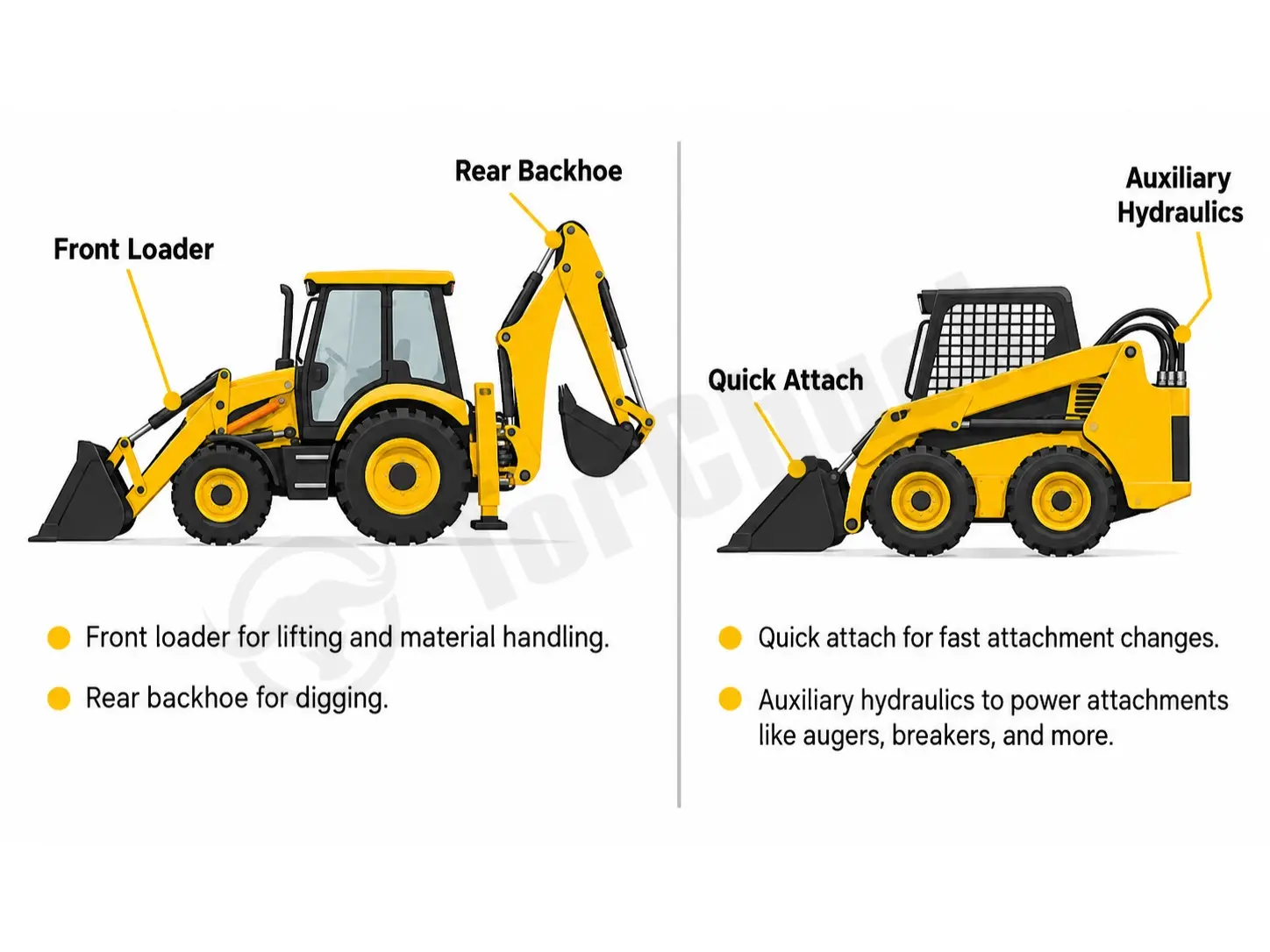
A backhoe loader combines two main working systems on one machine. The term backhoe refers to the digging action of the rear bucket, which pulls material toward the machine. A typical backhoe loader combines this rear digging system with a front loader. The front loader bucket handles material, while the rear boom and bucket handle excavation. The operator can move between digging, loading, and backfilling without removing the main digging equipment.
Torchuck'ın TCB 10-20 follows this layout with a front loader and rear backhoe. The model has a listed operating weight of 3,400 kg and a maximum digging depth of 2,000 mm.
Bu TCB 15-26 uses the same basic design in a larger machine. Its listed maximum digging depth is 2,700 mm, with a 0.7 m³ front loader bucket and 4,500 kg operating weight.
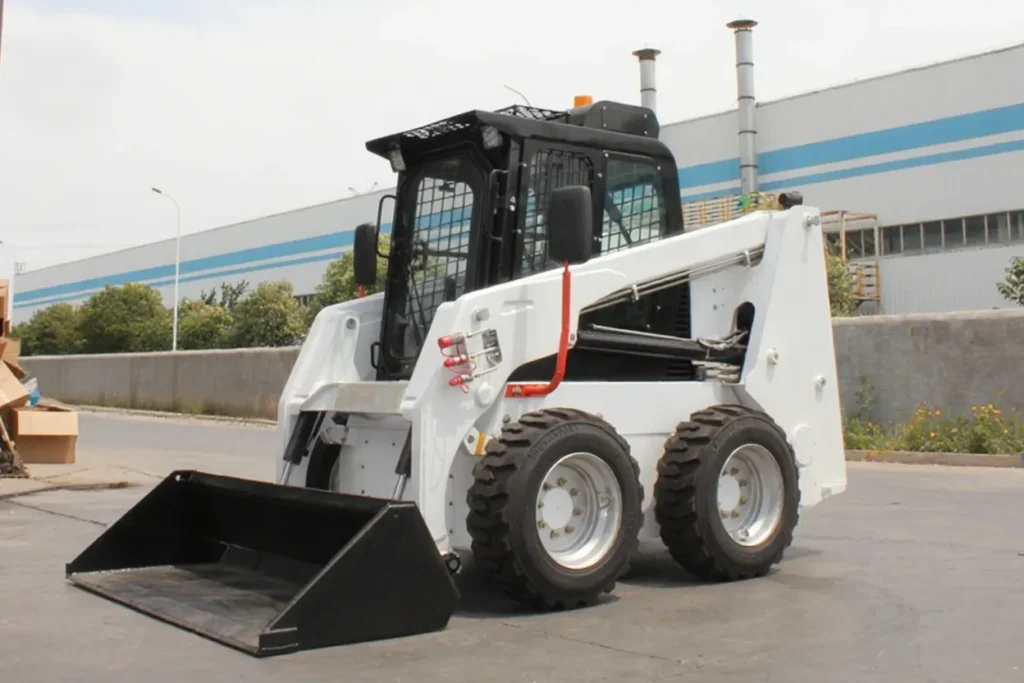
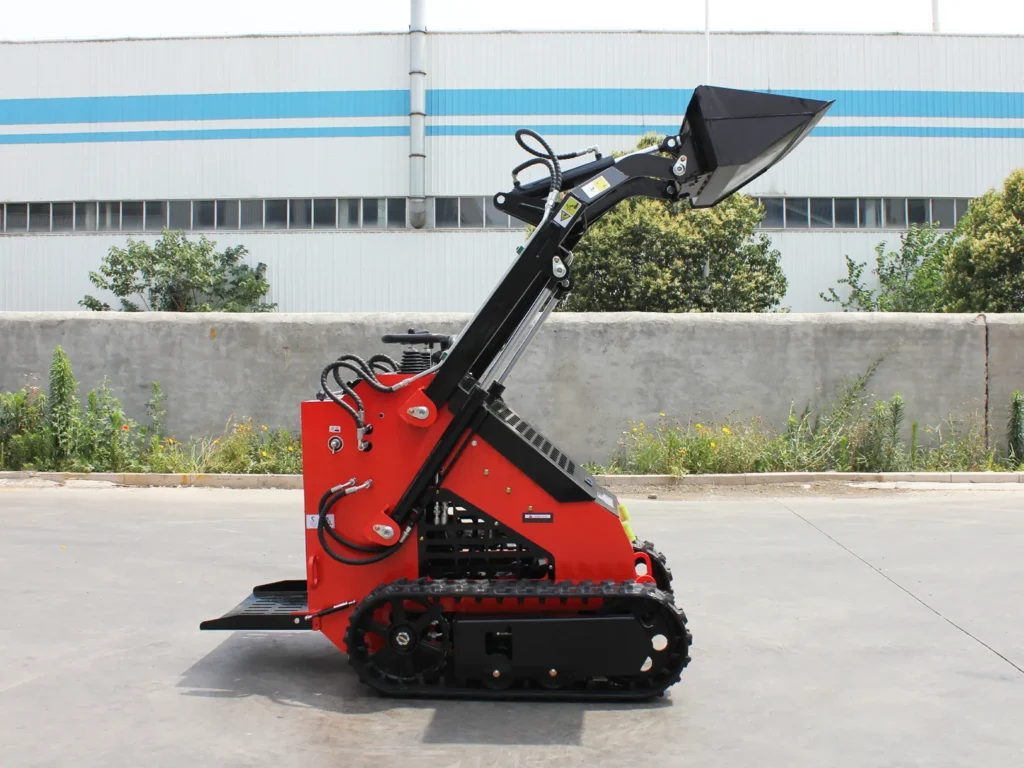
A mini yükleyici works differently. The machine starts with a compact loader chassis and changes jobs by changing attachments. Buckets, pallet forks, augers, breakers, trenchers, sweepers, brush cutters, and other tools can all be matched to the same host machine.
The difference is therefore not simply machine size. A backhoe loader carries dedicated digging and loading equipment all the time, while a skid steer gains versatility through its attachment system.
Digging: Dedicated Backhoe or Hydraulic Attachment?
Digging is one of the biggest differences between these machines.
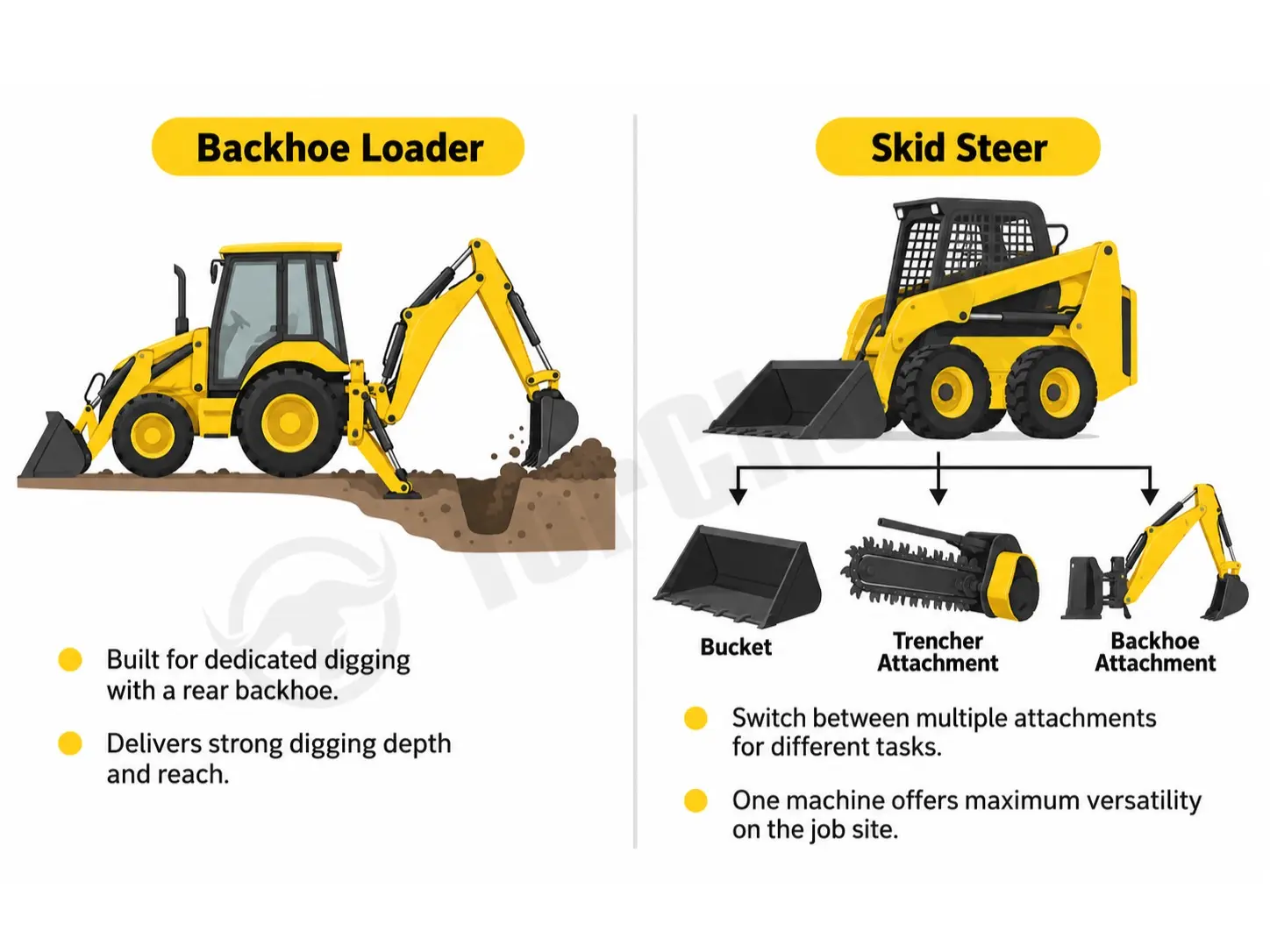
A backhoe loader already carries a rear digging boom. For contractors who regularly work on drainage, utility trenches, farm ditches, small foundations, or road repairs, the digging system is always available.
Torchuck'ın TCB 10-20 lists a maximum digging depth of 2,000 mm. The larger TCB 15-26 reaches 2,700 mm. These figures are specific to those models, but they show that digging is part of the basic machine design rather than an occasional attachment function.
A skid steer can also dig. A standard bucket can handle light excavation, while trenchers, augers, and other hydraulic tools expand the machine’s capability. Some skid steers can also use a dedicated backhoe attachment.
That does not make every skid steer a direct replacement for a backhoe loader. A backhoe attachment has its own digging depth, reach, hydraulic requirements, weight, and mounting system. These need to be checked against the host machine.
If digging only happens occasionally, the skid steer approach can be practical. If excavation is part of the daily workflow, a dedicated backhoe loader deserves a closer look.
Loading and Material Handling
Both machines can load material, but they approach the job differently.
A backhoe loader keeps its loader bucket at the front while the backhoe remains mounted at the rear. After digging a trench, the machine can move spoil, backfill the area, or load loose material without removing the rear digging system.
The skid steer has a different advantage. Its front attachment can be changed for different materials and jobs. A contractor may use a bucket for soil, pallet forks for construction materials, a grapple for debris, or another compatible attachment later in the day.
This difference matters when the job changes frequently. If most of the work is digging and moving soil, the backhoe layout is straightforward. If the machine handles many different materials and tools, the skid steer attachment system becomes more useful.
Which Machine Works Better in Tight Jobsites?
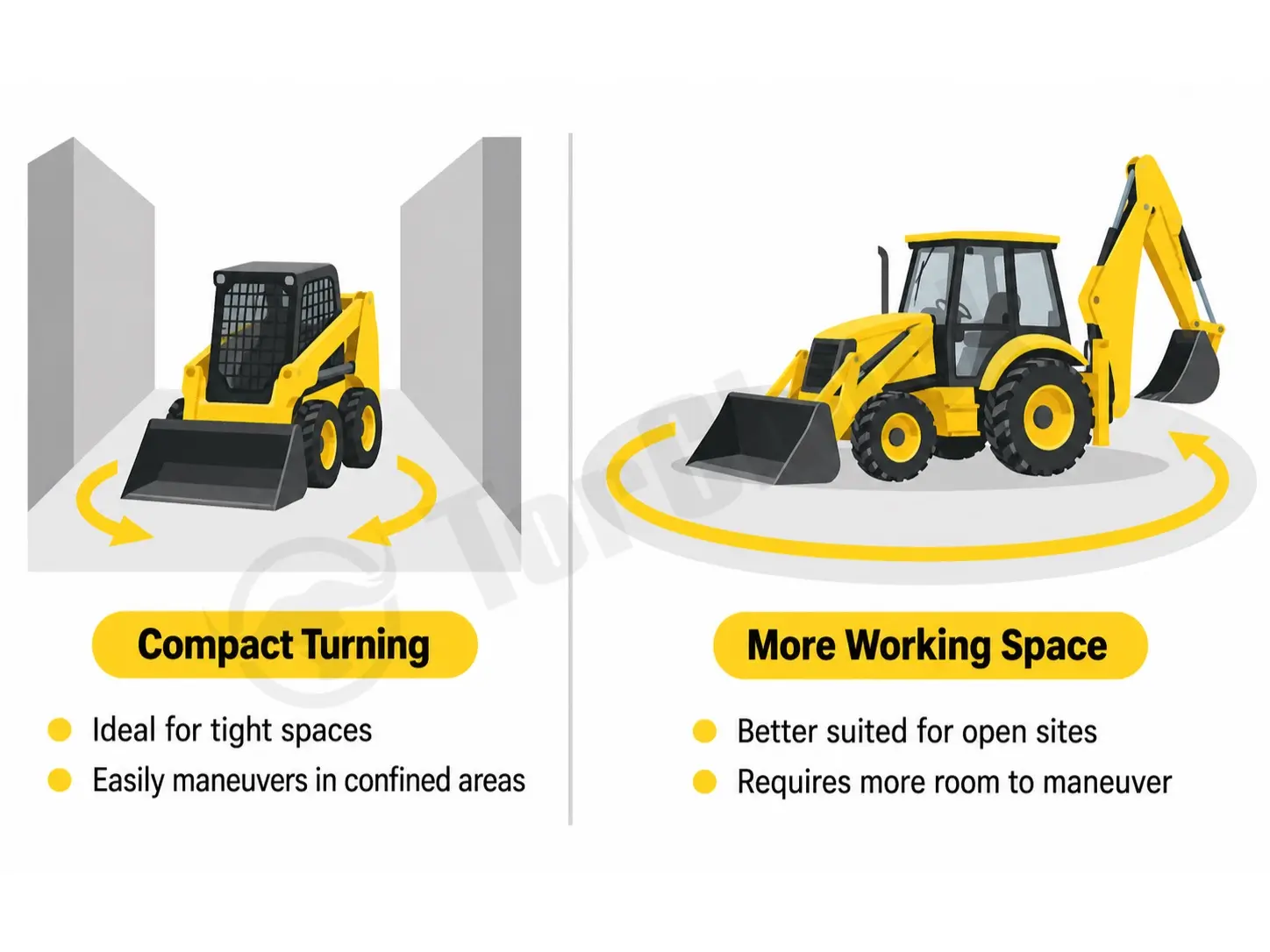
Skid steers are designed for compact maneuverability.
Their steering system allows the wheels or tracks on each side to move at different speeds. Our guide to skid loaders and other loader types explains this steering difference in more detail.
Backhoe loaders are longer because they carry working equipment at both ends. The TCB 10-20, for example, has a listed overall length of 5,500 mm, while the TCB 15-26 measures 5,800 mm.
That extra length is not simply wasted space. It is part of the machine layout that allows the operator to have both loader and excavation equipment available.
The question is whether the jobsite has enough room for that layout. When access is tight and obstacles are common, the skid steer has a clear practical advantage. When space is available and digging is a major part of the job, the larger backhoe loader can still be the better fit.
Travel Between Work Areas
Movement around the site also affects the choice.
A wheeled backhoe loader can move the complete digging and loading machine between different areas without changing attachments. Torchuck lists maximum travel speeds of 25 km/h for the TCB 10-20 and 26 km/h for the TCB 15-26.
These figures describe the machines themselves. Public-road use still depends on local registration, lighting, transport, and road regulations.
Skid steers are very maneuverable inside the active work area, but buyers should also consider how much travel happens during a normal day. A machine that spends most of its time within one compact jobsite has different requirements from a machine that regularly moves between distant sections of a larger project.
Travel distance should therefore be discussed before selecting the machine, especially when the worksite covers a large area.
Attachments and Job Changes
Skid steers are particularly strong when the job changes frequently.
Torchuck offers wheel and track skid steer configurations together with Standard and High-Flow hydraulics and a wide range of attachments. A single machine can be configured for loading, drilling, trenching, sweeping, cutting, breaking, handling, and other jobs.
That makes the skid steer attractive to contractors, rental companies, farms, and dealers that need one host machine to cover several applications.
Backhoe loaders solve versatility in another way. Instead of changing between a loader attachment and a digging attachment, the machine already carries both major tools.
This is why simply counting attachments does not tell you which machine is better. A contractor using many different tools has different needs from one that spends most of the working day digging, loading, and backfilling.
Can You Put a Backhoe on a Skid Steer?
Yes. Some skid steer loaders can use a compatible backhoe attachment.
The attachment still needs to match the host machine. Hydraulic flow, pressure, quick-attach system, attachment weight, operating position, and machine capacity all need to be checked before ordering.
A skid steer backhoe attachment is also not automatically the same as the rear digging system on a dedicated backhoe loader. Digging depth, reach, stabilizer design, operator position, and working range depend on the exact attachment.
For occasional excavation, a backhoe attachment can add useful capability to a skid steer. If digging is one of the machine’s main daily jobs, comparing the attachment setup with a dedicated backhoe loader is more useful than assuming they will work the same way.
When Is a Backhoe Loader the Better Choice?
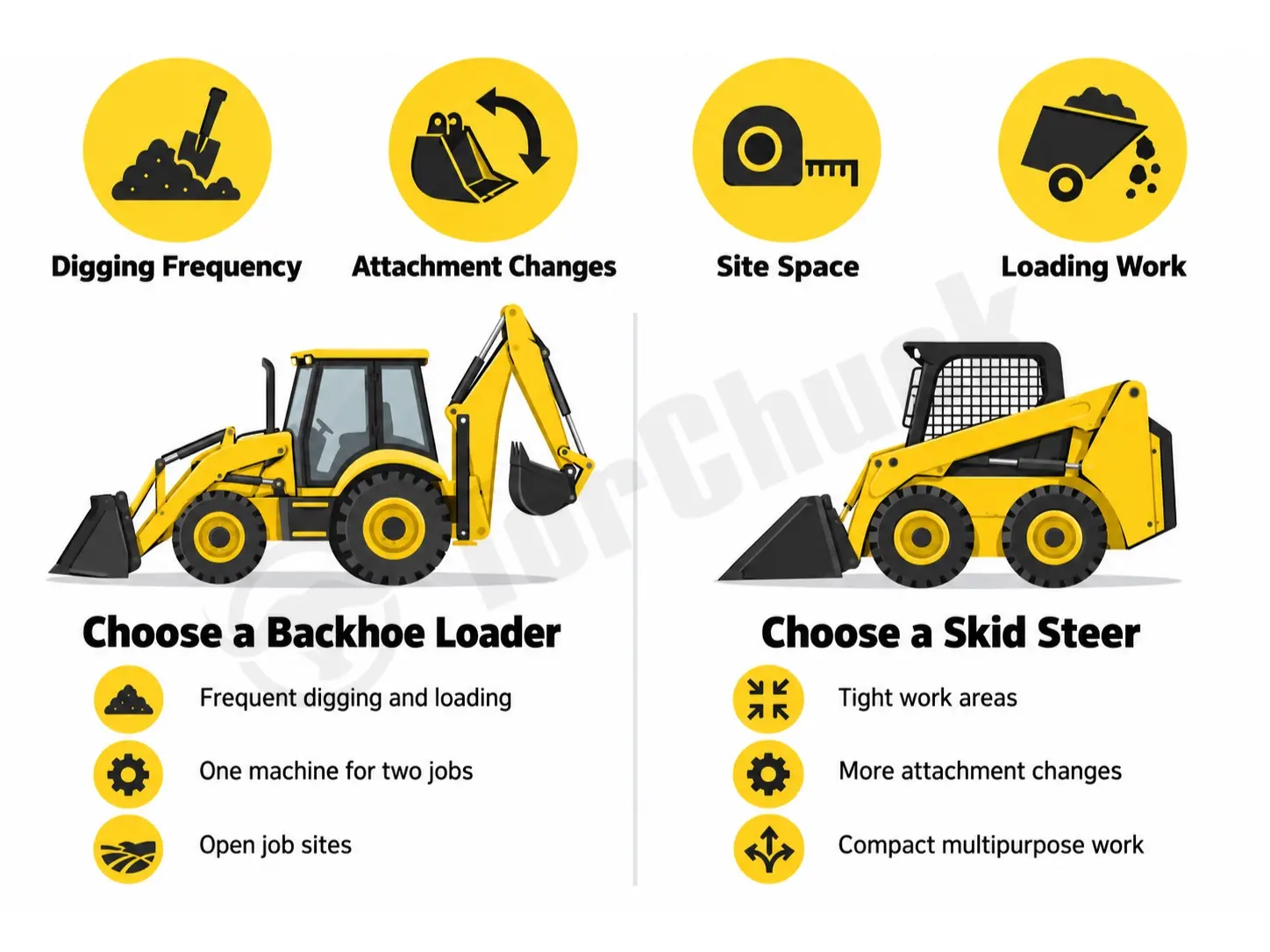
A backhoe loader makes sense when digging and loading are both regular parts of the same job.
Drainage work, utility trenches, small construction projects, farm ditching, and road maintenance are good examples. The operator can dig with the rear boom, move spoil with the front bucket, and backfill the trench using the same machine.
This setup is especially useful when those two functions repeat throughout the working day. The operator does not need to turn the loader into a digging machine by installing another major attachment.
Frequency is the key point. If excavation only happens occasionally, carrying a dedicated backhoe every day may not be necessary. If excavation is central to the work, the backhoe loader layout becomes much easier to justify.
When Is a Skid Steer the Better Choice?
A skid steer works well when space is limited and the job changes often.
A contractor may use a bucket in the morning, pallet forks later, and an auger, breaker, grapple, or sweeper on another project. This type of work benefits from a machine designed around quick attachment changes.
Skid steers also come in wheel and track configurations. This gives buyers another way to match the machine to the ground conditions and jobsite.
The skid steer becomes less attractive if the buyer mainly wants to turn it into a backhoe every day. If regular digging and loading are the core jobs, a dedicated backhoe loader should be compared before buying several attachments around a skid steer.
How Torchuck Helps You Choose the Right Machine
Choosing between a backhoe loader and skid steer should start with the work, not the machine name.
Tell Torchuck what you need to dig, required digging depth, materials being loaded, jobsite width, ground conditions, attachment needs, and normal travel distance. These details make it easier to compare a backhoe loader with a wheel or track skid steer configuration.
Torchuck supplies several backhoe loader models together with skid steer loaders and attachment options. The goal is to match the machine layout to the work instead of simply recommending the machine with the longest specification list.
Sık Sorulan Sorular
Is a Backhoe Better Than a Skid Steer?
A backhoe is better when regular digging and loading are central to the job. A skid steer is often better when space is limited and the machine needs to use many different attachments.
Neither machine is better for every application.
Can You Put a Backhoe on a Skid Steer?
Yes. Compatible backhoe attachments are available for some skid steers.
Before buying, check hydraulic flow, pressure, mounting system, attachment weight, machine capacity, and manufacturer requirements.
What Are the Disadvantages of a Skid Steer?
A skid steer depends on attachments for many specialized jobs. Regular excavation may require installing a backhoe, trencher, or other digging tool rather than using a dedicated rear digging system.
Wheeled skid steers also turn by skidding the tires, which can disturb some surfaces and increase tire scrub during frequent tight turns.
Why Are Backhoes Less Popular?
This should not be treated as a universal market fact. Equipment preferences vary by country, industry, contractor size, and type of work.
Some buyers choose skid steers or mini excavators because they prefer smaller specialized machines. Other operators continue to use backhoe loaders because one machine can handle both loading and excavation.
Is a Skid Steer Better for Attachments?
A skid steer is designed around attachment changes and can use a wide range of compatible tools.
The attachment still needs to match the machine’s hydraulic flow, pressure, capacity, and quick-attach system.
Sonuç
A backhoe loader works well when digging and loading happen together throughout the day. A skid steer is better suited to tight jobsites and work that requires frequent attachment changes.
Send Torchuck your digging requirements, materials, jobsite conditions, and attachment needs. We can compare the available backhoe loader and skid steer configurations and help you match the machine to the job.