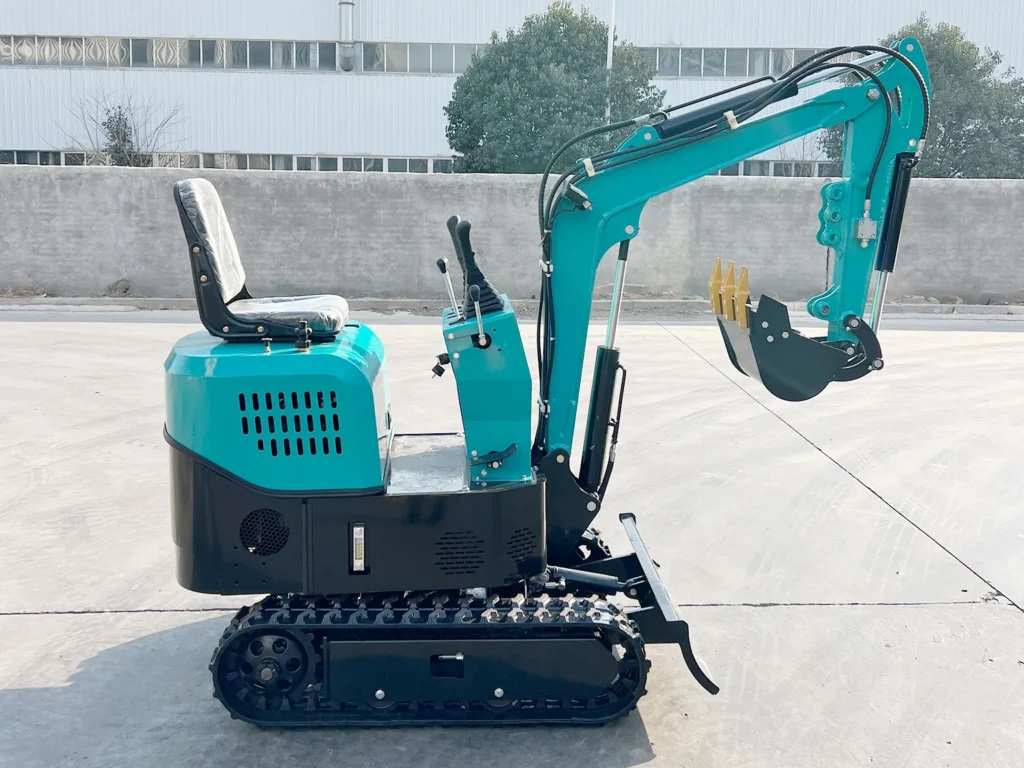
Chinese mini excavator can be worth buying if the machine matches your work, the specifications are clear, and the supplier can provide inspection, spare parts, and support after delivery.
The main risk is not simply where the machine is made. Chinese mini excavators vary widely in engines, hydraulic systems, controls, undercarriages, attachments, build quality, and after-sales support. Two machines that look almost identical may have very different configurations and delivery packages.
Before placing an order, buyers should verify the machine specification, engine documents, included attachments, inspection process, shipping terms, warranty, and spare-parts support. This guide explains the main risks and shows how to compare Chinese mini excavators more accurately.
Why Do Buyers Consider Chinese Mini Excavators?
Many buyers start looking at Chinese mini excavators after comparing local equipment prices, rental availability, and the cost of established international brands.
The Chinese market offers a wide selection of compact machines. Buyers can find micro excavators for gardens and narrow entrances, 1-ton machines for landscaping and farm work, and larger compact models for contractors and rental fleets.
Configuration choice is another reason. Depending on the model, buyers may be able to select gasoline or diesel engines, mechanical or pilot controls, fixed or expandable tracks, open canopies or enclosed cabs, boom swing, quick hitches, and several attachments.
A broad selection can help a buyer find a machine that matches a specific market. However, it also makes comparison more difficult. A model name such as “1-ton mini excavator” does not define the complete machine.
A low quotation may describe a basic mechanical model with a simple engine and fixed chassis. A higher quotation may include pilot controls, an approved engine, a variable hydraulic pump, boom swing, expandable tracks, a quick hitch, spare parts, export packing, and inspection records.
Both machines may still be advertised as 1-ton mini excavators.
Chinese machines may therefore offer good value, but only when the buyer understands the configuration and receives what was agreed.
What Are the Common Problems with Chinese Mini Excavators?
There is no single quality level that applies to every Chinese mini excavator. China has many factories, assembly plants, component suppliers, exporters, and trading companies. Their machines and service systems are not the same.
The problems buyers report or worry about are usually linked to unclear specifications, inconsistent configuration, weak inspection, or poor support rather than the country of origin alone.
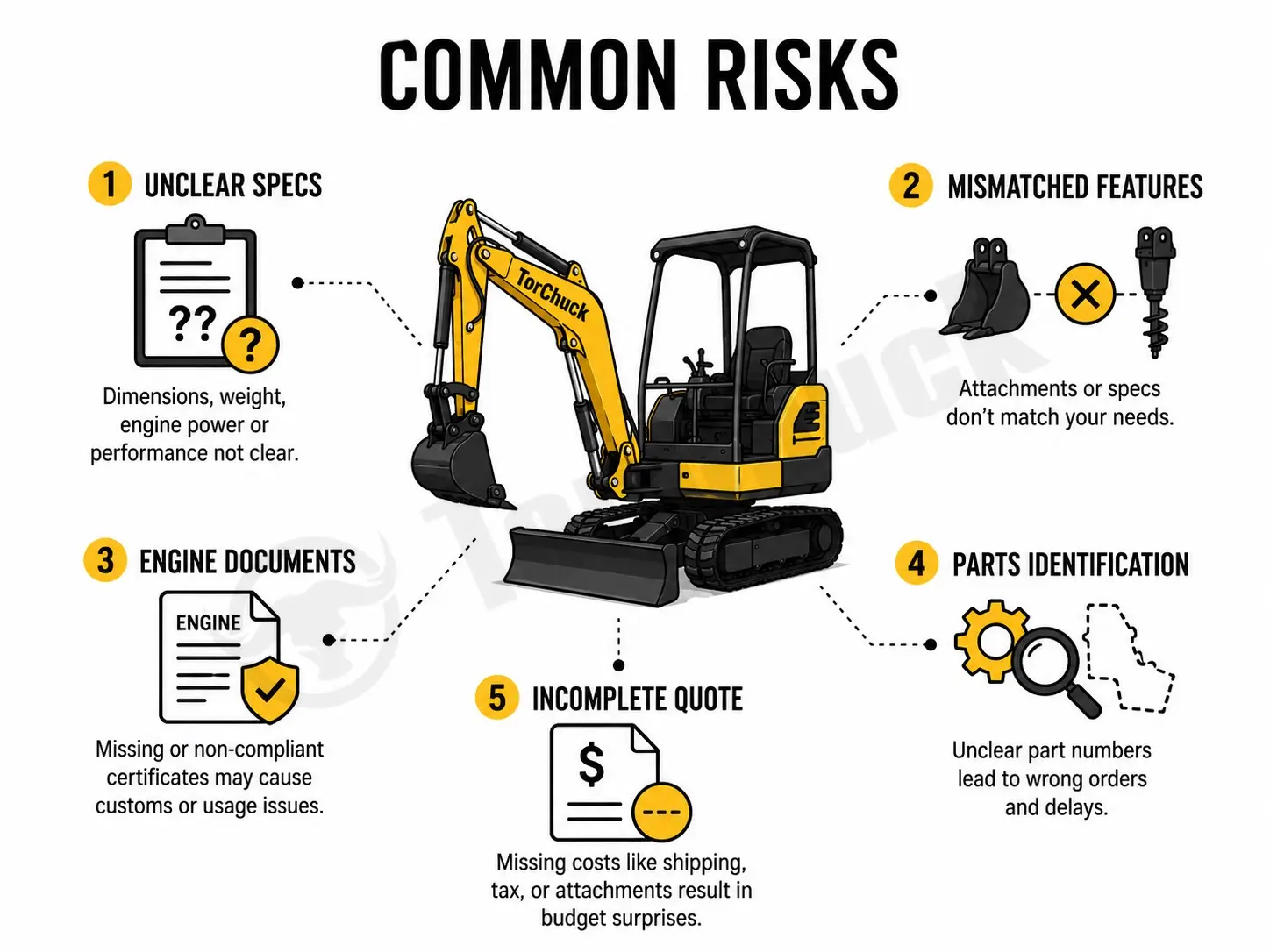
The Actual Configuration Is Not Clear
Some quotations list only the operating weight, engine power, bucket capacity, and overall size. They do not identify the hydraulic pump, main valve, travel motor, swing motor, control type, hose routing, or auxiliary hydraulic setup.
This creates a problem when two machines need to be compared. It also makes future parts identification more difficult.
The buyer should request a written configuration sheet. Important components should be identified by brand, model, or technical specification where possible.
The Delivered Machine Does Not Match the Sales Material
Product pages often display several versions of the same model. One image may show an expandable undercarriage. Another may show boom swing, pilot controls, or a closed cab.
The quoted machine may not include all the features shown in those photos.
The sales contract should state the final engine, chassis, controls, dimensions, attachments, colors, and optional features. Buyers should also request actual-machine photos or video before shipment.
Engine and Emission Documents Are Not Confirmed
An engine that can be sold in one country may not meet the rules of another market.
The United States regulates engines used in nonroad equipment through EPA emission standards. The European Union also regulates internal-combustion engines used in non-road mobile machinery, including excavators.
Buyers should check the official requirements of the destination market before selecting an engine. For the United States, the buyer can review the EPA regulations for nonroad vehicles and engines. Buyers importing into the European Union can review the European Commission’s information on non-road mobile machinery emissions.
An exporter saying that an engine is “EPA” or “EU compliant” is not enough by itself. The buyer should ask for the exact engine model and the relevant label, approval, certificate, or technical document.
CE-related documents and engine emission approval should also be checked as separate parts of the import file. One document should not be assumed to replace every other requirement.
Parts Are Difficult to Identify After Delivery
A small hydraulic hose, seal, switch, filter, travel motor, or pump can stop the machine when the buyer cannot identify the correct replacement.
Generic promises such as “all parts are available” provide little protection. The supplier should be able to connect the machine serial number and component details with a parts list.
Before ordering, buyers should ask what service documents are included. They should also ask how the supplier identifies parts after delivery and which common service items can be ordered with the machine.
The Lowest Price Does Not Include the Full Order
A low quotation may exclude the attachment shown in the image, a quick hitch, spare filters, wooden packing, inland delivery to the port, export documents, or ocean freight.
It may also use EXW pricing while another supplier uses FOB or CIF.
The buyer should compare the total content of each quotation. A lower machine price does not always create the lowest delivered cost.
What Should You Check in the Machine Specification?
A reliable quotation should allow the buyer to understand the machine without relying on promotional photos.
Start with the operating weight. A supplier may use a model name that suggests a certain tonnage, but the actual operating weight may be different. Ask whether the stated weight includes the standard bucket, canopy, fuel, counterweight, or optional equipment.
The overall dimensions must also be checked. Width affects gates and transport. Height affects container loading, doors, and storage. Tail swing and boom swing affect work near walls and fences.
Buyers working in restricted spaces can also review the Torchuck guide to mini excavator gate width.
The engine description should include the brand, model, rated power, fuel type, and emission version. A general phrase such as “famous engine” does not provide enough information.
The hydraulic system also needs attention. Ask about the pump type, system pressure, auxiliary lines, control method, and attachment requirements. A machine with simple mechanical controls will feel different from one with hydraulic pilot controls. A gear-pump system and a variable piston-pump system may also provide different operating characteristics.
The undercarriage should be described clearly. Confirm whether it is fixed or expandable, whether the blade folds, and whether rubber or steel tracks are available.
The attachment interface must match the tools the buyer plans to use. The quick hitch, pin size, auxiliary hydraulic flow, pressure, hose connections, and machine weight all affect compatibility.
A compact excavator is a system. The engine, hydraulics, structure, tracks, controls, and attachment must work together. Buyers who need a basic explanation of the machine layout can review the excavator overview on Wikipedia.
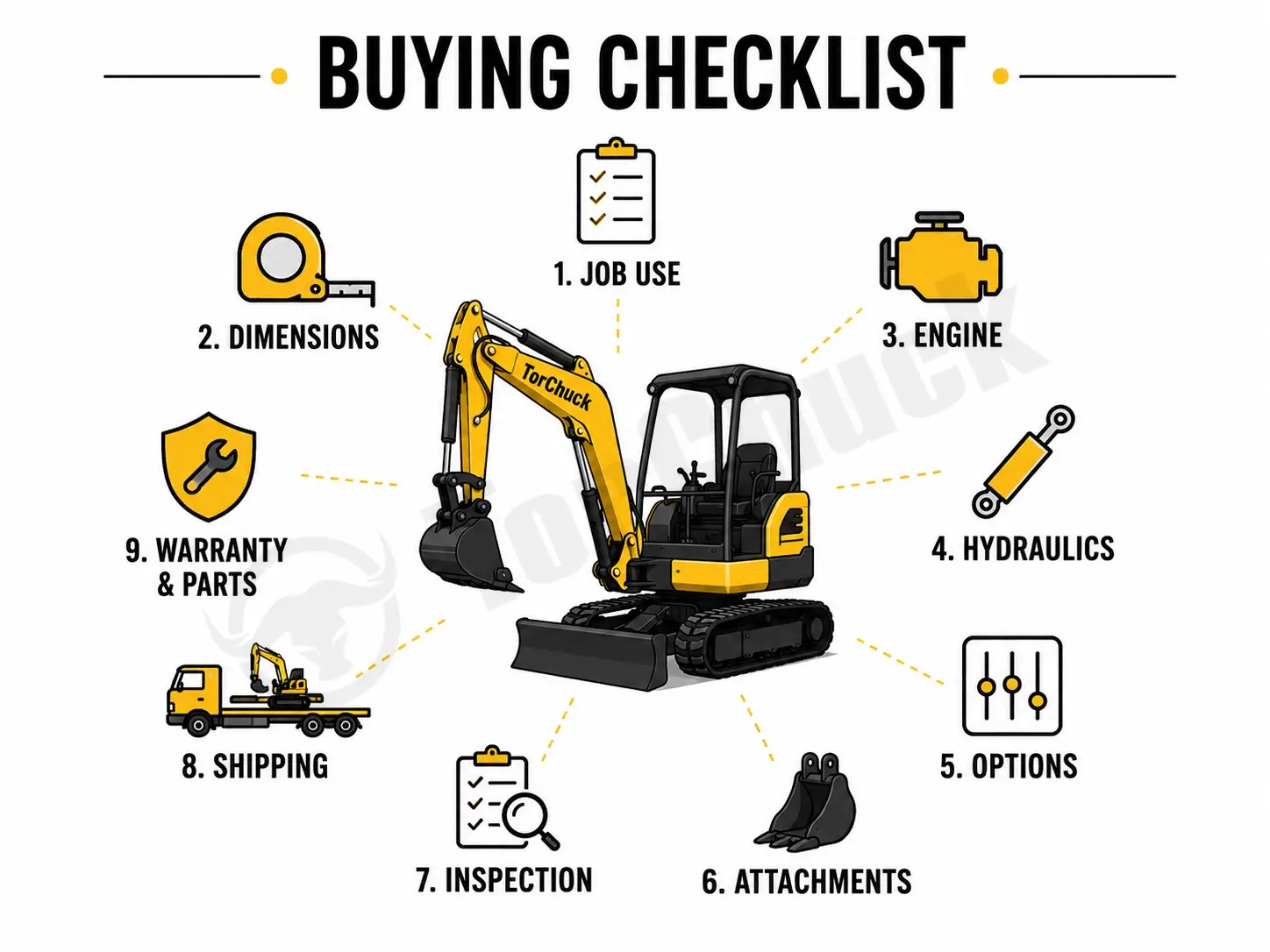
Nine Checks Before Buying a Chinese Mini Excavator
The following checks should be completed before the buyer confirms the order. They are not intended to turn every customer into an engineer. Their purpose is to remove uncertainty from the quotation.
1. Define the work before choosing the machine.
Describe the main jobs, soil, required digging depth, site width, working frequency, and attachments. A machine for occasional garden trenching does not need the same configuration as one used every day by a rental company.
2. Confirm the actual operating weight and dimensions.
Do not rely only on names such as “08,” “10,” “12,” or “15.” Ask for the actual weight, width, height, transport length, digging depth, and working radius of the final version.
3. Identify the engine precisely.
The quotation should state the engine brand, model, power, fuel type, and emission version. Confirm that the documents match the destination country.
4. Review the hydraulic and control system.
Ask whether the machine uses mechanical or pilot controls. Confirm the pump type, auxiliary hydraulic system, and compatibility with the required tools.
5. Confirm every optional feature.
Expandable tracks, boom swing, closed cabs, steel tracks, quick hitches, extra counterweights, and hydraulic thumbs should be listed individually. Do not assume that a feature shown in a photograph is included.
6. Match attachments before shipment.
Confirm the attachment type, width, weight, pin dimensions, hydraulic flow, pressure, and connection method. Ask whether hoses and couplers are included.
7. Define the inspection process.
Ask what will be checked before shipment. The inspection should cover the agreed configuration, basic machine operation, travel, swing, boom, arm, bucket, blade, auxiliary hydraulics, lights, gauges, visible leaks, and included accessories.
8. Clarify trade terms and delivery content.
EXW, FOB, and CIF describe different responsibilities and costs. The quotation should state the departure port, packing, documents, freight scope, lead time, and items that are not included.
9. Confirm parts and warranty support in writing.
Ask about the warranty period, exclusions, evidence required for a claim, parts identification process, technical support, and who pays freight for replacement parts.
A supplier who answers these questions clearly gives the buyer a much better basis for comparison.
How Should You Compare Two Mini Excavator Quotations?
The easiest method is to place the quotations into one comparison table.
Do not compare only the final number. First make sure that both suppliers are quoting the same engine, control system, chassis, attachments, trade term, and delivery content.
| Quote Item | Supplier A | Supplier B |
|---|---|---|
| Model and actual operating weight | ||
| Overall width and height | ||
| Maximum digging depth | ||
| Engine brand and model | ||
| Emission version and documents | ||
| Hydraulic pump and main valve | ||
| Mechanical or pilot controls | ||
| Fixed or expandable chassis | ||
| Boom swing | ||
| Included bucket and attachments | ||
| Quick hitch and hydraulic couplers | ||
| Spare parts package | ||
| Manuals and parts list | ||
| Pre-shipment inspection evidence | ||
| Packing | ||
| Trade term and departure port | ||
| Prazo de entrega | ||
| Warranty and parts process |
This table often explains why two prices are different.
One quotation may be lower because the machine uses a simpler engine and control system. That may be acceptable for a buyer who wants an easy-to-maintain basic machine.
Another quotation may be higher because it includes a different engine, pilot controls, expandable tracks, boom swing, extra attachments, inspection, packing, and spare parts.
The objective is not to select the most expensive quotation. The objective is to select the configuration that matches the work and makes the commercial terms clear.
Who Makes the Best Chinese Mini Excavator?
There is no objective answer that applies to every buyer.
One machine may be the best option for a homeowner who needs a compact and affordable digger. Another may suit a rental fleet that values simple controls and easy parts replacement. A professional contractor may need stronger hydraulics, better stability, and more attachment capacity.
A brand ranking without comparable tests, service records, and long-term operating data would not provide a reliable answer.
Buyers should evaluate both the machine and the supplier.
A reliable supplier should provide detailed specifications, actual photos, clear commercial terms, inspection evidence, manuals, parts support, and a written warranty process. The supplier should also be willing to explain limitations rather than claiming that one small excavator can complete every job.
Torchuck’s role is not to claim that one model is best for every customer. Torchuck works with machinery manufacturing partners in China and matches equipment to the buyer’s market, application, required configuration, and budget.
This sourcing model gives buyers access to several machine structures and configuration levels through one export contact. It also means the final quotation must identify the selected factory configuration clearly. The buyer should always know which engine, hydraulic system, chassis, attachments, and documents are included.
How Should the Machine Be Inspected Before Shipping?
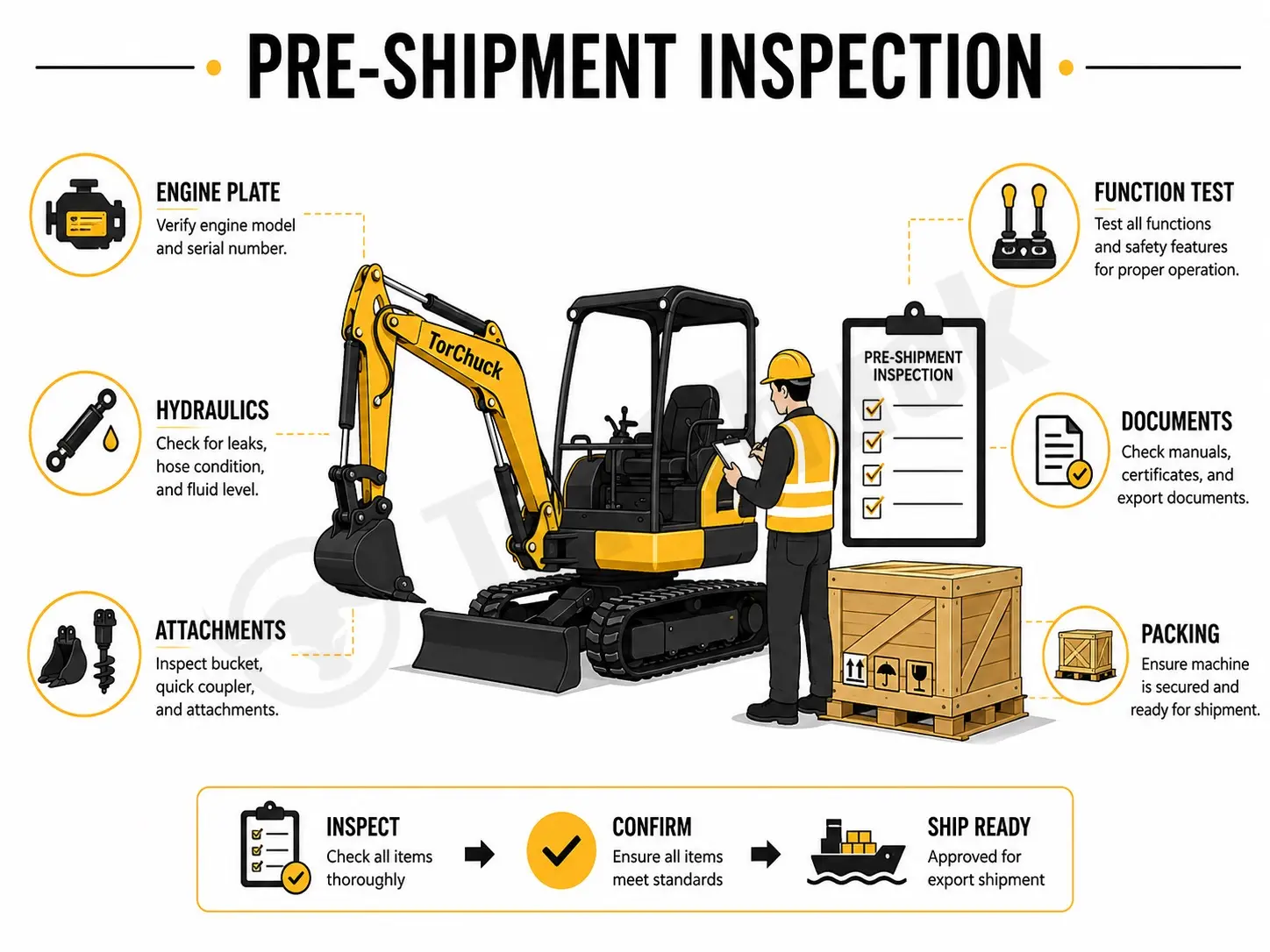
A pre-shipment inspection should confirm that the machine matches the approved order.
The first step is a visual configuration check. The inspector should confirm the model, color, engine, canopy or cab, track type, boom configuration, blade, quick hitch, attachments, and serial information.
The machine should then be started and operated. Travel, steering, swing, boom, arm, bucket, and blade functions should be checked. The auxiliary hydraulic circuit should also be tested when the order includes a hydraulic attachment.
The inspection should look for visible leaks, loose fittings, damaged hoses, abnormal noise, warning lights, and incomplete fasteners. Fluid levels and accessible service points should also be checked.
Attachments, toolboxes, filters, seals, hoses, manuals, keys, and other agreed items should be counted before packing.
Buyers can request dated photos and videos showing the actual machine, engine plate, serial number, operation, attachments, and packing. A generic factory video does not prove that the buyer’s machine has been tested.
For larger dealer orders, the customer may also appoint an independent inspection company. The inspection scope should be agreed before production so the supplier knows which records and tests will be required.
What Should Happen After the Machine Arrives?
The relationship with the supplier should not end when the container leaves China.
The buyer may need help identifying filters, seals, hoses, sensors, pumps, motors, switches, pins, or other replacement parts. Clear machine and component records make this process easier.
The supplier should explain how the buyer can submit a parts request. Useful information usually includes the machine model, serial number, component photos, part numbers, measurements, and a description of the fault.
Remote technical support can help with basic diagnosis, adjustment, installation, and parts replacement. However, complex repairs may still require a competent local mechanic or hydraulic technician.
Dealers and rental companies may need a starter spare-parts package. The correct package depends on the machines, engines, working conditions, and local service network. It should not be a random collection of parts.
Torchuck can help buyers review common service items and attachment needs during quotation. This approach is more useful than waiting for a machine to stop before discussing parts availability.
Who Should Buy Directly from China?
Direct purchase can suit experienced importers, machinery dealers, rental companies, farms, and contractors who understand their machine requirements and have a plan for customs, transport, storage, operation, and maintenance.
It may also suit a first-time importer who has a reliable supplier and receives clear support throughout the process.
However, direct import is not the best option for every buyer.
A local purchase may be more practical when the customer needs immediate delivery, local financing, on-site repair, legal registration support, or a local dealer warranty. It may also be safer when the buyer does not know what machine size or configuration is required.
Customers should be realistic about their own service ability. An imported machine still needs routine checks, maintenance, and occasional repair. A low purchase price cannot compensate for the absence of local skills, storage, transport, or spare-parts planning.
A responsible supplier should explain these limits instead of pushing every customer to place an order.
How Torchuck Reduces the Risk of Buying from China
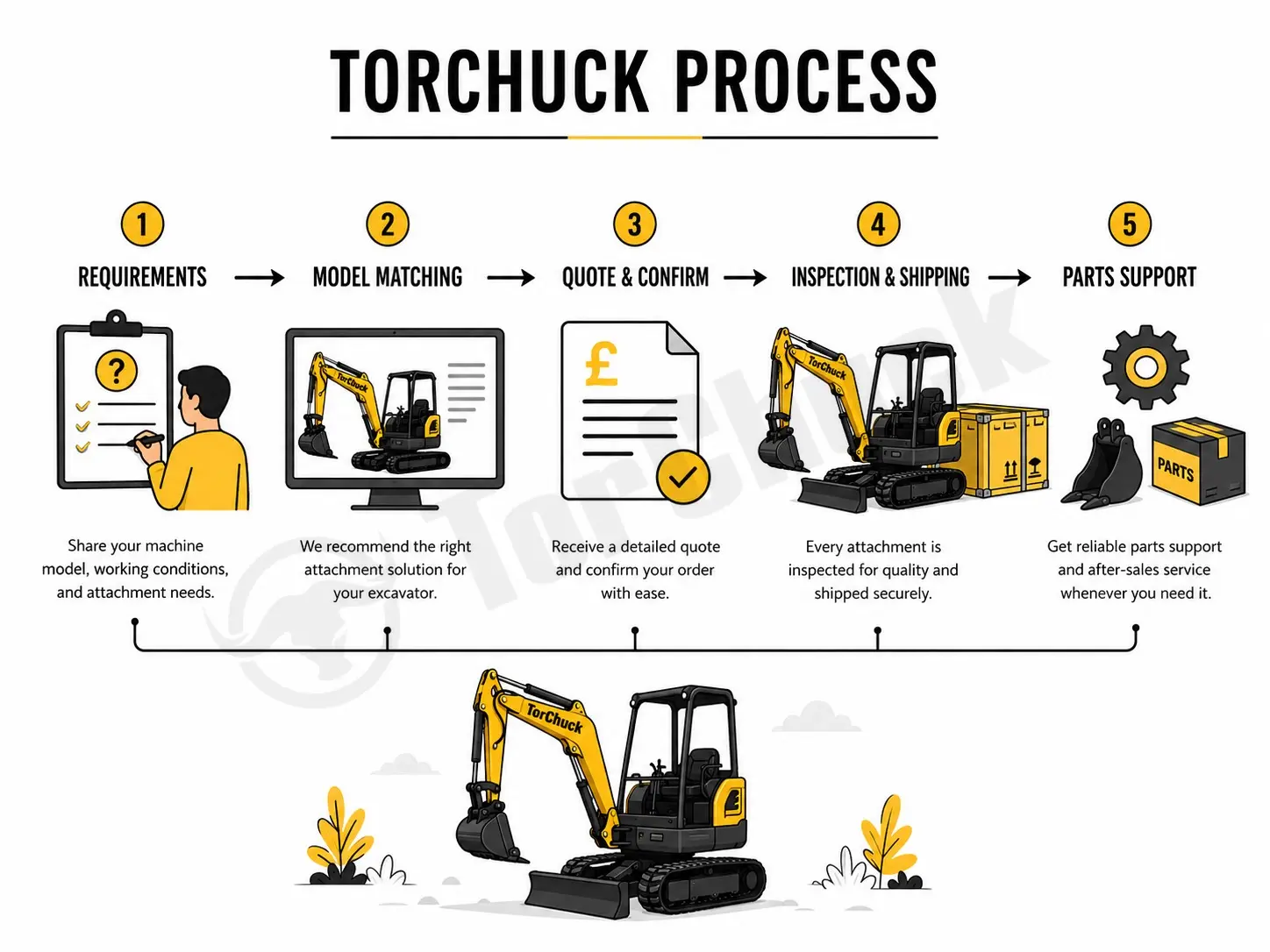
Torchuck does not recommend the same miniescavadeira to every buyer. The team first reviews the intended work, destination market, site access, engine requirements, attachments, budget, and expected order quantity.
Based on these requirements, Torchuck matches suitable configurations from selected manufacturing partners. The quotation clearly states the engine, operating weight, dimensions, hydraulic system, controls, undercarriage, attachments, trade term, and lead time.
Before shipment, Torchuck coordinates configuration checks, functional testing, export packing, and commercial documents. After delivery, the team can assist with manuals, parts identification, replacement parts, and remote technical guidance.
This structured process helps buyers compare machines more accurately and reduces the risk of receiving an unsuitable or poorly documented configuration.
Frequently Asked Questions
Should I Buy a Chinese Mini Excavator?
A Chinese mini excavator can be a practical choice when the configuration matches the work and the supplier provides clear specifications, correct documents, inspection evidence, and parts support.
Do not make the decision from the lowest quotation or product appearance alone.
What Are the Common Problems with Chinese Mini Excavators?
Possible problems include unclear component specifications, delivered configurations that differ from sales photos, unsuitable engine documents, incomplete manuals, difficult parts identification, and weak after-sales communication.
These issues do not apply to every Chinese machine. Buyers can reduce the risk by documenting the configuration and support terms before payment.
Who Makes the Best Chinese Mini Excavator?
There is no single manufacturer or model that is best for every customer. The correct choice depends on the work, access, machine size, engine requirements, controls, attachments, local service ability, and budget.
A reliable supplier should help the buyer compare these factors instead of claiming that one model is suitable for every application.
What Should I Know Before Buying a Mini Excavator?
Confirm the actual operating weight, dimensions, engine, emission documents, hydraulic system, control type, undercarriage, attachments, inspection, packing, trade term, warranty, and parts process.
All important options should appear in the written quotation.
Are Chinese Mini Excavators Reliable?
Some Chinese mini excavators can provide reliable service when they use a suitable configuration and receive proper inspection and maintenance. However, quality and support vary between factories, models, and suppliers.
Reliability should be judged from the actual components, build, documentation, testing, maintenance access, and parts system.
Is the Cheapest Chinese Mini Excavator a Good Buy?
Not necessarily. A low quotation may reflect a basic configuration, but it may also exclude attachments, packing, documents, spare parts, freight, or after-sales support.
Compare the complete delivered package rather than the machine price alone.
Can Torchuck Supply OEM Colors and Branding?
Torchuck can coordinate OEM colors and branding for suitable models and order quantities. The final options, cost, and lead time should be confirmed for the selected machine.
What Information Should I Send to Torchuck?
Send your destination country, main application, preferred operating weight, required digging depth, access width, engine or emission requirement, canopy or cab preference, attachments, quantity, and expected purchase time.
Torchuck can use these details to match a suitable configuration and prepare a clearer quotation.
Conclusão
Chinese mini excavator can be a practical choice when the machine configuration, engine documents, inspection, shipping terms, warranty, and parts support are clearly confirmed before ordering.
Torchuck helps buyers match suitable miniescavadeiras, verify the agreed configuration, and coordinate export delivery and after-sales parts support. Send us your application, destination country, preferred machine size, and attachment requirements for a suitable recommendation and quotation.