Bir mini ekskavatör pek çok ağaç kütüğünü kaldırabilir, ancak her makine ve her şantiye için geçerli olan tek bir güvenilir kütük çapı yoktur.
Görünür olan kütük, işin sadece bir parçasıdır. Direnç çoğunlukla köklerden ve bunların etrafındaki topraktan kaynaklanır. Gevşek toprakta sığ kökleri olan küçük bir kütük, kompakt bir makineyle halledilebilir. Aynı çapta bir kütük, derin kökleri, yoğun sert odun, sıkışmış kil, kayalar veya erişim zorluğu varsa çıkarılması çok daha zor olabilir.
Makinenin özellikleri de önemlidir. Çalışma ağırlığı, kazma gücü, hidrolik performans, denge, erişim mesafesi ve ataşman seçenekleri, sonucun belirlenmesinde etkili faktörlerdir. Şantiyeye ulaşabilen bir mini ekskavatör, kök sistemi için yine de çok hafif olabilir. Daha güçlü bir makine yeterli güce sahip olabilir, ancak girişten geçemeyebilir.
Bu nedenle, alıcılar sadece kütük çapına göre bir ekskavatör seçmemelidir. Daha doğru yaklaşım, makineyi seçmeden önce kütüğü, kökleri, toprağı, erişim koşullarını ve gerekli temizlik işlerini değerlendirmektir.
Torchuck Ağır Makine Ltd. Şti. tedarik etmektedir mini ekskavatörler peyzaj düzenlemesi, tarım, mülk bakımı, kiralık filo ve küçük çaplı inşaat işleri için. Torchuck serisi, dar alanlara erişim sağlayan makinelerin yanı sıra farklı kazma kuvvetleri, alt takımları, motorları ve ataşman seçeneklerine sahip daha güçlü kompakt modelleri de içermektedir.
Bu kılavuzda, bir ağaç kökü temizleme projesinin nasıl değerlendirileceği, hangi ataşmanların yararlı olduğu, işin genellikle nasıl tamamlandığı ve doğrulanmamış boyut iddialarına güvenmeden uygun bir Torchuck mini ekskavatörün nasıl seçileceği açıklanmaktadır.
Neden Sabit Bir Kütük Çapı Sınırı Yoktur?
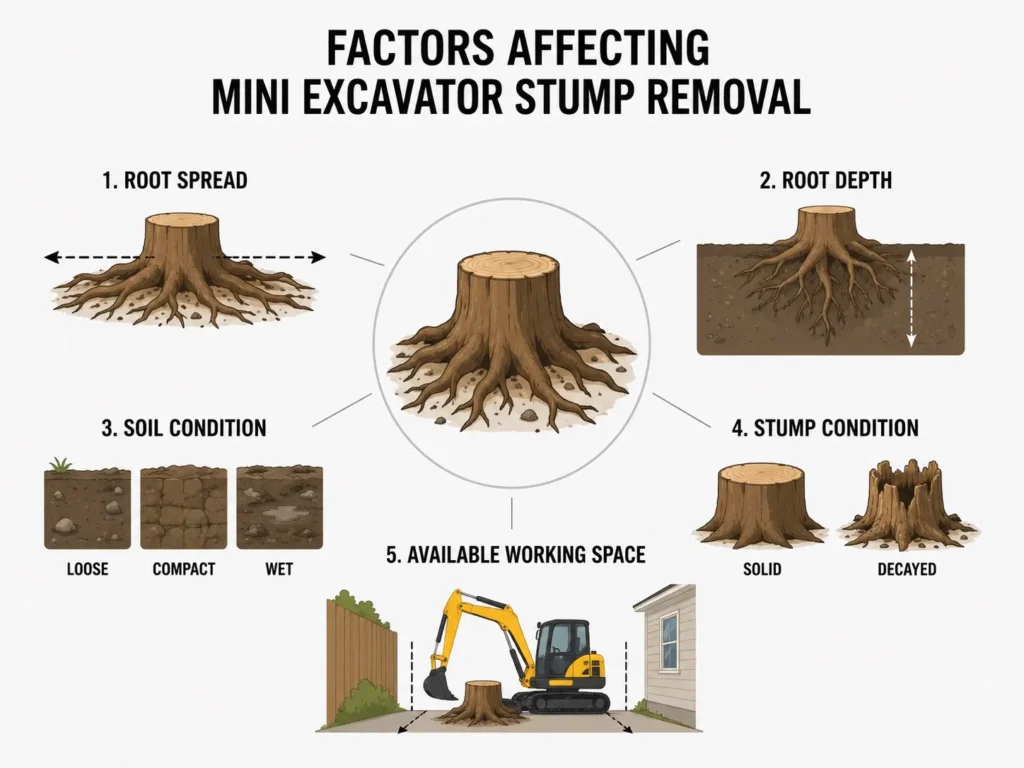
A ağaç kütüğü bir ağacın kesilmesi veya devrilmesinden sonra yer altında kalan gövdenin geri kalan kısmını ve kökleri içerir. Kökler yüzeyin altında büyük ölçüde sağlam kalabilir; bu nedenle, gözle görülebilen gövde, ortadan kaldırılması gereken malzemenin toplam miktarını tam olarak yansıtmaz.
Üreticiler genellikle çalışma ağırlığı, kazma kuvveti, kazma derinliği, makine genişliği, hidrolik sistem ve ataşman uyumluluğu gibi makine teknik özelliklerini yayınlar. Genellikle resmi bir maksimum kütük çapı değeri belirtmezler.
Bunun nedeni, kütüğün standart bir yük olmamasıdır. Direnci, yalnızca çapından hesaplanamaz.
Taze bir sert ağaç kütüğünün, toprağa sıkıca tutunan güçlü kökleri olabilir. Daha eski bir kütük ise kısmen çürümüş olabilir ve parçalanması daha kolay olabilir. Bazı ağaçlar yüzeye yakın geniş kökler oluşturur. Diğerlerinin ise gövdenin altında daha derine uzanan kökleri vardır.
Zemin de işi aynı derecede etkileyebilir. Gevşek toprak, köklerin etrafından daha kolay temizlenir. Kuru kil, kök topunu sıkıca tutabilir. Kayalık zemin, kepçenin hareketini kısıtlayabilir. Islak veya yumuşak zemin, çekiş gücünü azaltabilir ve makinenin dengesini bozabilir.
Çalışma alanı da önemlidir. Operatörün kütüğün çeşitli yönlerine erişmesi gerekebilir. Bir çit, duvar, sağlıklı bir ağaç, elektrik hattı veya düzenlenmiş bir bahçe, köklerin etrafında tam bir kazı yapılmasını engelleyebilir.
Bu nedenlerle, belirli bir ekskavatör tonajının her zaman belirli bir kütük çapını kaldırabileceğini iddia eden herhangi bir tablo yanıltıcı olacaktır. Makine boyutu seçimde yol gösterici olabilir, ancak sonucu garanti edemez.
Bir mini ekskavatör, ağaç kökü sökme işleri için ne zaman iyi bir seçimdir?
Bir proje hem kazı hem de malzeme taşıma gerektirdiğinde, mini ekskavatör pratik bir seçenektir.
Bu makine, kütüğün etrafındaki toprağı temizleyebilir, kökleri ortaya çıkarabilir, kök topunu gevşetebilir, serbest kalan kütüğü kaldırabilir veya yuvarlayabilir, çukuru tekrar doldurabilir ve yüzeyi düzleştirebilir. Bu özellikleri sayesinde, sadece kütük kaldırma işleminin ötesine geçen peyzaj projelerinde de kullanışlıdır.
Kompakt boyutları da bir başka avantajdır. Küçük bir makine, bahçelerde, avlularda, meyve bahçelerinde, çiftliklerde ve tam boy bir ekskavatörün giremediği alanlarda çalışabilir. Lastik paletler ayrıca kaldırımlara ve düzleştirilmiş zemine verilen hasarı azaltabilir; ancak operatör yine de makinenin ağırlığını ve zemin koşullarını göz önünde bulundurmalıdır.
Müşteri, ana kütüğü ve kök topunu zeminden kaldırılmasını istediğinde mini ekskavatör özellikle kullanışlıdır. Bu durum, arazinin yeniden ağaçlandırılması, tesviye edilmesi, drenajının yapılması, asfaltlanması veya başka bir yapı için hazırlanması gerektiğinde önem kazanabilir.
Ancak, mini ekskavatör her ağaç kökü için otomatik olarak en iyi seçenek değildir. Büyük veya olgun bir ağaç kökü, kompakt bir makinenin sağlayabileceğinden daha fazla güce ihtiyaç duyabilir. Dar bir şantiye alanında bom ve üst yapı için yeterli alan kalmayabilir. Temel, duvar, boru veya kablonun yakınındaki bir ağaç kökü de farklı bir yöntem gerektirebilir.
Asıl sorulması gereken soru sadece “Makine bu kütüğü kaldırabilir mi?” değildir. Alıcı, ekskavatörün kütüğe güvenli bir şekilde ulaşıp ulaşamayacağını, kökleri ortaya çıkarabileceğini, dengeli bir konumdan çalışabileceğini ve çıkarılan malzemeyi şantiyeden dışarı taşıyabileceğini de sormalıdır.
Doğru Mini Ekskavatörü Belirleyen Yedi Faktör
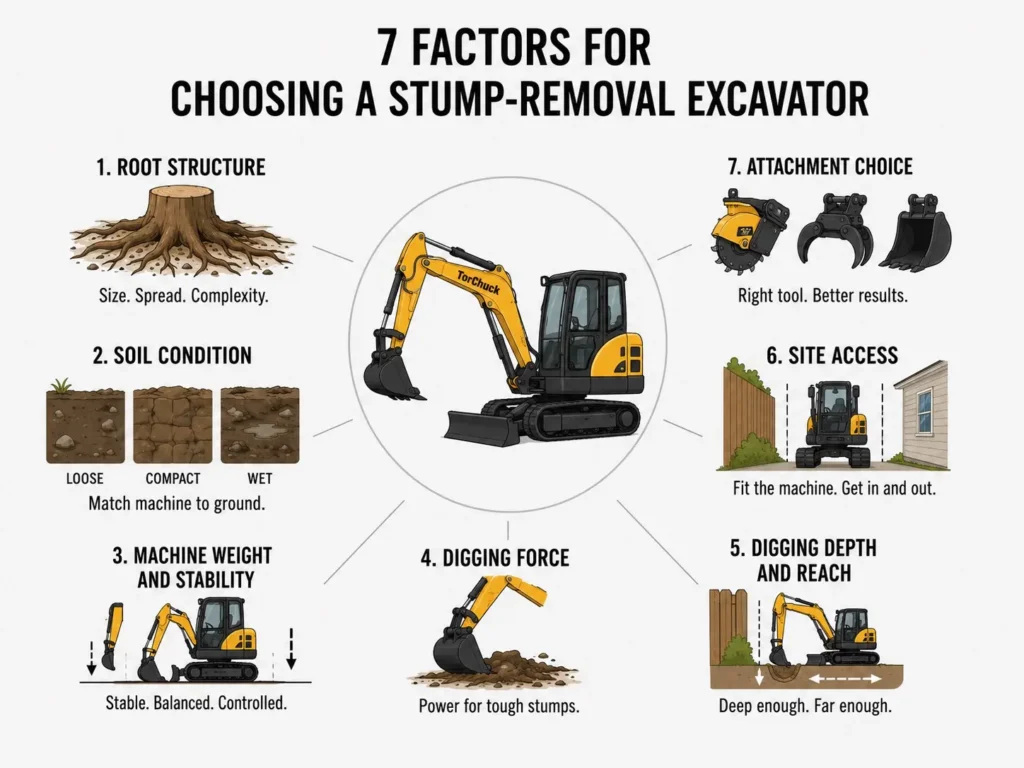
1. Kök Yapısı
Kökler, kütüğün sökülmesi sırasında karşılaşılan direncin büyük bir kısmını oluşturur.
Geniş bir yan kök ağı, geniş bir alanda kazı yapılmasını gerektirebilir. Daha derindeki kökler ise daha fazla kazı derinliği ve farklı konumlardan tekrarlanan çalışmalar gerektirebilir. Operatör, kütüğü hareket ettirmeye çalışmadan önce kök sisteminin yeterli bir kısmını ortaya çıkarmalı ve serbest bırakmalıdır.
Birkaç kök ortaya çıkarıldıktan sonra hala sağlam kalan bir ağaç kütüğü, genellikle alt kısmında veya karşı tarafında hâlâ bağlı kökler barındırır. Daha fazla kazı yapmadan daha fazla kuvvet uygulamak, sorunu çözmeden makineye binen yükü artırabilir.
2. Toprak Koşulları
Toprak, hem kazma direncini hem de makinenin dengesini etkiler.
Kök sisteminin çevresindeki gevşek toprak genellikle daha kolay bir şekilde temizlenebilir. Sıkışmış kil ise daha fazla kazma gücü gerektirebilir. Taşlar ve inşaat kalıntıları kepçeyi tıkayabilir veya kökleri gizleyebilir.
Yumuşak veya suyla doymuş zemin farklı bir sorun yaratır. Makine batabilir veya dengeli bir çalışma pozisyonunu kaybedebilir. Operatör, işe başlamadan önce zemin paspaslarına, daha iyi bir drenaj sistemine veya alternatif bir erişim yoluna ihtiyaç duyabilir.
3. Makinenin Ağırlığı ve Dengesi
Daha ağır bir mini ekskavatör, kepçe bir ağaç kütüğünün altında veya yanında çalışırken genellikle daha sağlam bir temel sağlar. Ayrıca daha büyük ataşmanları da destekleyebilir.
Makinenin ağırlığı yine de kullanım alanına uygun olmalıdır. Daha ağır bir model, yumuşak çimlere zarar verebilir, daha büyük bir römork gerektirebilir veya dar bir kapıdan geçemeyebilir.
Alıcılar, Torchuck rehberinde kompakt ağırlık sınıfları arasındaki temel farklılıkları karşılaştırabilirler: 0,8 ton, 1,5 ton ve 2 tonluk mini ekskavatörler.
4. Kazma Gücü
Kazma kuvveti, kepçenin veya riperin sert toprağa ne kadar iyi girebileceğini ve köklerin etrafında ne kadar etkili çalışabileceğini etkiler.
Daha yüksek bir değer, zorlu zemin koşullarında yardımcı olabilir, ancak bu, kütüğün çıkarılmasına ilişkin doğrudan bir ölçüt değildir. Operatörün yine de doğru ataşmana, dengeli bir konumlandırmaya ve kütüğün çevresinde yeterli erişim alanına ihtiyacı vardır.
Makine, kullanım kılavuzunda belirtilen sınırlar dahilinde çalıştırılmalıdır. Köklerin çevresinde düzgün bir kazı çalışmasının yerine ani çekme, sarsma veya darbe uygulamaları yapılmamalıdır.
5. Kazma Derinliği ve Uzanma Mesafesi
Makinenin, sabit bir konumda kalarak kök bölgesinin altına ulaşabilmesi için yeterli çalışma alanına ihtiyacı vardır.
Maksimum kazma derinliği, makineleri karşılaştırırken faydalı bir kriterdir; ancak ekskavatör, çalışma aralığının her noktasında aynı kaldırma kuvveti ve kepçe hareketine sahip değildir. Alıcılar, yalnızca maksimum sınırında gerekli noktaya ulaşan bir makine seçmek yerine, normal kepçe hareketi için yeterli kapasiteye yer ayırmalıdır.
Torchuck kılavuzunda bu konuyla ilgili daha fazla bilgiye ulaşabilirsiniz: mini ekskavatörün maksimum kazma derinliği.
6. Siteye Erişim
Bir makine, kütüğe ulaşamazsa işi tamamlayamaz.
Alıcı, kapıyı, yolu, dönüş alanını, tavan yüksekliğini ve çalışma alanını ölçmelidir. Bıçak veya ataşman, paletlerden daha geniş olabilir. Dar bir makine kapıdan geçebilse de avlu içinde dönmek için yeterli alana sahip olmayabilir.
Şantiye fotoğrafları, genellikle tek bir kapı ölçümünden daha yararlıdır. Bu fotoğraflar, erişimi etkileyebilecek eğimleri, döşemeleri, duvarları, ağaçları, basamakları ve engelleri gösterir.
7. Ek Seçimi
Standart bir kepçe, kökleri ortaya çıkarabilir ve toprağı kaldırabilir. Bir riper, sıkışmış zeminde çalışabilir ve gücü tek tek köklerin çevresine yoğunlaştırabilir. Bir kıskaç veya hidrolik parmak, kütük serbest bırakıldıktan sonra kontrol edilmesine yardımcı olabilir.
The correct setup may use more than one attachment. A quick hitch can reduce the time needed to switch between tools.
Which Attachments Are Useful for Stump Removal?
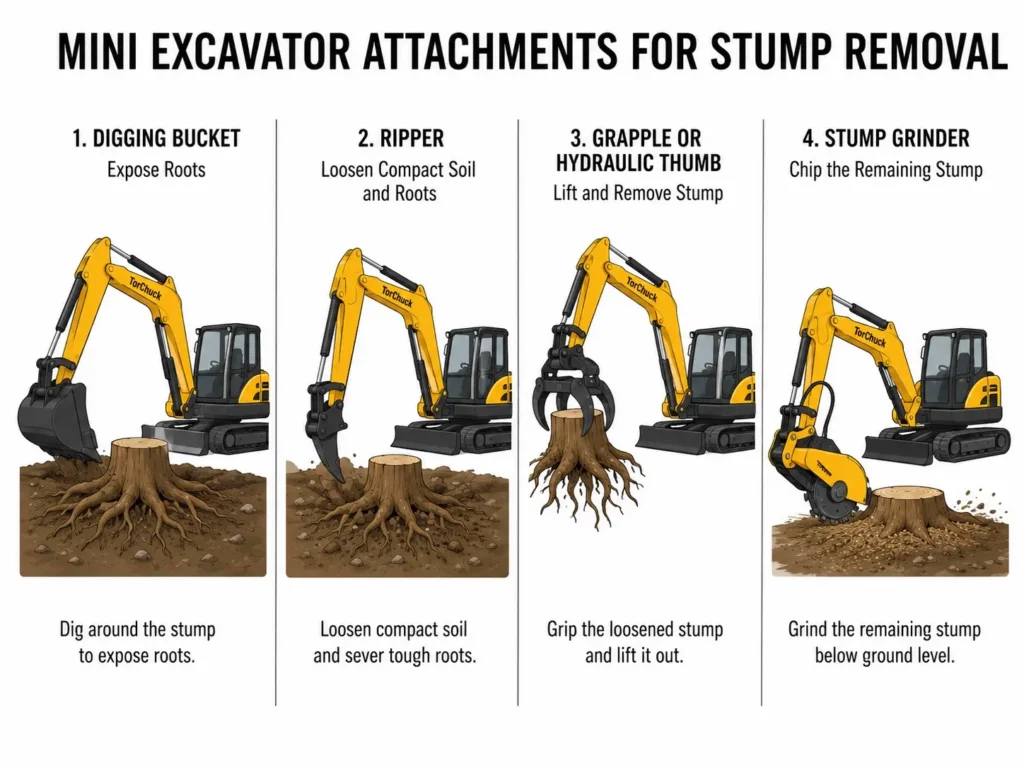
Torchuck offers buckets, rippers, grapples, hydraulic thumbs, augers, breakers, and other mini ekskavatör ataşmanları. The best attachment depends on the stage of the work and the selected machine.
Digging Bucket
The digging bucket is normally the main tool for opening the ground and exposing the root system.
A narrower bucket can work between roots and concentrate the machine’s digging force. It also limits the amount of soil removed from a finished garden. A wider bucket clears loose soil more quickly but may place more load on a small machine.
The bucket size must match the excavator. A larger bucket does not always improve productivity, especially in hard soil.
Ripper
A ripper has a narrow tooth that concentrates force in a small area. It can loosen compacted ground and work around roots that are difficult to approach with a wide bucket.
The ripper is not a replacement for the bucket. It does not clear loose soil as efficiently. Many stump-removal jobs use the bucket to expose the roots and the ripper to loosen the harder areas.
Grapple or Hydraulic Thumb
A grapple or hydraulic thumb helps control irregular wood after the stump has become loose.
It can hold, rotate, and move the stump more securely than an open bucket. It is also useful for handling loose roots, branches, and debris during cleanup.
The stump may carry a large amount of soil between its roots. That soil adds weight. The operator should remove loose material before moving the stump and keep the load low during travel.
Güdük Öğütücü
A stump grinder uses a rotating cutting disc to chip away the wood. It removes the stump in a different way from an excavator, which normally exposes and releases the root ball.
Torchuck’s accessories range also includes a hydraulic stump grinder. Compatibility must be confirmed against the host machine, hydraulic flow, pressure, connection type, and working weight before purchase.
How Is a Tree Stump Removed with a Mini Excavator?
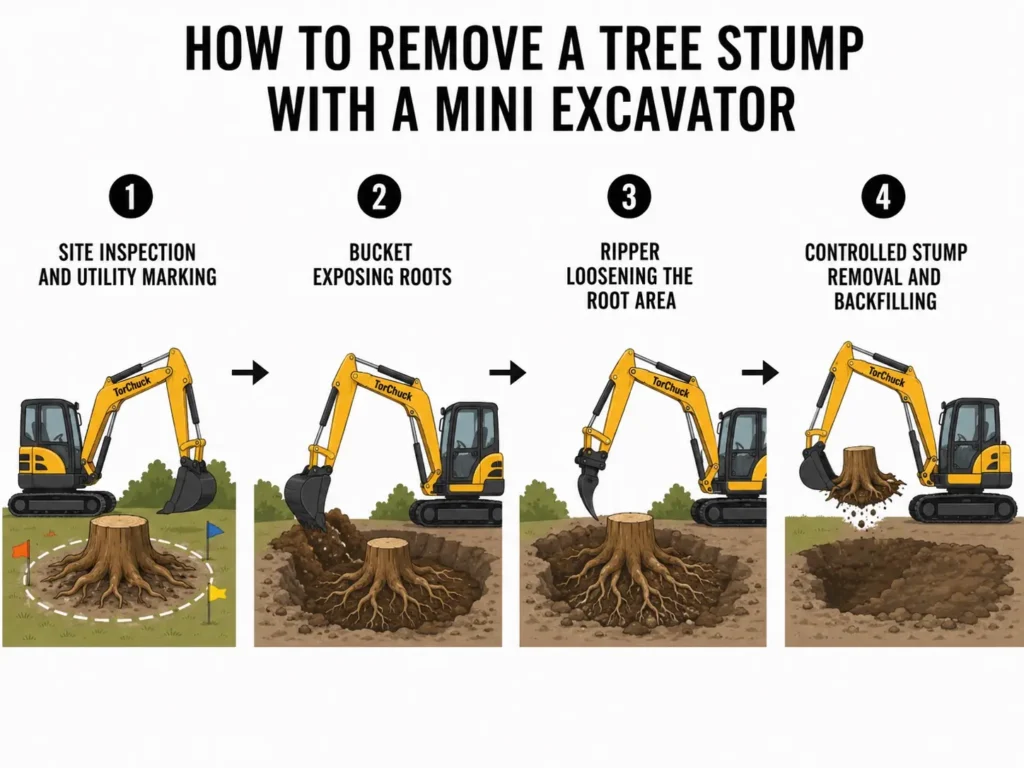
The work should begin with a site inspection. The operator needs to check the access route, machine position, nearby structures, overhead obstacles, and the area available for removed soil and wood.
Underground utilities must be addressed before excavation begins. OSHA requires the expected locations of sewer, telephone, fuel, electric, water, and other underground installations to be determined before an excavation is opened. Utility companies or owners should also be contacted under the applicable local process. Buyers outside the United States should follow the equivalent rules in their country.
The operator then clears enough soil to identify the main roots. The goal is to reduce the resistance around the root ball, not to pull against an unseen root system.
The excavator may need to work from several sides. The bucket removes soil and creates working space. A ripper may help where the ground is compacted or where a root is difficult to reach with the bucket.
The operator should test the stump with controlled movement after the main roots have been loosened. If the stump remains fixed, the work should return to excavation. More roots or soil still need to be released.
Once the stump moves freely, the bucket, grapple, or thumb can roll or lift it from the hole. The load should stay low and close to the machine. No person should stand below or close to a suspended stump or other material handled by the excavator. OSHA prohibits employees from standing beneath loads handled by lifting or digging equipment.
The final work includes removing loose roots, backfilling the hole, and grading the ground. The required finish will depend on whether the site will be planted, paved, drained, or used for construction.
How to Choose a Torchuck Mini Excavator for the Job
The safest way to choose a model is to compare verified machine specifications with the actual site. Torchuck does not assign a guaranteed stump diameter to its excavators because the stump and ground conditions can vary too much.
Torchuck 10Q
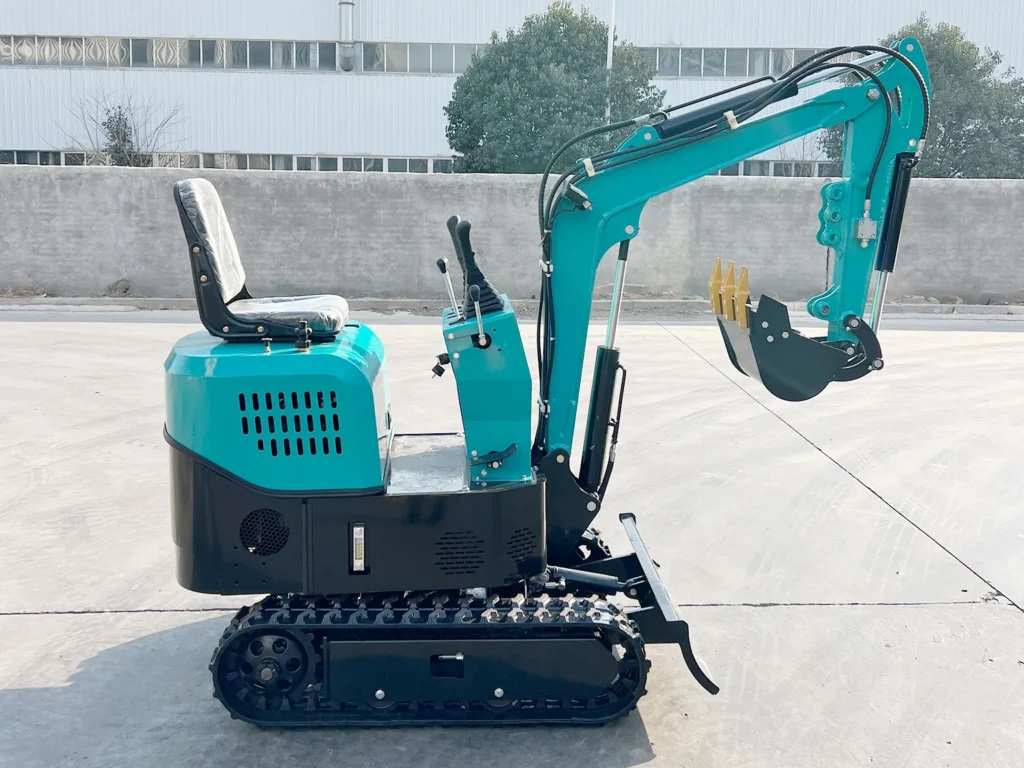
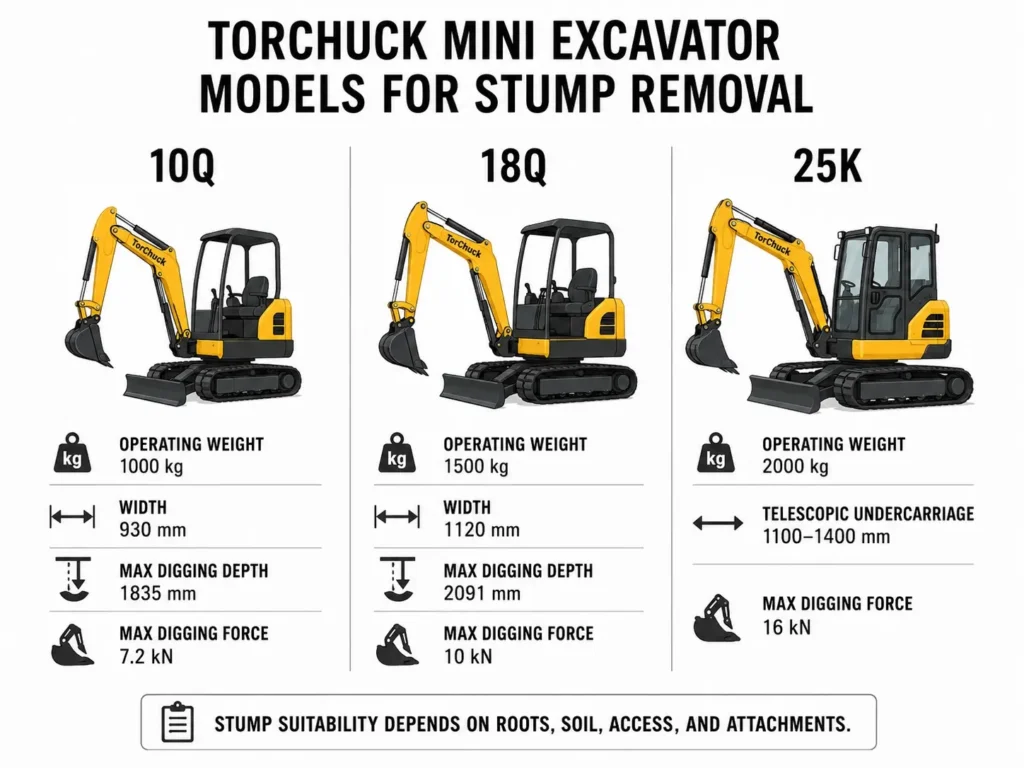
Bu Torchuck 10Q Mini Ekskavatör has an operating weight of 1,000 kg, a total width of 930 mm, a maximum digging depth of 1,835 mm, and a listed maximum digging force of 7.2 kN. It can work with a bucket, auger, breaker, ripper, rake, and other compatible attachments.
Its main advantage is access. The narrow body suits small yards, garden gates, farms, and residential landscaping areas. It is more appropriate when compact dimensions are essential and the stump-removal work is not the machine’s only task.
The specifications do not prove that the 10Q can remove a particular stump diameter. The final choice still depends on root structure, soil, working space, and the attachment.
Torchuck 18Q
The Torchuck 18Q has an operating weight of 1,500 kg, a total width of 1,120 mm, a maximum digging depth of 2,091 mm, and a listed maximum digging force of 10 kN. Its quick-coupler interface can work with augers, rippers, rakes, thumbs, breakers, and other tools.
Compared with the 10Q, the 18Q provides more operating weight and digging force. It can be considered for buyers who carry out regular landscaping and need more capability while keeping the machine compact.
Site access must still be checked because the wider body may not pass through every garden gate.
Torchuck 25K
Bu Torchuck 25K Mini Ekskavatör has an operating weight of 2,000 kg and a listed maximum digging force of 16 kN. Its telescopic undercarriage adjusts from 1,100 mm to 1,400 mm. The machine also supports attachments such as augers, hammers, and grapples.
The narrower undercarriage setting helps with access. The expanded setting provides a wider working stance. This configuration can suit contractors who need more stability and digging force for demanding soil and root conditions.
The 25K still has no official maximum stump diameter. The higher specifications only show that it offers more machine capability than the lighter models.
Mini Excavator or Stump Grinder: Which Is Better?
The correct method depends on what the customer wants to achieve after the stump is gone.
An excavator is useful when the project requires the stump and root ball to be dug out and removed. The same machine can also handle soil, roots, backfill, grading, drainage, and other landscaping work.
A stump grinder chips the wood instead of lifting the complete stump. It may be more suitable when the customer wants less excavation around the surrounding ground or when the site has limited room for a large hole.
A grinder can also be useful near finished landscaping, but underground services still need to be located before work begins. The cutting tool can extend below the visible surface.
The final ground use should guide the decision. A new planting area, foundation, drainage line, or paved surface may need more root material removed. A lawn repair may not require the same level of excavation.
Some contractors use both methods. The excavator opens the area and handles soil or larger roots, while the grinder reduces wood that is difficult to remove as one piece.
What Information Should You Send to Torchuck?
A clear model recommendation needs more than a stump diameter.
Send several photos of the stump and the surrounding site. Include a close view of the trunk and a wider view showing the available working space. Measure the narrowest entrance and note any walls, slopes, paving, steps, or overhead obstacles.
Describe the soil if possible. Tell the Torchuck team whether it is loose soil, clay, wet ground, or rocky material. Also explain whether the stump is fresh, decayed, or already partly exposed.
The sales team will also need to know how often the machine will remove stumps. A landscaper who handles occasional small jobs may need a different configuration from a contractor who carries out regular land clearing.
Include the required attachments, destination country, engine or emission requirements, and transport limits. Torchuck can then compare the site with the machine dimensions, digging force, working range, undercarriage, and attachment compatibility.
Sık Sorulan Sorular
Can a 1-Ton Mini Excavator Remove a Tree Stump?
A 1-ton mini excavator can remove some stumps, but there is no reliable universal diameter limit. The result depends on the roots, soil, stump condition, access, digging force, and attachment.
The Torchuck 10Q provides a compact 930 mm width and a listed maximum digging force of 7.2 kN. Buyers should send site details before treating it as suitable for a specific stump.
What Size Mini Excavator Do I Need for Stump Removal?
Choose the machine from the whole job, not the visible trunk alone. Check root structure, soil, access, machine stability, digging force, reach, attachments, and transport.
A heavier machine may provide more capability, but it may also be too wide or heavy for the site.
Is a Ripper Better Than a Bucket?
The two attachments perform different tasks. A bucket is better for removing soil and exposing roots. A ripper concentrates force in a narrower area and can help loosen compacted ground around difficult roots.
Many projects use both tools.
Can an Excavator Pull Out a Stump Without Digging?
A loose, decayed, or already exposed stump may move with limited digging. However, pulling against an unknown root system can place unnecessary stress on the boom, cylinders, pins, and attachment.
The more controlled method is to expose and loosen the root system first.
Does More Digging Force Guarantee Stump Removal?
No. Higher digging force can improve performance in difficult ground, but it does not guarantee removal. Machine stability, root direction, soil, access, attachment choice, and operator technique also matter.
Should I Use an Excavator or a Stump Grinder?
Use an excavator when the project needs excavation, root-ball removal, soil handling, backfilling, or grading. Consider a stump grinder when the main task is to chip the stump with less excavation around the surrounding surface.
Can Torchuck Guarantee the Maximum Stump Diameter?
No fixed diameter should be guaranteed without assessing the site. Torchuck can recommend a machine from verified specifications and the information supplied by the customer, but actual performance depends on the stump and working conditions.
Sonuç
A mini excavator can remove many tree stumps, but stump diameter alone cannot determine the correct machine. Root structure, soil, stump condition, access, operating weight, digging force, reach, stability, and attachments all affect the job. These factors explain why reliable manufacturers publish machine specifications rather than a universal stump-diameter rating.
A compact model such as the Torchuck 10Q offers narrow access. The 18Q provides more weight and digging force. The 25K adds a telescopic undercarriage and higher listed digging force. None of these specifications should be converted into an unsupported stump-size guarantee.
Torchuck Ağır Makine Ltd. Şti. can compare the actual stump and site with verified product data. Send the stump photos, entrance width, soil condition, required attachments, destination, and expected working frequency. Torchuck will recommend a suitable configuration and provide a clear quotation.