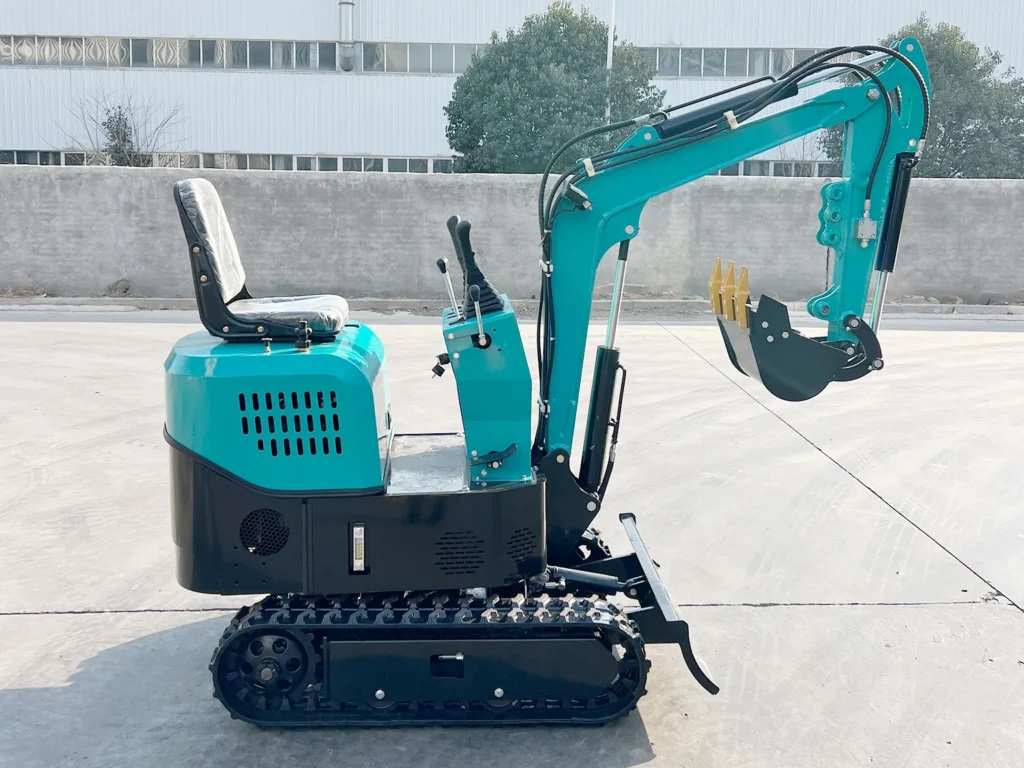
Lebar gerbang untuk ekskavator mini biasanya berkisar antara sekitar 700 mm hingga 1.500 mm, tergantung pada kelas mesin dan desain rangka bawahnya. Model kompak dengan lebar antara sekitar 700 mm dan 1.000 mm dapat melewati banyak gerbang taman dan pintu masuk halaman belakang. Kesesuaian yang tepat bergantung pada lebar bukaan gerbang dan bagian terlebar dari mesin tersebut.
Lebar ekskavator mikro bisa kurang dari 800 mm, sehingga alat ini dapat masuk ke area yang sangat sempit. Excavator mini berkapasitas 1 ton biasanya memiliki lebar sekitar 900 mm hingga 1.000 mm. Mesin ini menawarkan kemampuan penggalian yang lebih baik sekaligus tetap cukup ringkas untuk melewati banyak pintu masuk perumahan. Sebagian besar mesin berkapasitas 1,5 ton dan 2 ton memerlukan gerbang yang lebih lebar.
Berat operasional saja tidak cukup untuk menentukan apakah suatu alat berat akan muat. Dua ekskavator mini dalam kelas berat yang sama mungkin memiliki dimensi yang berbeda. Bilah dozer mungkin lebih lebar daripada treknya. Kaca spion, panel kontrol, selang hidrolik, dan alat tambahan mungkin juga memerlukan ruang kosong tambahan.
Torchuck Heavy Machinery Co., Ltd. menyediakan ekskavator mini untuk pekerjaan di area dengan akses terbatas, penataan lanskap, penggalian parit, pertanian, armada penyewaan, dan proyek konstruksi skala kecil. Tergantung pada modelnya, pembeli dapat memilih bodi kompak, rangka bawah yang dapat diperluas, ayunan boom, berbagai sistem track, serta beberapa pilihan alat tambahan.
Panduan ini menjelaskan cara mengukur pintu masuk, menentukan lebar mesin yang sebenarnya, dan memilih ekskavator mini Torchuck untuk lokasi kerja yang sempit.
Mini ekskavator mana yang bisa melewati gerbang?
Sebuah mini ekskavator yang ramping dapat melewati sebuah gerbang jika lebar luar maksimumnya lebih kecil daripada lebar bukaan gerbang.
Pintu harus diukur pada bagian tersempitnya. Mesin tersebut juga memerlukan ruang kosong di kedua sisinya. Model yang lebarnya hanya beberapa milimeter lebih sempit daripada bukaan mungkin masih sesuai dengan spesifikasi, tetapi tetap sulit untuk diarahkan melewatinya dengan aman.
Untuk akses yang sangat terbatas, ekskavator mini dengan lebar sekitar 700 mm hingga 800 mm sering kali menjadi pilihan awal yang paling tepat. Alat berat dalam kelas ini umumnya digunakan di taman, halaman kecil, area renovasi, dan ruang sempit di antara bangunan.
Mini ekskavator berkapasitas 1 ton dengan lebar sekitar 900 mm hingga 1.000 mm mampu menangani pekerjaan yang lebih berat sekaligus tetap ringkas. Ukuran ini sering kali cocok untuk sistem drainase perumahan, penataan taman, pemasangan pagar, irigasi, dan pekerjaan konstruksi ringan.
The Torchuck Excavator Mini 10Q Memiliki lebar total tercantum sebesar 930 mm. Alat ini dirancang untuk gerbang sempit, halaman kecil, pekerjaan pertanian, penataan taman, dan perbaikan jalan. Lebar bukaan harus lebih dari 930 mm. Pengguna juga harus menyediakan ruang kosong yang cukup di kedua sisi untuk memastikan pergerakan yang terkendali.
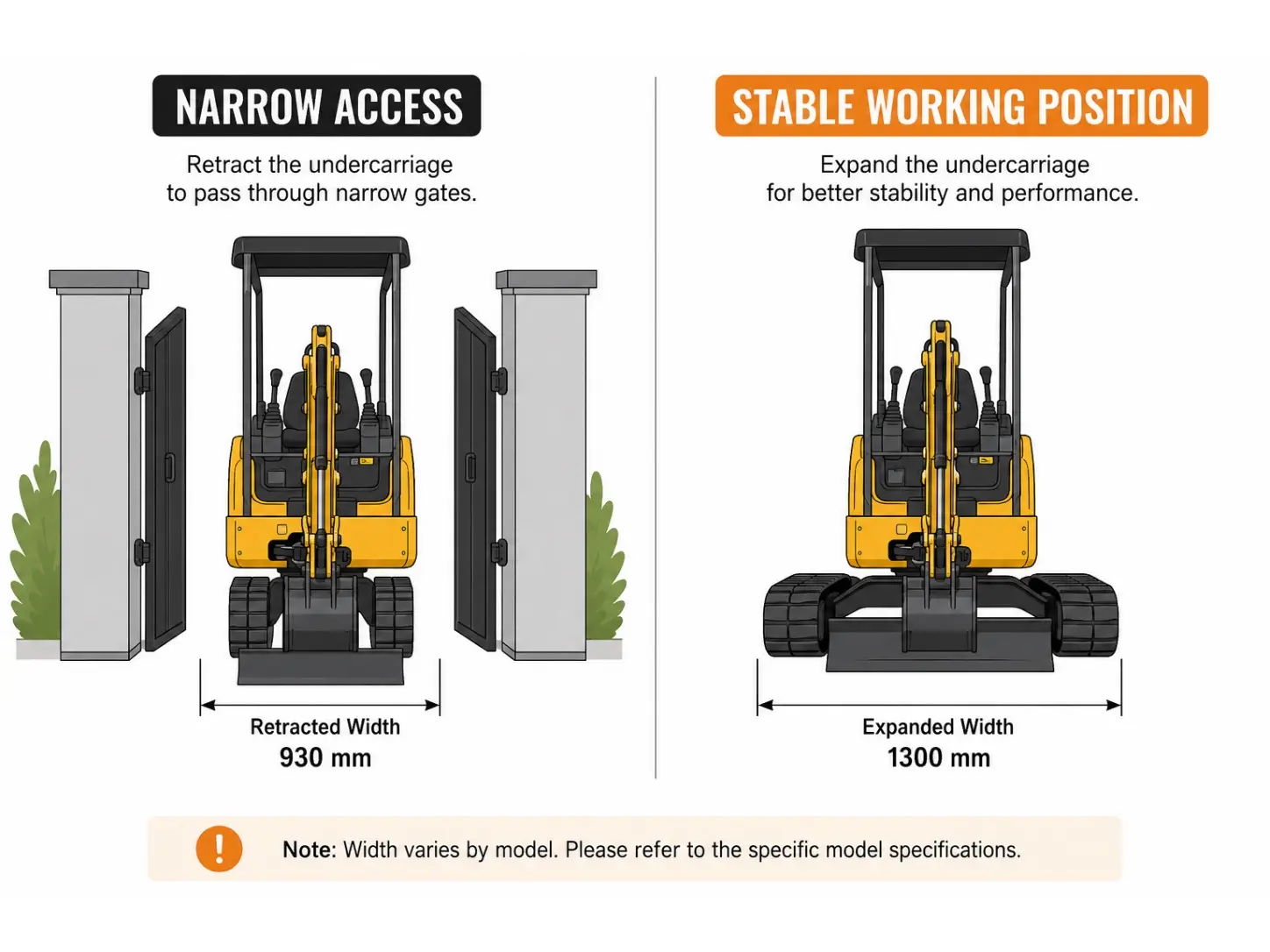
Beberapa ekskavator mini menggunakan rangka bawah yang dapat diperpanjang. Operator akan menarik kembali rantai traksi sebelum memasuki lokasi dan memperpanjangnya setelah tiba di area kerja. Desain ini memungkinkan akses melalui jalur yang sempit tanpa mengorbankan jarak antar roda yang lebih lebar yang diperlukan untuk penggalian yang stabil.
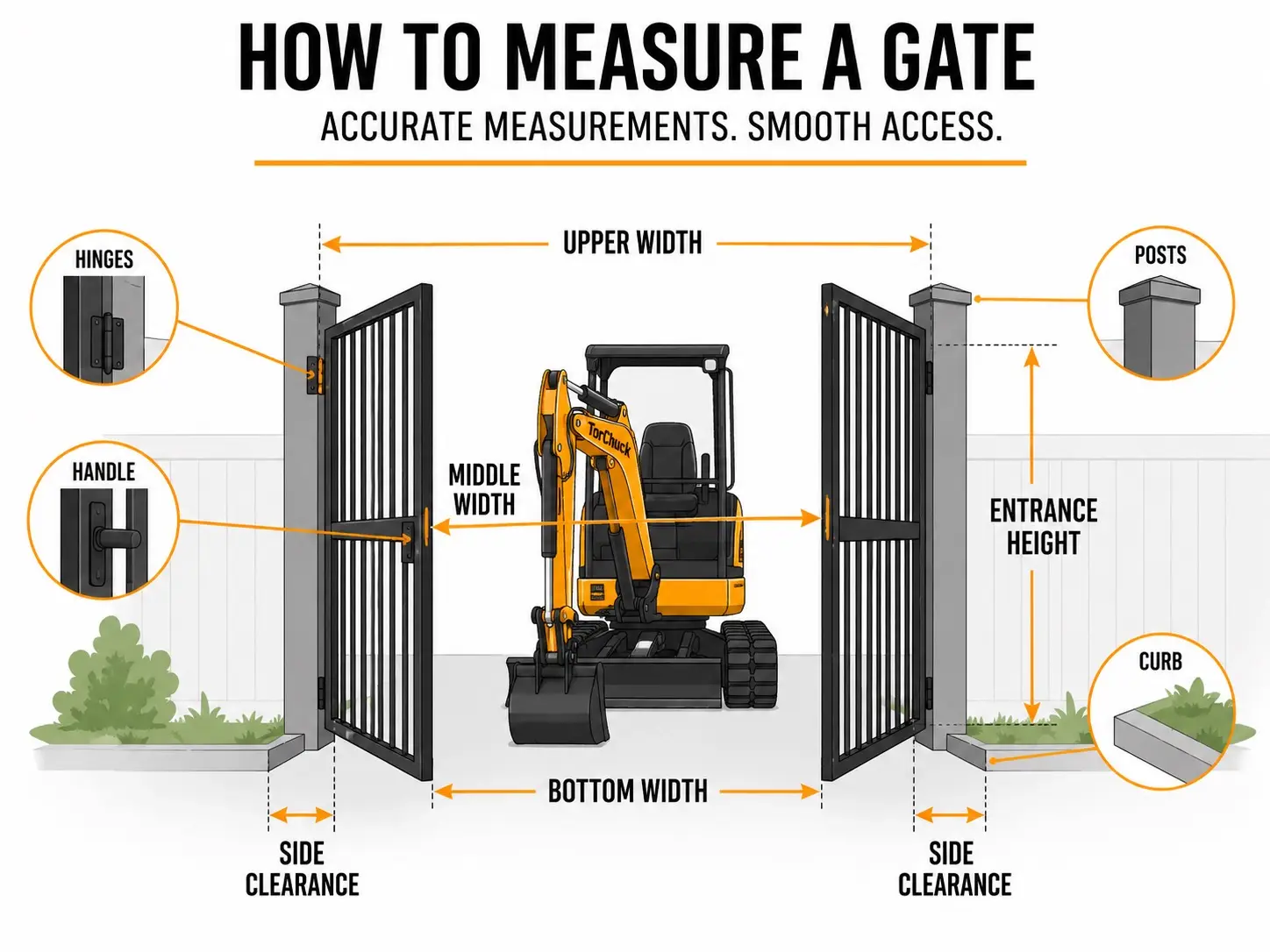
Ukur Lebar Bukaan Gerbang yang Kosong Terlebih Dahulu
Ukuran gerbang yang tertera dalam iklan mungkin tidak sesuai dengan lebar bukaan yang sebenarnya dapat digunakan. Engsel, tiang, pegangan, pengunci, dan dinding yang tidak rata semuanya dapat mengurangi ruang yang tersedia.
Buka gerbang sepenuhnya sebelum melakukan pengukuran apa pun. Ukur jarak antara dua titik tetap yang paling berdekatan. Jangan mengukur dari tepi luar salah satu tiang ke tepi luar tiang lainnya karena mesin tidak dapat memanfaatkan jarak penuh tersebut.
Lakukan pengukuran di bagian bawah, tengah, dan atas bukaan. Pengukuran bagian bawah harus mencakup trotoar, batu, akar yang menonjol, dan jarak bebas rel. Pengukuran bagian tengah harus memperhitungkan engsel, pengunci, pegangan, dan tepi dinding. Pengukuran bagian atas harus mencakup kanopi, kaca spion, lampu, dahan, kabel, atau rangka gerbang.
Anda juga sebaiknya memeriksa permukaan tanah. Kemiringan tanah dapat menyebabkan bagian atas kendaraan condong ke salah satu sisi. Trotoar yang menonjol dapat membuat rel melenceng dari tengah bukaan. Tanah yang lunak dapat menyebabkan salah satu rel tenggelam. Kondisi-kondisi tersebut dapat mengurangi jarak bebas yang sebenarnya tersedia bagi operator.
| Pengukuran | Hal-hal yang Perlu Diperiksa |
|---|---|
| Lebar bagian bawah | Tiang, tepi jalan, batu, akar pohon, dan jarak bebas jalur |
| Lebar sedang | Engsel, pengunci, pegangan, dan tepi dinding |
| Lebar bagian atas | Kanopi, kaca spion, lampu, dan struktur di atas kepala |
| Tinggi pintu masuk | Rangka gerbang, atap, cabang-cabang, dan kabel |
| Kondisi tanah | Lereng, tanah lunak, anak tangga, dan permukaan jalan yang tidak rata |
| Ruang di belakang gerbang | Ruang putar serta ruang gerak untuk boom dan bilah |
Berikan jarak aman yang memadai di kedua sisi. Jarak yang lebih luas ini memungkinkan operator memiliki kendali yang lebih baik dan mengurangi risiko kerusakan pada mesin, gerbang, atau dinding di sekitarnya.
Beberapa sentimeter saja sudah bisa menentukan apakah mesin dapat masuk dengan lancar. Pengukuran yang akurat jauh lebih berguna daripada perkiraan secara kasat mata atau ukuran gerbang yang diambil dari gambar lama.
Periksa Bagian Terlebar dari Ekskavator Mini
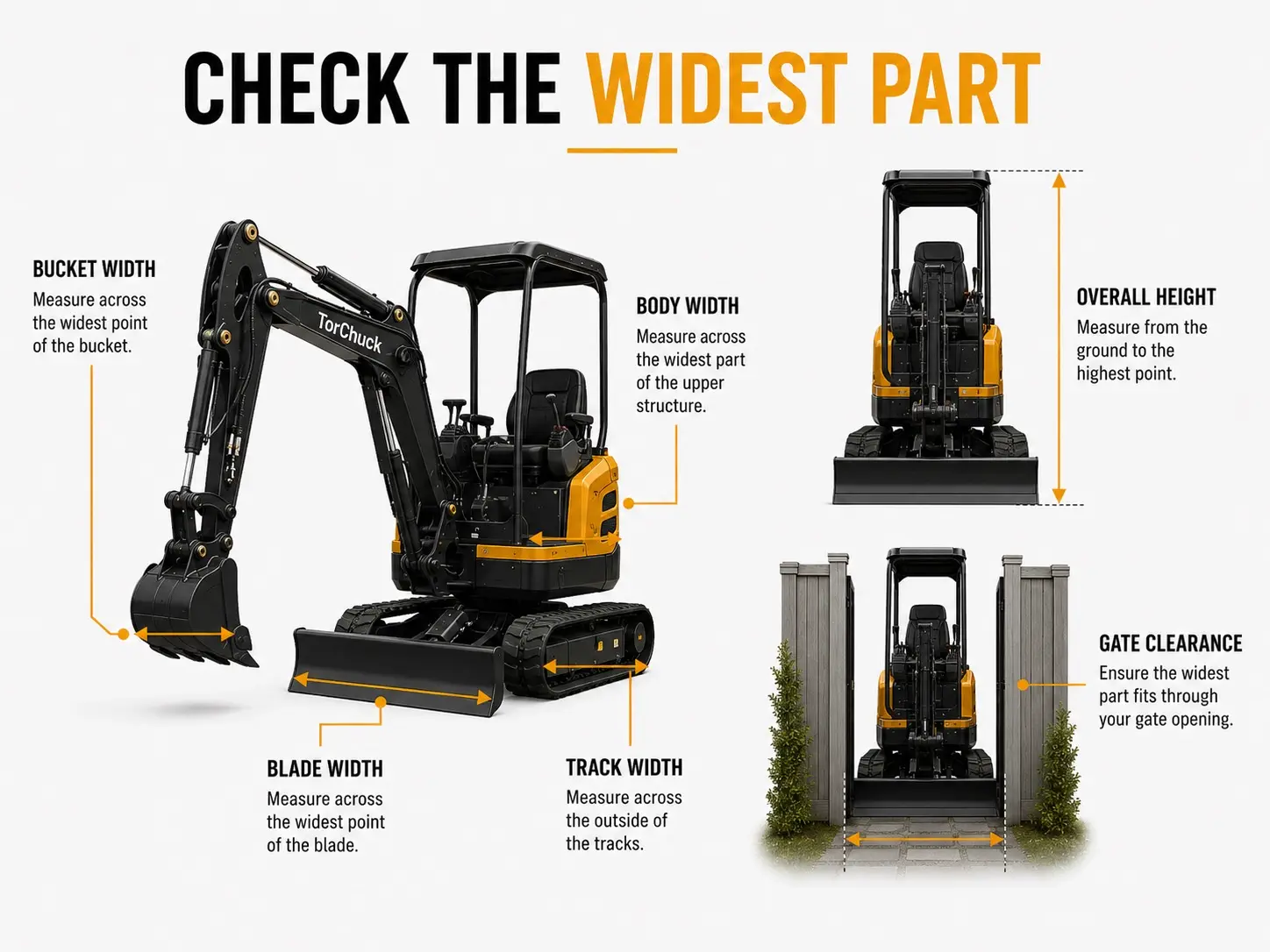
Lebar rel tidak selalu sama dengan lebar keseluruhan mesin.
Sebuah eksavator terdiri dari rangka bawah, struktur atas yang dapat berputar, boom, lengan, dan ember. Beberapa bagian dari struktur ini mungkin memengaruhi jarak bebas yang diperlukan saat melewati pintu masuk yang sempit.
Pada beberapa ekskavator mini, bilah dozer merupakan komponen terlebar. Ada bilah yang dapat dilipat atau ditarik masuk, sementara yang lain tetap terpasang secara permanen. Struktur atas juga mungkin menjulur melampaui rel. Penyeimbang, tuas pengendali, panel samping, kaca spion, atau komponen hidraulik dapat menambah lebar total.
Alat tambahan dapat menimbulkan masalah lain. Sebuah bucket penggalian standar mungkin dapat melewati bukaan tersebut tanpa kesulitan, tetapi bucket perata atau bucket lumpur bisa jauh lebih lebar daripada rangka bawah. Sebuah auger, grapple, atau jari hidrolik mungkin juga memerlukan ruang yang lebih luas di sekitar lengan.
Sebelum melakukan pemesanan, pastikan lebar keseluruhan mesin dan tanyakan apakah ukuran tersebut didasarkan pada trek, pisau, atau bagian atas mesin. Anda juga sebaiknya memeriksa lebar trek saat ditarik dan saat diperluas, tinggi keseluruhan, lebar ember, serta radius ayunan bagian belakang.
Lembar spesifikasi akhir harus dijadikan acuan utama. Tetaplah berguna untuk menanyakan apakah bilahnya dapat dilipat dan apakah alat tambahan yang lebar dapat dilepas sebelum mesin dibawa ke lokasi.
Lebar Umum Ekskavator Mini untuk Akses Gerbang
Persyaratan lebar gerbang untuk ekskavator mini bervariasi tergantung pada model dan konfigurasinya. Kisaran berikut ini dapat dijadikan acuan awal yang praktis.
| Kelas Ekskavator Mini | Rentang Lebar Umum | Akses Gerbang |
| Ekskavator mini | Sekitar 700–800 mm | Cocok untuk gerbang taman yang sangat sempit dan lorong-lorong yang sempit |
| Model ringkas berkapasitas 1 ton | Sekitar 850–1.000 mm | Cocok untuk berbagai jenis gerbang rumah dan pintu masuk halaman belakang |
| Model 1,2–1,5 ton | Sekitar 900–1.200 mm | Mungkin cocok untuk gerbang tunggal yang lebih lebar atau aplikasi rel yang dapat ditarik |
| Model 1,8–2,5 ton | Sekitar 1.000–1.500 mm | Biasanya membutuhkan gerbang lebar, gerbang ganda, atau akses terbuka |
| Model kompak yang lebih besar | Lebih dari 1.500 mm | Biasanya memerlukan akses ke lokasi pembangunan, bukan gerbang taman |
Angka-angka ini merupakan kisaran umum, bukan aturan baku. Beberapa model yang lebih berat menggunakan sasis yang dapat ditarik masuk dan berukuran sempit. Beberapa mesin yang lebih ringan memiliki bilah tetap yang lebar.
Selalu bandingkan spesifikasi mesin yang tepat dengan ukuran pintu masuk yang tepat. Adanya mesin lain dengan berat serupa yang berhasil melewati gerbang di dekatnya tidak menjamin bahwa model yang Anda pilih juga akan muat.
Panduan kami mengenai Mini ekskavator 0,8 vs 1,5 vs 2 ton menjelaskan bagaimana kelas beban yang berbeda memengaruhi akses, kapasitas penggalian, pengangkutan, dan aplikasi umum.
Mengapa Rangka Bawah yang Dapat Diperluas Bermanfaat
Sistem roda bawah yang dapat diperpanjang memungkinkan operator untuk mengubah jarak antar rel.
Roda rantai akan ditarik masuk saat alat berat perlu melewati pintu masuk yang sempit. Begitu ekskavator tiba di area kerja, operator akan mengembalikannya ke posisi semula. Posisi yang lebih lebar ini menciptakan dasar penyangga yang lebih luas dan meningkatkan stabilitas.
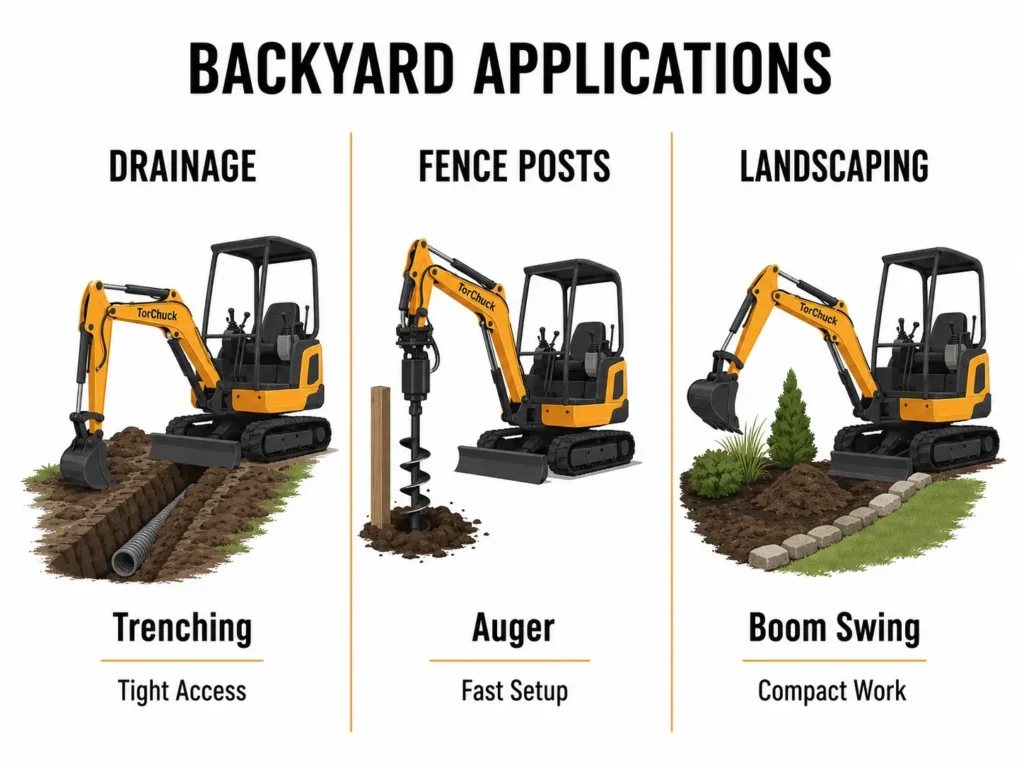
Fitur ini berguna untuk penataan lanskap halaman belakang, sistem drainase perumahan, pekerjaan di sekitar bangunan, pembangunan dinding taman, jalan setapak pertanian yang sempit, serta armada sewa yang melayani berbagai jenis lokasi proyek.
Posisi ditarik ini terutama dirancang untuk memudahkan akses. Posisi ini mungkin tidak memberikan posisi kerja yang optimal saat boom diperpanjang atau beroperasi ke samping. Roda rantai sebaiknya dibuka terlebih dahulu sebelum melakukan penggalian rutin, asalkan lokasi kerja menyediakan ruang yang cukup.
Desain pisau juga harus sesuai dengan perubahan lebar trek. Beberapa mesin menggunakan bagian pisau yang dapat dilipat, yang bergerak ke dalam saat perlu akses dan ke luar saat bekerja. Tanpa fitur ini, pisau mungkin tetap lebih lebar daripada trek yang ditarik masuk.
Torchuck menawarkan konfigurasi ekskavator mini dengan track yang dapat diperpanjang dan ayunan boom. Fitur-fitur yang tersedia bergantung pada model yang dipilih dan spesifikasi akhir. Pembeli disarankan untuk memastikan baik lebar akses yang sempit maupun lebar kerja yang diperluas sebelum melakukan pemesanan.
Mengapa Ayunan Boom Penting di Halaman Belakang
Melewati gerbang hanya menyelesaikan masalah akses yang pertama. Mesin tersebut masih membutuhkan ruang yang cukup untuk beroperasi setelah memasuki halaman.
Bumper ekskavator standar umumnya beroperasi sepanjang garis tengah mesin. Sistem ayunan bumper memungkinkan bumper bergerak ke kiri atau ke kanan. Gerakan ini memudahkan operator untuk menggali di samping pagar, dinding, pondasi, atau struktur taman tanpa harus menempatkan seluruh mesin tepat di depan parit.
Gerakan ayunan boom juga mengurangi kebutuhan untuk mengubah posisi secara berlebihan. Keunggulan ini sangat penting di halaman yang sempit karena operator mungkin tidak memiliki ruang yang cukup untuk memutar roda rantai beberapa kali.
Ayunan ekor juga perlu mendapat perhatian yang sama. Bagian belakang struktur atas akan bergerak saat alat berat berputar. Penyeimbang yang besar dapat menabrak dinding atau pagar. Desain ekor pendek atau tanpa ekor memang membutuhkan ruang yang lebih sedikit di belakang ekskavator, namun tetap memerlukan area kerja yang bebas hambatan.
Lebar alat berat, jangkauan ayunan boom, jangkauan ayunan bagian belakang, dan jangkauan kerja harus dipertimbangkan secara bersamaan. Sebuah ekskavator mini yang dapat melewati pintu masuk mungkin tetap tidak cocok jika tidak dapat berputar atau mengatur posisi bucket di dalam lokasi kerja.
Apakah Ekskavator Mini Bisa Masuk Melalui Sebuah Rumah?
Beberapa ekskavator mikro cukup ramping untuk melewati pintu masuk yang lebar atau bukaan bangunan. Namun, lebar hanyalah salah satu aspek yang perlu dipertimbangkan.
Pintu masuk harus memiliki lebar dan tinggi yang memadai. Kontraktor juga perlu memeriksa lantai, anak tangga, sudut dalam, pelindung dinding, dan ruang putar yang tersedia.
Berat alat berat dapat merusak ubin, lantai kayu, dan beton yang rapuh. Rantai karet mungkin dapat mengurangi bekas pada permukaan, tetapi tidak mengurangi beban total yang ditanggung lantai. Alas pelindung atau penyangga struktural mungkin tetap diperlukan.
Peralatan bertenaga bahan bakar menimbulkan risiko yang lebih serius. Pedoman resmi NIOSH mengenai karbon monoksida memperingatkan agar tidak mengoperasikan mesin bertenaga bensin di dalam gedung atau area yang sebagian tertutup, kecuali jika mesin tersebut dapat ditempatkan di luar dan jauh dari saluran masuk udara. Gas buang dapat menumpuk meskipun area tersebut tampak memiliki ventilasi yang memadai.
Mini ekskavator listrik mungkin lebih cocok untuk proyek-proyek tertentu di dalam ruangan. Namun, kontraktor tetap harus mengevaluasi beban lantai, jarak pandang, kebisingan, ventilasi, akses darurat, serta persyaratan keselamatan setempat.
Mesin yang ukurannya cukup untuk melewati ambang pintu belum tentu aman atau praktis untuk dioperasikan di dalam gedung.
Kondisi Tanah Seperti Apa yang Dapat Menghalangi Mesin?
Sebuah gerbang mungkin cukup lebar, tetapi kondisi tanah yang buruk tetap dapat menghalangi mini ekskavator untuk masuk.
Ambang yang lebih tinggi dapat menghambat bagian bawah kendaraan yang memiliki jarak bebas rendah. Lereng yang curam dapat menyebabkan bagian atas kendaraan miring ke arah tiang gerbang. Tanah yang lunak dapat menyebabkan salah satu rantai terbenam, sedangkan permukaan jalan yang basah dapat mengurangi daya cengkeram.
Periksa seluruh jalur akses sebelum memindahkan mesin. Mungkin diperlukan jalur landai sementara di bagian anak tangga atau ambang pintu. Pelat baja, tikar kayu, kerikil, atau tikar pelindung permukaan dapat menciptakan jalur yang lebih stabil di atas permukaan yang rapuh atau telah dilapisi.
Jalur akses harus mampu menahan beban ekskavator mini. Jalur tersebut mungkin juga perlu mampu menahan beban trailer, alat angkat, atau peralatan angkut lainnya yang digunakan selama pengiriman.
Operator harus menjaga agar pisau dan ember tetap rendah saat melewati celah yang sempit. Kecepatan gerak yang lambat memberi operator lebih banyak waktu untuk mengoreksi posisi alat berat. Seorang pengawas yang terlatih dapat mengawasi rantai, kanopi, pisau, dan penyeimbang dari luar kabin.
Rencana akses juga harus mencakup jalur keluar yang jelas. Alat berat tersebut harus dapat keluar setelah proyek selesai, meskipun tanah, pipa, bahan lansekap, atau peralatan lain telah ditempatkan di dekat pintu masuk.
Ukuran Mini Excavator Mana yang Paling Cocok untuk Pekerjaan di Halaman Belakang?
Ukuran yang paling tepat bergantung pada ukuran pintu masuk dan jenis pekerjaan yang harus diselesaikan oleh mesin tersebut.
Ekskavator Mikro untuk Akses yang Sangat Sempit
Ekskavator mini sering kali menjadi pilihan terbaik ketika lebar pintu masuk menjadi kendala utama. Alat ini dapat beroperasi di taman-taman kecil, jalan setapak yang sempit, area renovasi, dan celah di antara bangunan.
Ukuran yang ringkas dan bobot pengangkutan yang lebih ringan membuatnya lebih mudah dipindahkan antar lokasi pekerjaan perumahan. Alat ini mampu menangani drainase dangkal, lubang tanam kecil, pembongkaran ringan, serta pekerjaan penggalian terbatas lainnya.
Komprominya adalah daya gali, kapasitas angkat, jangkauan, dan volume ember yang lebih rendah. Tanah yang keras atau proyek penggalian berskala besar mungkin membutuhkan waktu lebih lama. Mesin yang sangat kecil mungkin cocok untuk lokasi tersebut, namun tetap tidak memiliki daya yang cukup untuk tugas utama.
Mini Ekskavator Satu Ton untuk Kinerja yang Seimbang
Mini ekskavator berkapasitas 1 ton menawarkan keseimbangan yang praktis antara kemudahan akses dan produktivitas. Alat ini dapat digunakan untuk pekerjaan drainase taman, irigasi, penggalian parit kabel, penanaman pohon, pemasangan pagar, serta pekerjaan konstruksi ringan.
Torchuck 10Q memiliki lebar total 930 mm. Ukuran bodinya yang ringkas cocok untuk gerbang sempit, halaman kecil, dan jalan yang sempit. Alat ini juga dapat digunakan bersama dengan bucket, auger, breaker, ripper, dan rake.
Mesin ini sangat diminati oleh para ahli lansekap, kontraktor kecil, peternakan, dan perusahaan penyewaan karena satu unit mesin saja sudah dapat menyelesaikan beberapa pekerjaan umum tanpa perlu menggunakan kendaraan pengangkut berukuran besar.
Model yang Lebih Besar untuk Pekerjaan yang Lebih Berat
Mini ekskavator berkapasitas 1,5 ton hingga 2,5 ton menawarkan daya gali, stabilitas, jangkauan, dan kapasitas pemasangan alat tambahan yang lebih baik.
Peningkatan kinerja ini disertai dengan bodi yang lebih lebar dan area putar yang lebih luas. Pelanggan mungkin memerlukan gerbang ganda, bagian pagar yang dapat dilepas, atau pintu masuk sementara untuk lokasi konstruksi.
Model yang lebih besar mungkin merupakan pilihan yang lebih baik untuk pengeringan tanah yang dalam, tanah liat yang padat, pembongkaran tunggul pohon, persiapan pondasi, serta penggunaan rutin oleh kontraktor. Pembeli yang membutuhkan kedalaman lebih juga dapat membaca panduan kami mengenai kedalaman penggalian maksimum ekskavator mini.
Mesin yang tepat harus menyeimbangkan kemudahan akses dengan kapasitas kerja. Memilih model terkecil dapat menurunkan produktivitas jika pekerjaan tersebut membutuhkan daya yang lebih besar. Memilih mesin yang terlalu besar dapat menimbulkan masalah akses bahkan sebelum pekerjaan dimulai.
Apakah Lampiran Mempengaruhi Lebar Gerbang yang Diperlukan?
Aksesori dapat mengubah lebar, panjang, dan keseimbangan keseluruhan ekskavator mini.
Bucket penggalian standar dapat melewati pintu masuk tanpa kesulitan. Bucket perata atau bucket lumpur bisa jauh lebih lebar daripada rel. Auger, grapple, jari hidrolik, dan pemecah batu mungkin juga memerlukan ruang yang lebih luas di sekitar lengan.
Alat tambahan berukuran lebar dapat diangkut melalui gerbang secara terpisah dan dipasang di dalam area kerja. Sistem pengait cepat mempercepat proses ini, terutama ketika operator perlu berganti antara sekop penggali, bor, ripper, atau alat perata.
Torchuck menyediakan berbagai macam perlengkapan untuk ekskavator mini, termasuk ember penggalian, ember penggalian parit, ember perataan, pemecah hidrolik, bor, ripper, grapple, garu, dan quick hitch.
Setiap perlengkapan harus sesuai dengan berat alat berat dan sistem hidrauliknya. Alat yang terlalu besar dapat mengurangi stabilitas dan menimbulkan beban yang terlalu berat pada ekskavator berukuran kecil.
Beritahukan kepada pemasok perlengkapan apa saja yang akan Anda gunakan serta bagaimana cara memasukkannya ke lokasi proyek. Dengan demikian, pemasok dapat memastikan kompatibilitas, aliran hidraulik, keseimbangan alat berat, dan dimensi pengangkutan.
Tujuh Hal yang Perlu Diperiksa Sebelum Memesan Mini Ekskavator untuk Akses Sempit
Mulailah dari pintu masuk itu sendiri. Ukur celah terlebar antara titik-titik tetap, bukan jarak antara tepi luar tiang-tiang. Sertakan engsel, pegangan, pengunci, tepi dinding, dan trotoar apa pun yang berada dekat dengan tanah. Ukur juga tingginya. Kanopi atau kabin harus dapat melewati bagian bawah rangka gerbang, atap, dahan pohon, kabel, atau hambatan lain di atas kepala.
Selanjutnya, bandingkan pengukuran ini dengan dimensi keseluruhan alat berat tersebut. Tanyakan lebar keseluruhan, bukan hanya mengandalkan lebar jejak. Pastikan lebar pisau dozer karena pisau tersebut mungkin merupakan bagian terlebar dari alat berat tersebut. Anda juga sebaiknya memeriksa apakah pisau tersebut dapat dilipat dan apakah rangka bawahnya dapat ditarik masuk.
Alat berat dengan rantai yang dapat diperlebar memang dapat masuk dalam posisi sempit, namun tetap membutuhkan ruang yang cukup di dalam lokasi untuk memperlebar rantainya sebelum proses penggalian biasa dimulai. Periksa lebar area kerja serta lebar pintu masuk.
Kondisi tanah dan rute juga perlu diperhatikan. Perhatikan kemiringan, ambang batas, tanah lunak, tepi perkerasan, dan tikungan tajam. Alat berat tersebut harus mampu bergerak dari gerbang ke area kerja tanpa miring ke arah dinding atau terjebak.
Periksa ruang putar yang tersedia setelah gerbang. Ekskavator memerlukan ruang untuk menurunkan boom, memutar struktur atas, menggunakan blade, dan mengatur posisi bucket. Sebuah model mungkin bisa melewati gerbang, tetapi tetap terlalu besar untuk beroperasi di dalam halaman.
Alat tambahan harus dimasukkan ke dalam rencana akses. Bucket lebar, auger, grapple, atau breaker mungkin perlu dibawa masuk secara terpisah. Anda harus memastikan apakah alat tambahan tersebut dapat dilepas dan dipasang kembali dengan mudah di lokasi kerja.
Pemeriksaan terakhir adalah terkait pengangkutan. Meskipun ekskavator mini mungkin bisa melewati gerbang, bobot operasional dan perlengkapannya tetap harus sesuai dengan trailer dan kendaraan penariknya. Pemeriksaan ini mengurangi risiko memesan alat berat yang tiba di lokasi namun tidak dapat masuk atau beroperasi secara efektif.
Apa Saja yang Harus Ditanyakan oleh Penjual Peralatan kepada Pelanggannya?
Seorang penjual sebaiknya tidak hanya bertanya, “Berapa ton yang Anda butuhkan?” Kondisi lokasi mungkin sama pentingnya dengan berat mesin.
Dealer sebaiknya menanyakan lebar dan tinggi gerbang, area kerja di belakang pintu masuk, kedalaman galian yang diperlukan, kondisi tanah, serta perlengkapan tambahan yang direncanakan. Foto-foto pintu masuk dan lokasi dapat memperlihatkan kemiringan, dinding, trotoar, dan batas putar yang tidak sepenuhnya dapat dijelaskan melalui pengukuran.
Penjual juga sebaiknya menanyakan bagaimana pelanggan akan mengangkut alat berat tersebut. Mini ekskavator yang ramping mungkin bisa melewati gerbang, namun tetap melebihi kapasitas trailer atau batas beban yang dapat ditarik. Pembeli sebaiknya mempertimbangkan berat alat berat, ember, perlengkapan tambahan, bahan bakar, dan suku cadang secara keseluruhan.
Pertanyaan-pertanyaan ini menghasilkan rekomendasi yang lebih akurat serta mengurangi risiko pengembalian barang, keluhan, dan pemilihan model yang salah. Perusahaan penyewaan dapat menerapkan proses yang sama karena alat berat dengan akses terbatas dapat melayani pelanggan yang memiliki lokasi kerja yang sangat beragam.
Mengapa Memilih Ekskavator Mini Torchuck untuk Akses yang Sempit?
Torchuck Heavy Machinery Co., Ltd. memasok alat berat konstruksi kompak kepada kontraktor, dealer, perusahaan penyewaan, perkebunan, dan perusahaan jasa properti di seluruh dunia.
Jajaran produk Torchuck mencakup beberapa kelas berat ekskavator mini. Tergantung pada model yang dipilih, konfigurasi yang tersedia dapat mencakup bodi kompak, track yang dapat diperpanjang, ayunan boom, track karet, quick hitch, berbagai pilihan mesin, serta beragam alat bantu.
Tim Torchuck dapat membandingkan dimensi pintu masuk dengan spesifikasi alat berat. Kami juga mempertimbangkan kedalaman galian, kondisi tanah, batasan transportasi, persyaratan perlengkapan tambahan, serta pekerjaan yang harus diselesaikan oleh alat berat tersebut.
Dukungan kami tetap berlanjut setelah model dipilih. Torchuck dapat memverifikasi konfigurasi akhir, menyiapkan warna dan identitas merek sesuai spesifikasi OEM, mencocokkan mesin dengan perlengkapan yang sesuai, mengatur kemasan ekspor dan dokumen pengiriman, serta menyediakan suku cadang dan bantuan teknis jarak jauh setelah pengiriman.
Tujuan kami bukan sekadar menawarkan alat berat berukuran paling kecil. Kami berupaya menyediakan ekskavator mini yang mampu masuk ke lokasi proyek dan tetap menyelesaikan pekerjaan yang diperlukan secara efisien.
Saat mengajukan permintaan penawaran harga, harap sertakan lebar gerbang yang jelas, tinggi gerbang, foto lokasi, jenis pekerjaan, kedalaman penggalian yang dibutuhkan, negara tujuan, serta perlengkapan tambahan yang diinginkan. Rincian ini memungkinkan Torchuck untuk memberikan rekomendasi, konfigurasi, dan rencana pengiriman yang lebih akurat.
Pertanyaan yang Sering Diajukan
Berapa Lebar Mini Excavator yang Dapat Melewati Gerbang Taman?
Sebuah ekskavator mini dapat melewati gerbang taman jika lebar totalnya lebih kecil daripada lebar bukaan gerbang. Ekskavator mikro biasanya memiliki lebar sekitar 700 mm hingga 800 mm. Banyak model berkapasitas 1 ton memiliki lebar sekitar 900 mm hingga 1.000 mm. Selalu periksa dimensi pasti dari model yang dipilih.
Apakah Ekskavator Mini Berkapasitas 1 Ton Dapat Melewati Gerbang?
Banyak ekskavator mini berkapasitas 1 ton yang dapat melewati gerbang taman yang lebar. Torchuck 10Q memiliki lebar total tercantum sebesar 930 mm. Bukaan gerbang harus menyediakan ruang yang dapat dimanfaatkan lebih dari 930 mm, ditambah jarak bebas samping yang cukup untuk pergerakan yang aman.
Apakah Lebar Jalur Sama dengan Lebar Mesin?
Tidak. Lebar jejak mungkin lebih kecil daripada lebar keseluruhan mesin. Pisau, bagian atas bodi, selang, kaca spion, panel kontrol, atau komponen lainnya mungkin merupakan bagian yang paling lebar.
Apakah Lebar Rel Bisa Dipersempit?
Beberapa ekskavator mini dilengkapi dengan rangka bawah yang dapat diperluas. Operator dapat menarik kembali rantai traksi untuk memudahkan akses dan memperluasnya kembali saat bekerja. Kisaran lebar yang tersedia bergantung pada modelnya.
Apakah Ekskavator Mini Bisa Melewati Ambang Pintu?
Beberapa ekskavator mikro dapat melewati pintu berukuran besar. Kontraktor juga harus memeriksa ketinggian pintu masuk, beban lantai, ruang putar, ventilasi, dan keselamatan sistem pembuangan gas buang. Alat berat bertenaga bahan bakar tidak boleh dioperasikan di area tertutup tanpa sistem keselamatan yang memadai.
Apakah Mini Excavator Berukuran Sempit Memiliki Daya Penggalian yang Lebih Rendah?
Mesin yang ramping biasanya berukuran lebih kecil dan lebih ringan, sehingga mungkin menghasilkan daya gali yang lebih kecil dibandingkan model yang lebih besar. Lebar saja tidak menentukan kinerja. Tenaga mesin, daya hidraulik, berat operasional, desain lengan, dan ukuran ember juga berperan penting.
Apakah Ekskavator Mini Dapat Menghilangkan Tunggul Pohon Setelah Melewati Gerbang?
Excavator mini dapat mencabut beberapa tunggul berukuran kecil dan sedang. Hasilnya bergantung pada ukuran mesin, kondisi tanah, struktur akar, jenis bucket, dan penggunaan ripper. Model yang sangat kecil mungkin memerlukan waktu lebih lama dan mungkin tidak cocok untuk mencabut tunggul berukuran besar.
Bagaimana cara mengirimkan hasil pengukuran gerbang ke Torchuck?
Kirimkan lebar bersih, tinggi bersih, foto akses masuk, kondisi tanah, dan ruang putar yang tersedia. Sertakan juga pekerjaan yang diperlukan, kedalaman galian, dan daftar perlengkapan. Torchuck kemudian dapat membandingkan lokasi tersebut dengan dimensi alat berat yang sesuai.
Kesimpulan
Lebar gerbang untuk ekskavator mini merupakan spesifikasi pertama yang harus diperiksa ketika alat berat tersebut harus masuk ke taman, halaman belakang, atau lokasi perumahan yang sempit.
Ekskavator mikro atau mini berkapasitas 1 ton biasanya merupakan pilihan terbaik untuk akses melalui gerbang yang sempit. Alat berat dengan lebar antara sekitar 700 mm hingga 1.000 mm dapat masuk ke banyak taman, halaman, dan lokasi pekerjaan perumahan.
Lebar gerbang bukanlah satu-satunya faktor. Pisau, bagian atas mesin, ketinggian kanopi, ember, kondisi tanah, ruang putar, dan posisi kerja juga memengaruhi akses.
Sistem pendaratan yang dapat diperluas memungkinkan alat berat ini melewati celah sempit dan kemudian beroperasi dengan posisi kaki yang lebih lebar. Kemampuan ayunan boom dan bagian belakang yang ringkas juga dapat meningkatkan kinerja saat beroperasi di dekat pagar dan dinding.
Torchuck Heavy Machinery Co., Ltd. dapat membantu Anda memilih ekskavator mini sesuai dengan kondisi akses masuk yang sebenarnya dan kebutuhan pekerjaan. Kirimkan kepada kami dimensi gerbang Anda, foto lokasi, kedalaman penggalian yang diperlukan, lokasi tujuan, dan daftar perlengkapan tambahan. Torchuck akan merekomendasikan model yang sesuai untuk akses sempit dan memberikan penawaran harga yang jelas.