Buy a mini excavator first if your main jobs involve trenching, drainage, foundations, or digging around obstacles. Choose a skid steer if you spend more time moving soil, loading materials, grading surfaces, or handling different attachments.
Both machines can work on small construction sites, farms, and landscaping projects. However, they solve different problems. If your budget only allows one machine, the better choice is the one that handles your most common paid jobs without constantly needing another piece of equipment.
What Jobs Can Each Machine Handle Better?
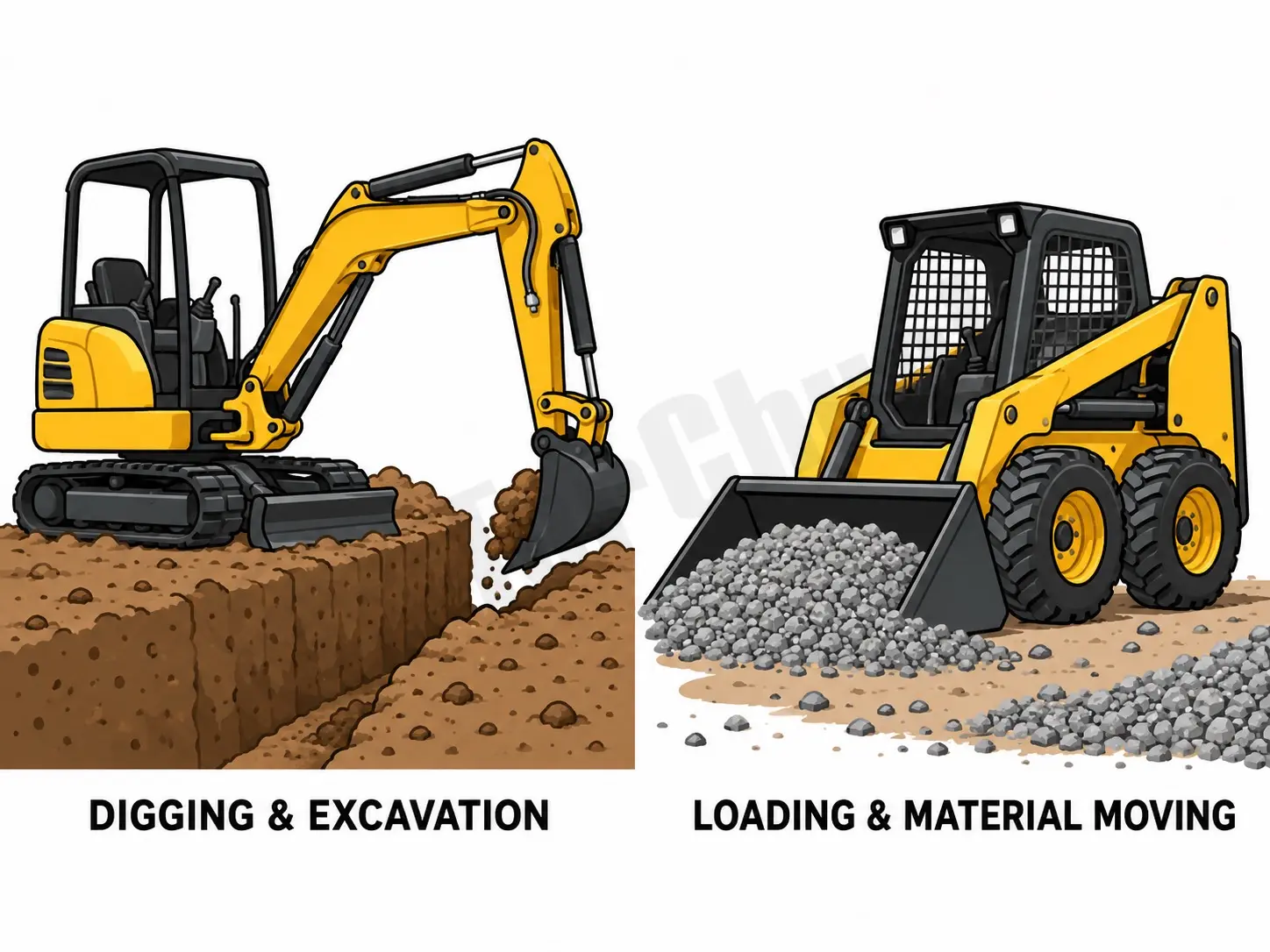
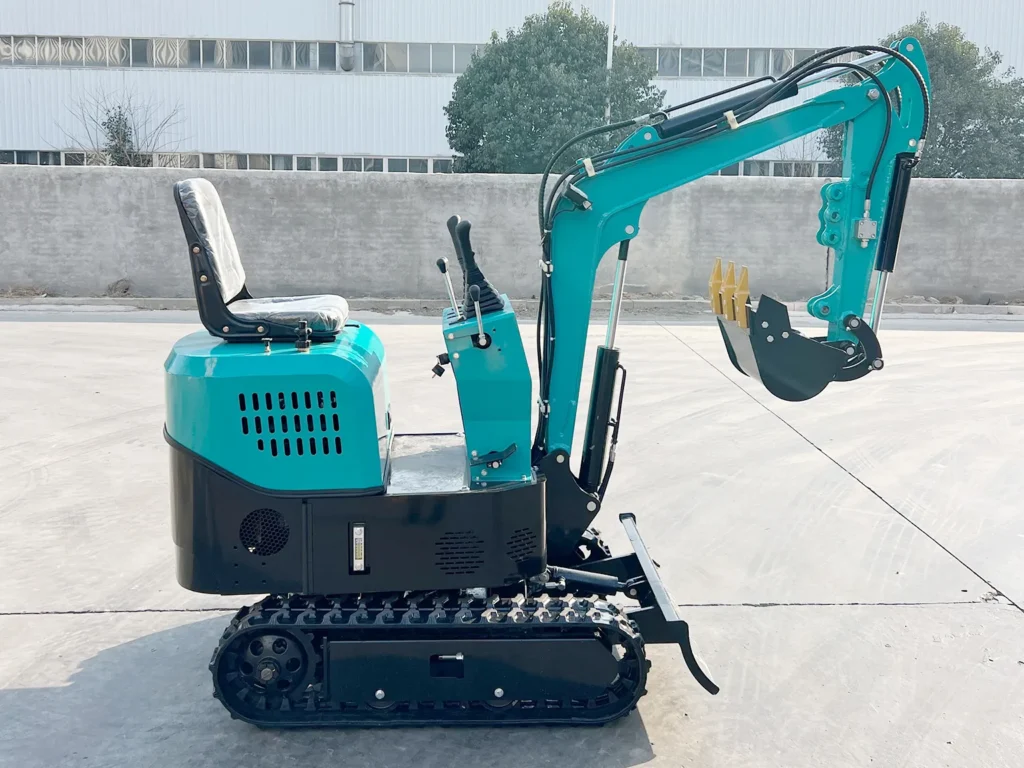
A mini excavator uses a boom, arm, and bucket to dig below ground level. The upper structure rotates, allowing the operator to dig and place soil without moving the entire undercarriage after every bucket.
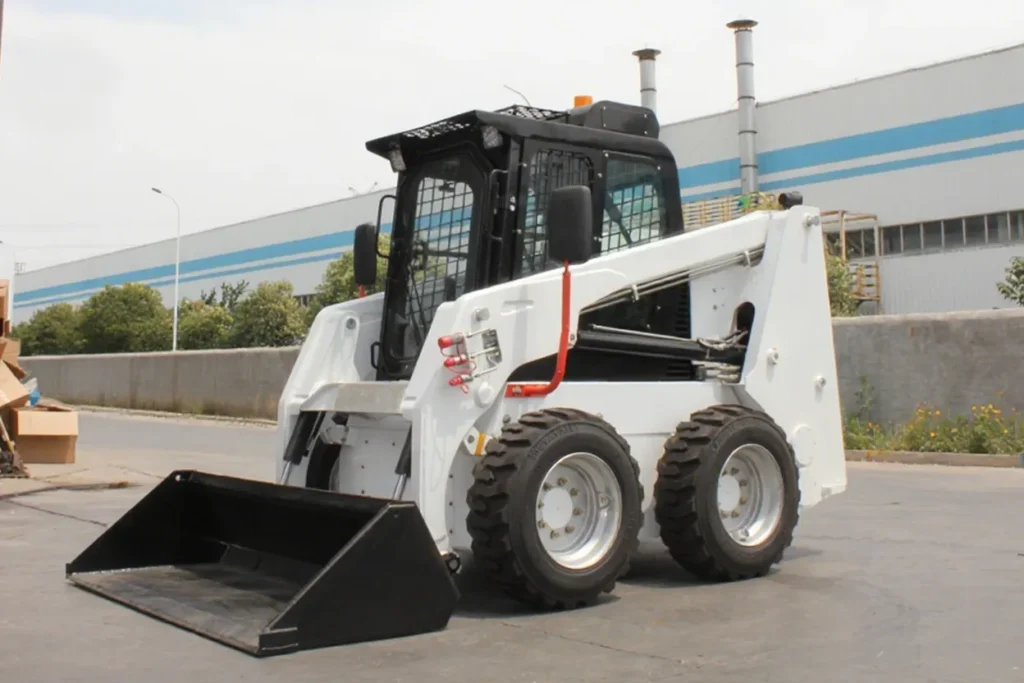
A skid steer works differently. It uses front-mounted loader arms and a quick-attach system for buckets, forks, grapples, sweepers, and other tools. Its main strength is moving and handling materials across the jobsite.
Both machines can use hydraulic attachments, but their working geometry changes what they can do efficiently.
| Job | Better Starting Choice | Mengapa |
|---|---|---|
| Drainage and utility trenches | Ekskavator mini | Digs below ground level with control over depth and position |
| Footings and foundation excavation | Ekskavator mini | Designed for deeper, more precise excavation |
| Spreading gravel and soil | Skid steer | Bucket makes repeated loading, carrying, and spreading practical |
| Loading loose materials into trucks | Skid steer | Designed for repeated loading cycles, provided the model has enough dump height and capacity |
| Moving pallets and building materials | Skid steer | Compatible pallet forks make material handling easier |
| Digging post holes | Either | Both can use a compatible auger |
| Brush and vegetation clearing | Skid steer | Suitable hydraulic brush-cutting attachments can cover larger working areas |
| Exposing and removing roots | Ekskavator mini | Digging arm helps reach around roots and remove surrounding soil |
These are general recommendations, not fixed rules. A skid steer fitted with a trencher can cut narrow trenches, while a mini excavator equipped with a grading bucket and blade can perform light leveling work.
The distinction becomes clearer when you look at how the machine will spend most of its day.
A contractor installing drainage pipes needs to control digging depth, work around existing structures, and place excavated soil beside the trench. A mini excavator is usually the more natural fit.
For a contractor preparing driveways, spreading aggregate, and loading trucks, a skid steer provides a more direct working process.
Trenching also requires proper ground assessment and utility checks. OSHA’s trenching and excavation safety guidance explains the hazards involving unstable soil, underground utilities, and equipment near excavation edges.
Which Machine Makes More Sense for Landscaping?
Landscaping is one of the areas where buyers often struggle to choose between a mini excavator and a skid steer.
Both machines can be useful, but landscaping covers several different types of work.
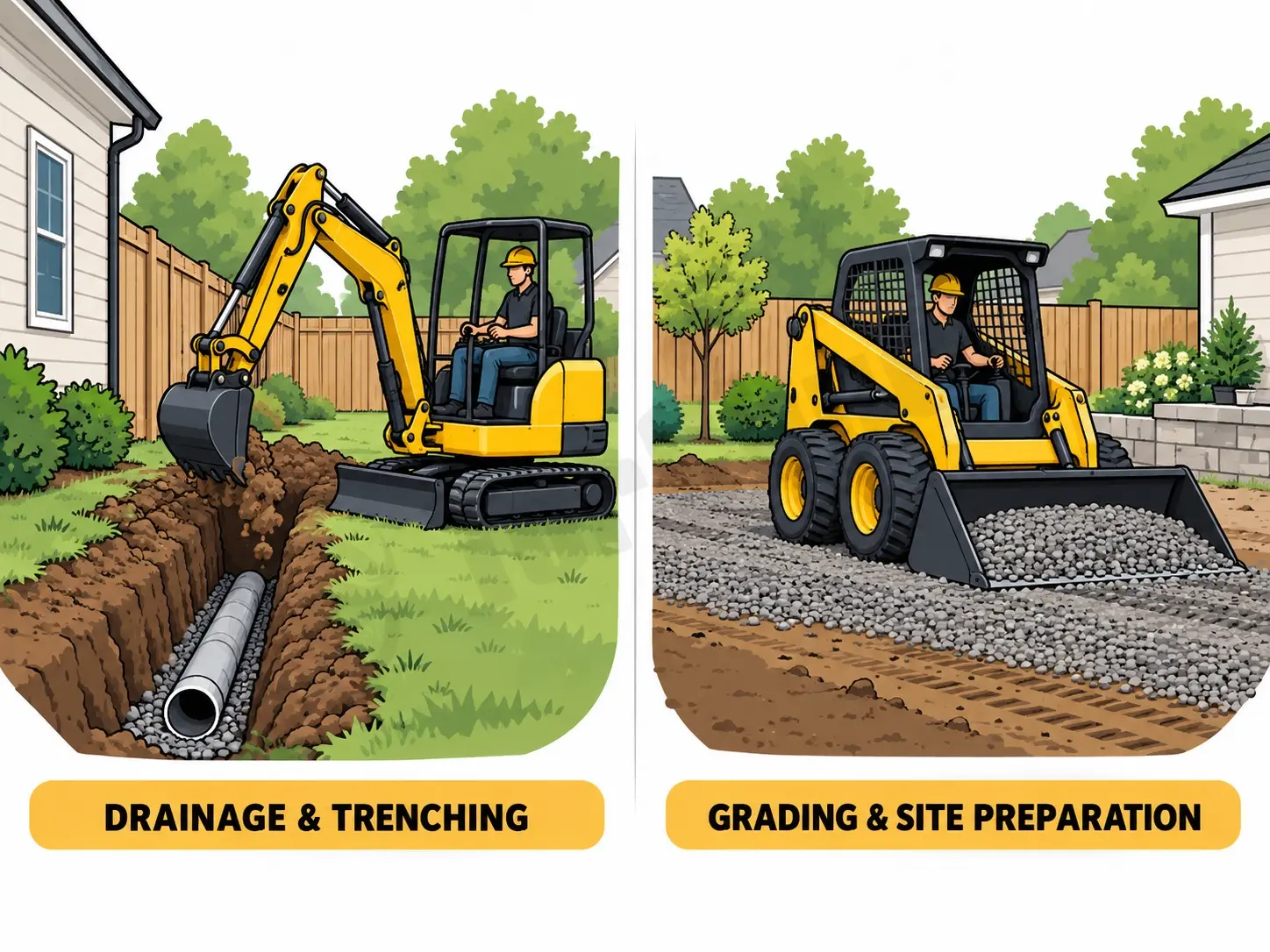
For Garden Construction and Drainage
A mini excavator makes sense when projects regularly involve digging planting holes, installing drainage, removing roots, or preparing small foundations.
Its digging arm can reach into areas that would be difficult to approach with a front bucket. The operator can also rotate the upper structure to place excavated soil nearby without repeatedly repositioning the tracks.
For example, a contractor working behind residential properties may need to install drainage pipes alongside fences or buildings. A compact excavator with a suitable width and boom configuration is generally more useful for that task.
The Excavator Mini Torchuck 18Q has an operating weight of 1,500 kg, an overall width of 1,120 mm, and a maximum digging depth of 2,091 mm.
Those specifications give buyers a starting point when checking narrow entrances and required excavation depth.
For Lawn Preparation and Material Moving
A skid steer becomes more attractive when landscaping work involves spreading topsoil, moving gravel, clearing debris, preparing paths, or loading materials.
Instead of digging in one location, these jobs require repeated travel between different parts of the site.
With a bucket, the operator can collect and move loose material. Switching to pallet forks or a grapple allows the same machine to handle other loads, provided the attachment and load remain within its rated limits.
Compact skid steers also suit smaller landscaping businesses where access and transport matter.
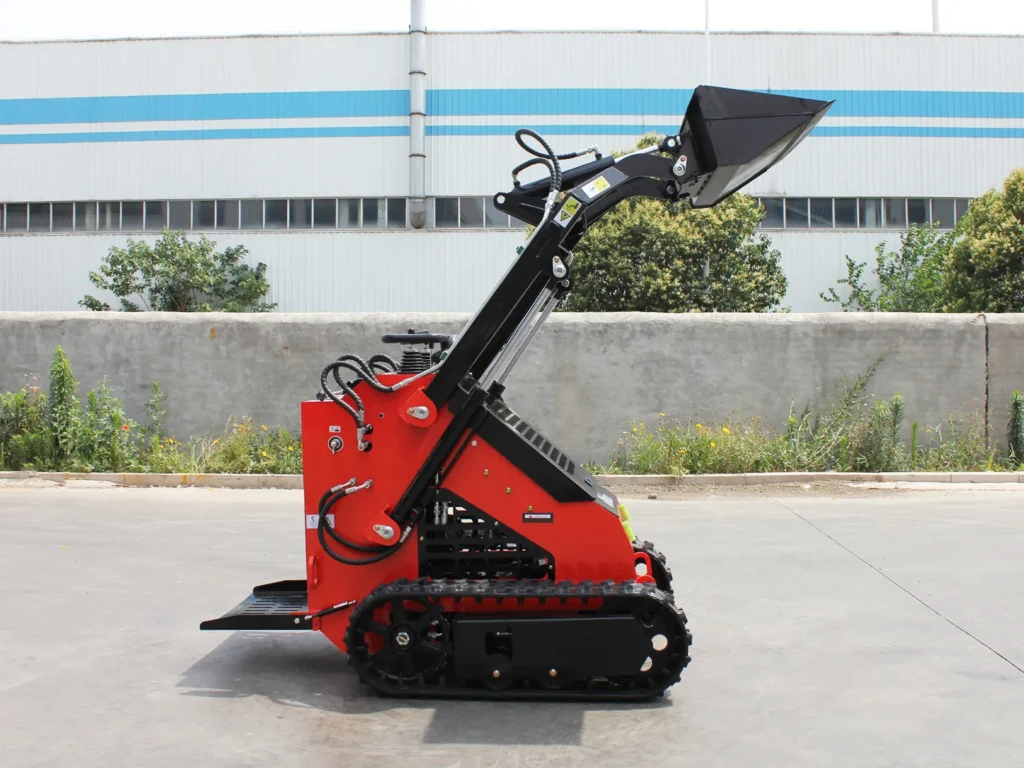
For example, the Torchuck SL-S1 Skid Steer Loader has a working weight of 890 kg, a rated loading capacity of 200 kg, and overall dimensions of 1,750 × 1,100 × 1,250 mm.
It is important not to confuse the loader’s rated capacity with the excavator’s operating weight. They measure different things.
What About Landscaping Companies That Do Both?
Consider which part of the project takes the most machine time.
If your business mainly installs drainage, removes roots, and builds small retaining-wall foundations, a mini excavator may be the better first purchase.
If your crews spend more time preparing surfaces, moving materials, and cleaning up sites, a skid steer may have more daily use.
Some landscaping businesses eventually need both machines. The purpose of choosing the first one is to cover the work you already have, not every service you might offer in the future.
What If Your Jobs Require Both Digging and Material Moving?
Many projects involve both activities, so the answer is not always obvious.
Imagine a contractor preparing a residential backyard for a patio and drainage system. The work includes digging drainage trenches, removing soil, bringing in aggregate, and leveling the area.
A mini excavator can handle the digging and place soil into piles. However, moving those piles across the property may be slow when the machine must repeatedly reposition itself.
A skid steer can move the excavated material and spread the new aggregate. But if the project includes deeper or irregular excavation, a skid steer with a standard bucket cannot replace the reach and control of an excavator.
You need to identify the part of the job that would be hardest to complete without the right machine.
If excavation determines whether the project can move forward, the mini excavator deserves priority. If digging is only a small part of the work while material handling continues throughout the day, the skid steer may be more valuable.
A skid steer can also use a compatible trencher attachment for certain trenching jobs. That may be enough for repetitive narrow cuts in suitable ground, but trench width, required depth, soil conditions, and attachment specifications must be checked.
Similarly, attaching a backhoe to a skid steer does not automatically give it the same working range as a dedicated mini excavator.
For occasional secondary tasks, renting another machine or working with a subcontractor may be more practical than buying two machines immediately.
The decision should reflect your actual workload, not just the number of attachments advertised for each machine.
Compare the Machines Before You Spend Money
Buying the right machine involves more than comparing the initial purchase price.
A lower-priced machine can become an expensive choice if it cannot handle the work you regularly accept.
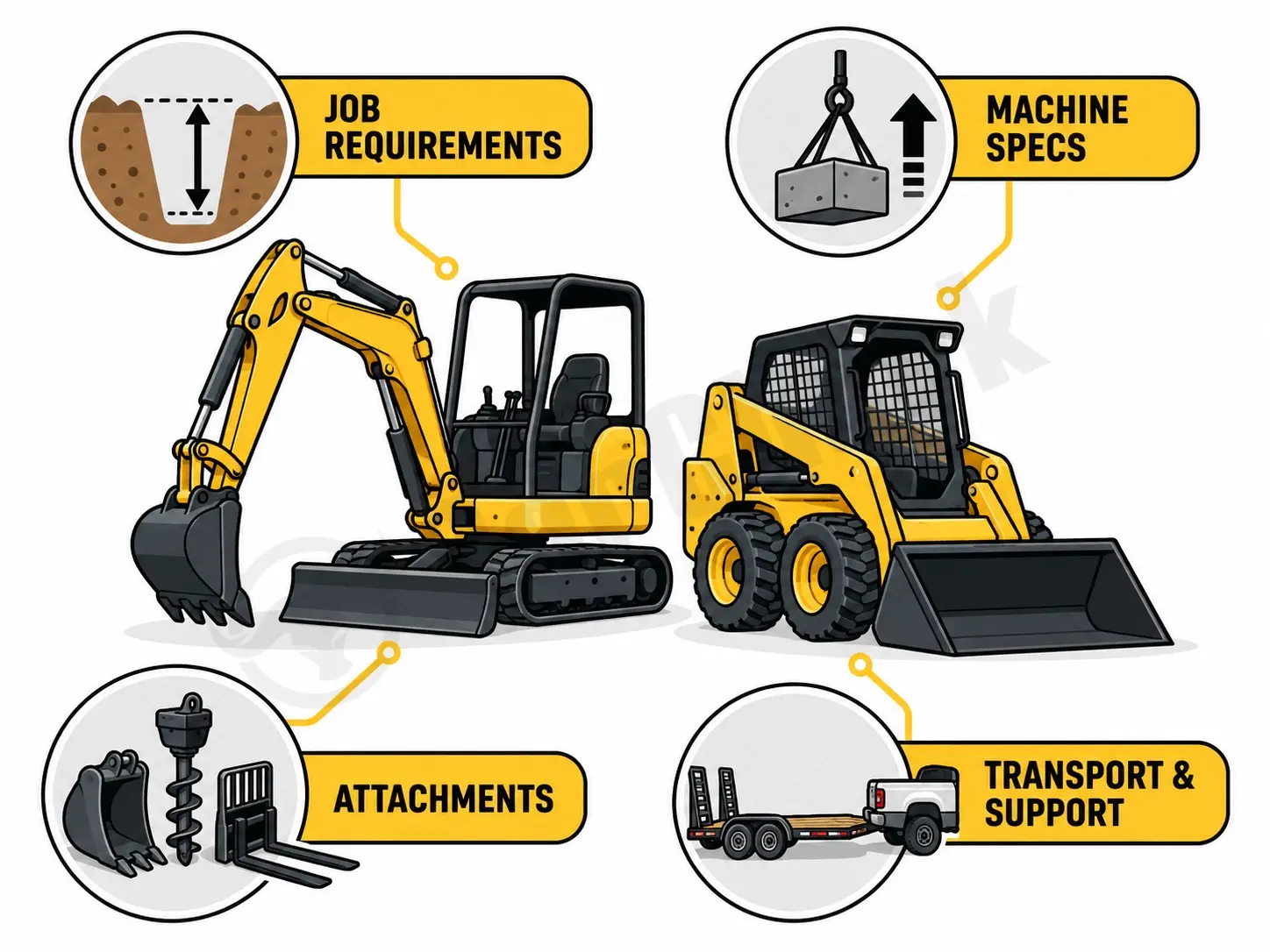
Working Requirements Come First
For a mini excavator, start with the required digging depth, machine width, working reach, and ground conditions.
Torchuck’s Mini Excavator 25K has an operating weight of 2,000 kg, a maximum digging depth of 2,241 mm, and a telescopic undercarriage that adjusts from 1,100 to 1,400 mm.
The adjustable width can help when a machine must pass through a narrow entrance before working with a wider undercarriage. However, buyers still need to check the complete machine dimensions and working space.
For a skid steer, digging depth is not the main specification. Rated operating capacity, lift height, dump clearance, machine width, and hydraulic performance become more important.
Torchuck’s heavy skid steer loader range includes wheeled and tracked configurations, radial and vertical lift options, and standard or high-flow hydraulics.
Those options matter because loading trucks, carrying pallets, and operating hydraulic tools can require different configurations.
Attachments Should Match the Work
One advantage of skid steers is the range of available attachments. Buyers can switch between buckets, pallet forks, grapples, sweepers, and suitable powered tools.
However, having a quick-attach system does not mean every attachment will work correctly.
Hydraulic flow, operating pressure, attachment weight, couplers, and the machine’s rated capacity must match.
Mini excavators also support several tools, including hydraulic breakers, augers, thumbs, and grapples. Their boom and arm geometry make these tools useful for excavation, demolition, and handling work close to the machine.
Torchuck’s machinery accessories range includes attachments for different equipment types, but compatibility needs to be confirmed for the selected model.
Before buying, choose the tools you expect to use regularly. Paying for attachments that rarely leave storage does little to help a new business.
Transport Can Change the Buying Decision
Machine size affects how easily you can move between jobs.
Compare operating weight, transport dimensions, trailer capacity, and the towing vehicle’s rated limits. Include the weight of attachments that will travel with the machine.
A compact excavator may be easier to fit into a narrow residential site, while a larger skid steer may be more useful for carrying materials. Neither advantage helps if your existing transport setup cannot accommodate the chosen machine.
Buyers should also consider whether they need a wheeled or tracked skid steer. Wheels can be practical on firm surfaces, while tracks may offer better traction and flotation in softer ground.
For mini excavators, rubber or steel tracks should likewise be chosen around the regular working surface.
Look Beyond the Purchase Price
Maintenance requirements and access to parts matter when a machine is expected to earn money every week.
Skid steers and mini excavators have different wear points. Tires or tracks, undercarriage parts, hydraulic hoses, filters, pins, bushings, and attachment components all require attention.
The exact maintenance cost depends on the model and workload, so comparing generic estimates is not especially useful.
Check service intervals, parts availability, warranty terms, and the support offered for the specific configuration.
Operator safety also belongs in this assessment. The NIOSH guidance on skid steer loader safety covers hazards involving machine movement, raised attachments, and people working nearby. Proper training and safe operating procedures remain essential regardless of equipment choice.
A clear quotation should identify the machine configuration and included attachments. That makes it easier to compare offers without assuming every supplier is quoting the same equipment.
How to Choose Your First Machine
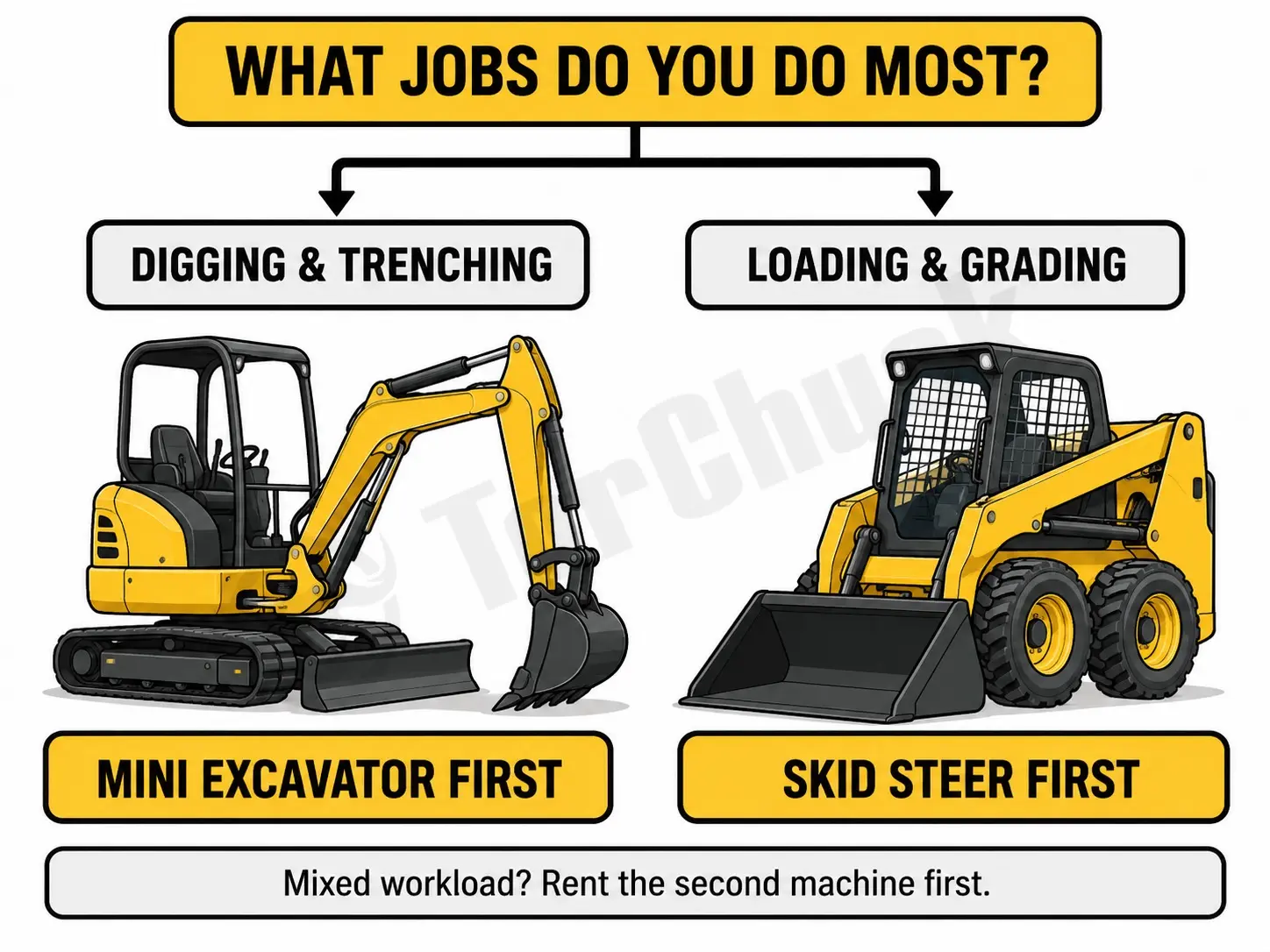
The simplest way to make this decision is to look at the jobs you already have or expect to win soon.
Consider a small contractor whose work mainly involves drainage, cable trenches, garden foundations, and root removal. Digging is central to nearly every project. Buying a skid steer first would leave the most important work dependent on rented equipment.
For this contractor, a suitable mini excavator is the stronger starting point.
Now consider a business that maintains properties, prepares gravel surfaces, clears debris, and moves landscaping materials. Digging may be necessary occasionally, but most of the work involves loading, carrying, and spreading.
Here, a skid steer may offer more use across the normal working week.
For farms, the answer also depends on the task. A mini excavator can help with drainage channels, ditch cleaning, and other digging jobs. A skid steer is often more useful for regular material handling, feed movement, and yard maintenance when properly equipped.
Rental businesses face a slightly different question. Instead of choosing for one operator, they need to understand which machine types their customers request most often.
Local demand matters more than a general recommendation. A rental yard serving drainage contractors may have different needs from one serving landscaping and property-maintenance customers.
Before placing an order, ask one practical question: Which machine would I use on the next three paid jobs?
If the answer is clearly a mini excavator, start there. If those jobs mostly involve moving and handling materials, a skid steer is likely the better first investment.
When neither machine covers the full workload, identify which tasks can be handled through short-term rental until the business is ready to expand.
How Torchuck Helps You Choose the Right First Machine
Torchuck supplies mini excavators and skid steer loaders for contractors, equipment dealers, rental businesses, and other overseas buyers.
Machine selection starts with the work you need to complete. Torchuck can help compare suitable models, attachment configurations, machine dimensions, and operating requirements rather than recommending a larger machine simply because it has higher specifications.
Once the configuration is agreed, Torchuck can coordinate quotation details, pre-shipment checks, export arrangements, and parts or technical support.
This approach is particularly useful for buyers comparing their first mini excavator and skid steer, where choosing the wrong machine type can be more costly than choosing between two models in the same category.
Pertanyaan yang Sering Diajukan
Can a Skid Steer Replace a Mini Excavator?
For some light digging jobs, a skid steer with a suitable trencher, auger, or backhoe attachment may be enough.
However, deeper excavation, working around underground services, and digging beside obstacles often favor the reach and control of a dedicated mini excavator. Check the required digging depth and attachment limits before deciding.
Is a Mini Excavator or Skid Steer Better for a Small Construction Business?
A mini excavator is generally more useful when the business focuses on drainage, foundations, and excavation.
A skid steer makes more sense when regular work involves grading, loading, site cleanup, and material handling. The best first purchase depends on which activities make up most of the company’s projects.
Which Machine Is More Versatile?
Skid steers are versatile for material handling and surface work because they can use many front-mounted attachments.
Mini excavators are more versatile for digging-related jobs because their boom, arm, and rotating upper structure can work at different depths and positions. Versatility only matters when it matches the tasks you actually perform.
Should I Buy a Mini Excavator and Skid Steer Together?
Buying both can make sense when your business has enough regular excavation and material-handling work to keep both machines in use.
For a new business with limited demand or capital, one well-matched machine plus occasional rental of the other may be a better starting point.
Kesimpulan
A mini excavator is usually the better first purchase for digging and excavation work. A skid steer is generally more useful for loading, grading, and moving materials. Neither machine is automatically the better investment.
If you are planning your first equipment purchase, share your main jobs, working conditions, and budget with Torchuck. We can help you compare suitable mini excavator and skid steer configurations before you place an order.