The right trailer depends on the excavator’s actual weight, transport dimensions, and the attachments you carry with it. You also need enough trailer payload, deck space, and towing capacity for the complete setup.
For example, a machine sold as a “1.5-ton mini excavator” does not automatically need a trailer with exactly 1.5 tons of capacity. The trailer must carry the machine, tools, and attachments while staying within its own rated limits.
Start With the Actual Excavator Weight
Operating weight gives you the first number needed for trailer selection.
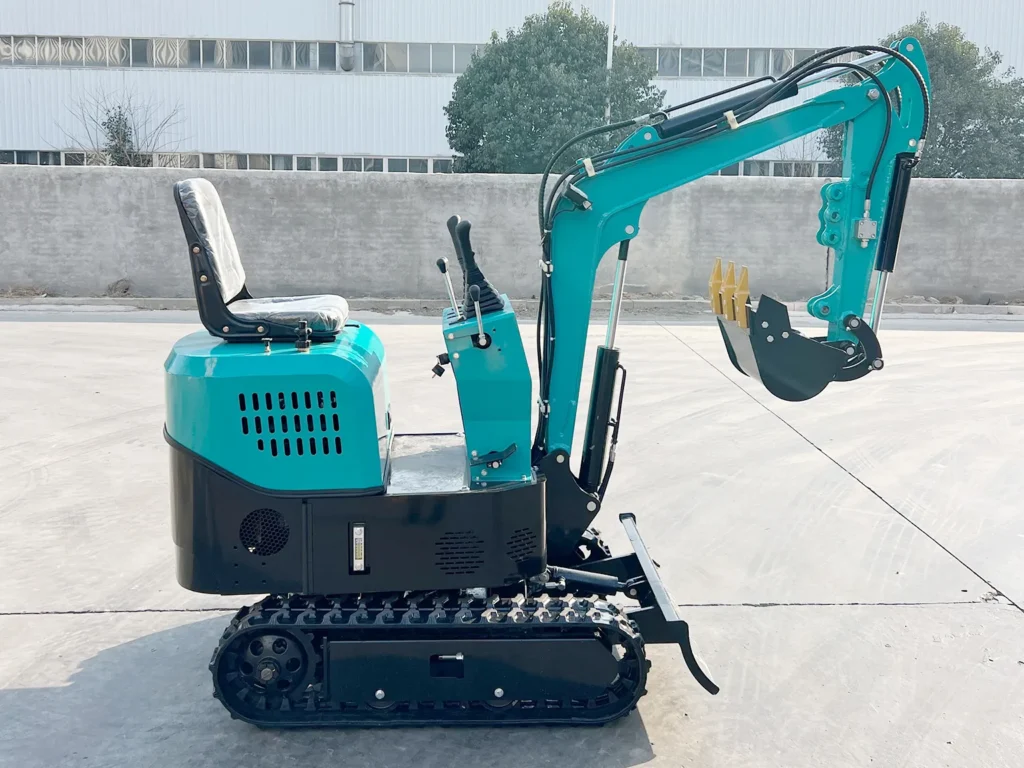
Torchuck's Ekskavator Mini 18Q has a listed operating weight of 1,500 kg. Its overall dimensions are 3,249 mm long, 1,120 mm wide, and 2,314 mm high.
The Mini Excavator 25K weighs 2,000 kg and measures 3,700 mm long. Its telescopic undercarriage changes the width from 1,100 to 1,400 mm.
Move up again and the transport requirement changes much more. The Excavator Mini TC35 weighs 3,989 kg and has a transport length of 5,029 mm.
Operating Weight Is Not the Whole Transport Weight
Operating weight does not always equal the weight you place on the trailer.
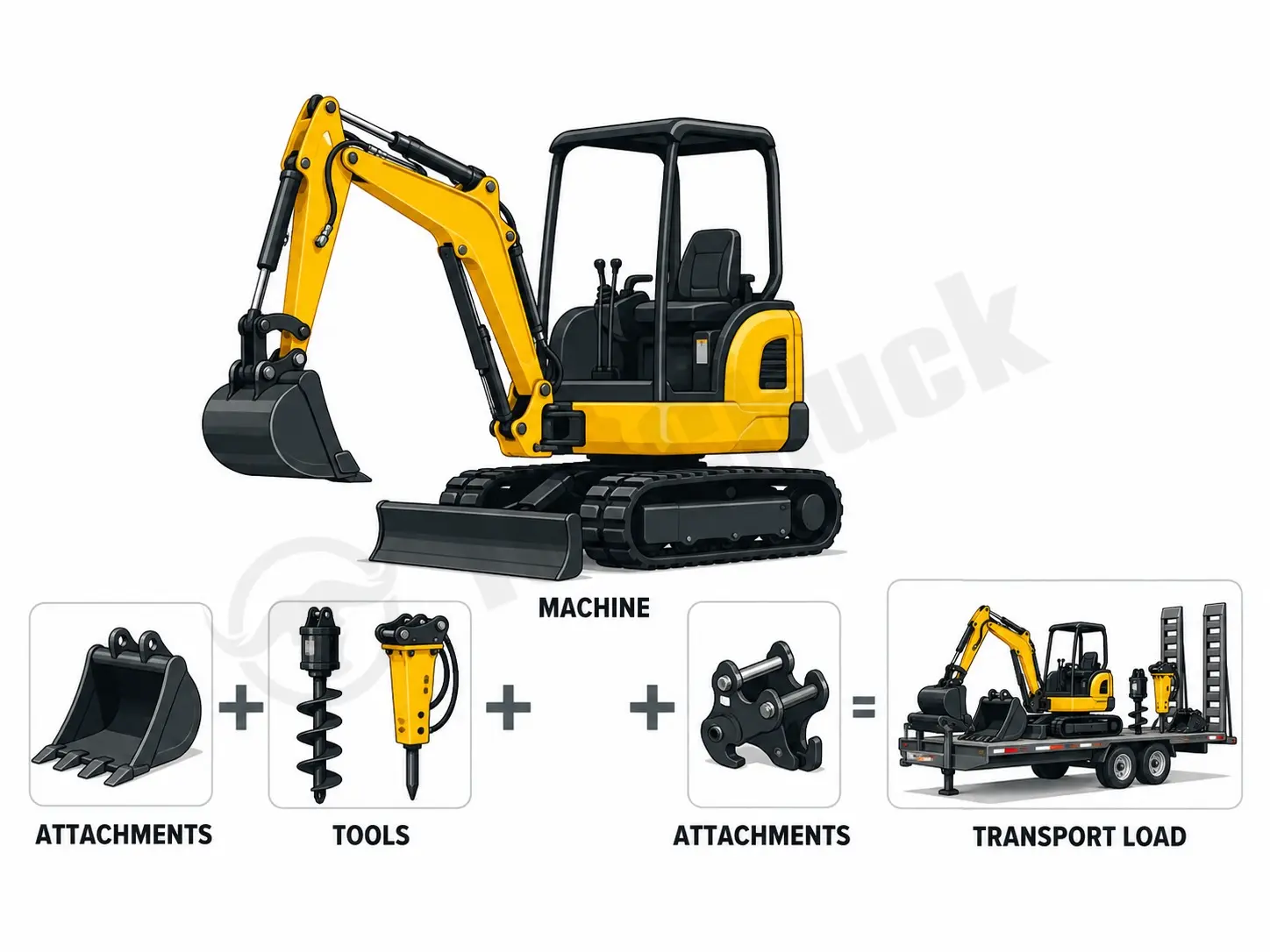
A contractor may carry an extra bucket, auger, hydraulic breaker, ripper, or grapple with the excavator. Quick hitches, thumbs, steel tracks, and other machine options can also change the final weight.
Torchuck's jajaran ekskavator mini supports many attachment options, so it is worth checking the weight of the tools you normally take to a job.
Trailer Payload vs GVWR: What’s the Difference?
GVWR and payload are related, but they are not the same number.
GVWR, or Gross Vehicle Weight Rating, is the maximum loaded weight specified by the trailer manufacturer. The NHTSA definition of GVWR includes both the trailer itself and the cargo it carries.
Payload is the amount of cargo the trailer can carry.
A simple way to understand it is:
Trailer payload = GVWR − empty trailer weight
Still, use the manufacturer’s stated payload rating when one is available. Axles, brakes, tires, and frame design can also limit the trailer.
For excavator transport, payload is the number you need to compare with the weight of the machine and its attachments.
Check Trailer Length, Width, and Loading Height
A trailer can have enough payload and still be too small.
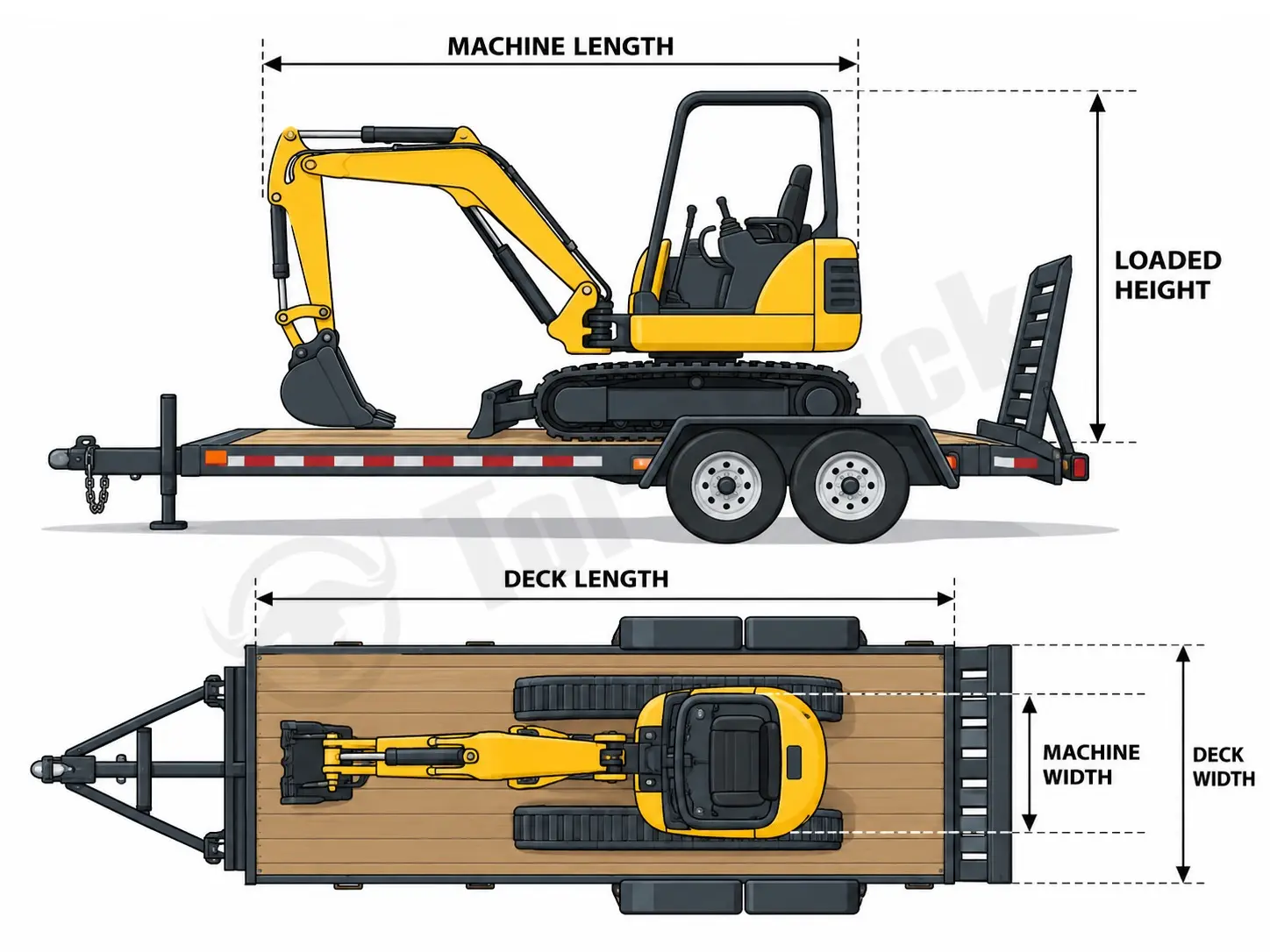
Deck length needs to leave enough room for the excavator to sit in the correct position and be secured properly. Deck width also needs to match the actual undercarriage width.
For example, the 25K can change from 1,100 to 1,400 mm wide because of its telescopic undercarriage. Check which width the machine will use during transport.
Loaded height is another point buyers sometimes miss. The trailer deck raises the excavator above the road, so the final transport height is higher than the excavator height shown on the specification sheet.
If the route includes tunnels, bridges, ferries, or low entrances, check the final loaded height before transport.
Can My Pickup or Truck Tow the Excavator?
The trailer may be suitable for the excavator while the tow vehicle is not.
Check the manufacturer’s towing limit, hitch rating, axle ratings, and Gross Combination Weight Rating where applicable. Use the specifications for the exact vehicle configuration.
Horsepower is not enough. A truck can have enough power to move a trailer and still exceed one of its weight ratings.
Local regulations also matter. Trailer brakes, licences, axle limits, registration, and commercial transport requirements vary by country.
Calculate the loaded trailer first, then check whether the tow vehicle and local rules allow that combination.
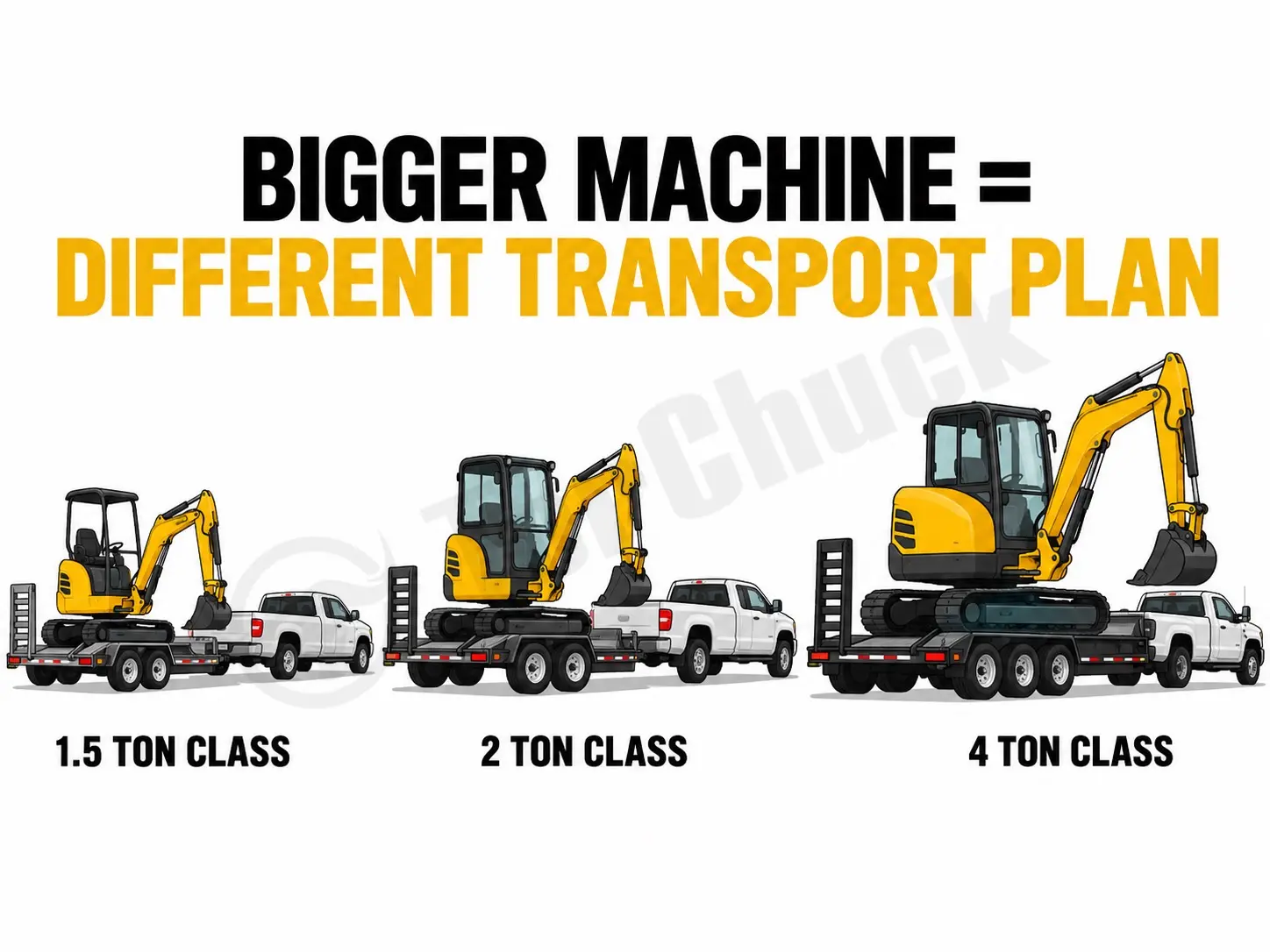
Why a 1.5-Ton and 3.5-Ton Excavator Need Different Transport Plans
The difference becomes clear when you compare real machines.
The 18Q weighs 1,500 kg and is 3,249 mm long. The 25K weighs 2,000 kg and measures 3,700 mm long. The TC35 is much larger at 3,989 kg and 5,029 mm transport length.
Moving into a larger excavator class can change more than the trailer deck size. Trailer axles, brakes, ramps, tow vehicle requirements, and legal weight limits may all need to be reconsidered.
This is worth checking before you choose the larger machine. If two excavators can both handle your normal work but only one fits your existing transport setup, transport cost becomes part of the buying decision.
How to Load and Secure a Mini Excavator
Once the machine and trailer match, the excavator still needs to be loaded and secured correctly.
Use the transport position and tie-down points specified by the equipment and trailer manufacturers. The boom, blade, bucket, and attachments should be secured so they cannot move during transport.
In the United States, the FMCSA cargo securement rules require cargo to be secured against shifting or falling during transport. The securement equipment must also meet the required working load limits.
FMCSA has additional rules for heavy vehicles, equipment, and machinery weighing 4,536 kg (10,000 lb) or more. Other countries use different requirements, so always check the rules where the machine will be transported.
Avoid using hydraulic hoses, cylinder rods, handrails, or other parts that were not designed as tie-down points.
Do Not Choose the Trailer From the Ton Class Alone
Labels such as “1-ton” or “2-ton mini excavator” are useful for comparing machine classes, but they are not trailer specifications.
Even machines in a similar class can have different lengths, widths, options, and actual operating weights. Use the specification sheet for the exact excavator you are buying.
For example, Torchuck’s Excavator Mini 10Q dan Ekskavator Mini 12K are both compact machines around the 1-ton class, but their dimensions and configurations are different.
Check the model, then check the trailer.
How Torchuck Helps You Check Transport Before Buying
Transport is easier to plan before the machine is ordered.
Tell Torchuck which excavator model and attachments you are considering. If you already have a trailer, share its payload, GVWR, and deck dimensions. If an existing truck will tow it, share the vehicle’s rated towing limits as well.
Torchuck can provide the machine weight and dimensions so you can compare the excavator with your transport setup before purchase.
This is particularly useful when choosing between two machine sizes. Sometimes both excavators can do the work, but only one fits the customer’s existing trailer and tow vehicle.
The Torchuck mini excavator range covers several compact machine classes, so transport requirements should be checked model by model.
Pertanyaan yang Sering Diajukan
What Size Trailer Do I Need for a 1.5-Ton Mini Excavator?
Use the exact machine specifications rather than the 1.5-ton class name.
The Torchuck 18Q weighs 1,500 kg and measures 3,249 mm long, 1,120 mm wide, and 2,314 mm high. Add the attachments you normally carry, then choose a trailer with enough payload and deck space for the complete setup.
Is Trailer GVWR the Same as Payload?
No. GVWR is the trailer’s maximum rated loaded weight, including the trailer itself.
Payload is how much cargo the trailer can carry within that rating.
Do I Need to Count the Excavator Attachments?
Yes. Buckets, augers, breakers, quick hitches, and other tools carried on the trailer are part of the cargo.
They also need enough deck space and proper securement.
Can I Tow a Mini Excavator With a Pickup?
Possibly, depending on the loaded trailer weight and the exact pickup.
Check the vehicle’s towing, hitch, axle, and combination-weight ratings, along with local trailer and licence rules.
Does the Excavator Have to Fit Completely Inside the Trailer Deck?
The machine must fit the trailer in a position that allows correct loading and securement.
Use the excavator’s actual transport dimensions and the trailer manufacturer’s requirements rather than judging from photos.
How Should a Mini Excavator Be Secured to a Trailer?
Use approved tie-down points and properly rated securement equipment.
In the United States, follow the applicable FMCSA cargo securement requirements. For other markets, follow local transport rules.
Kesimpulan
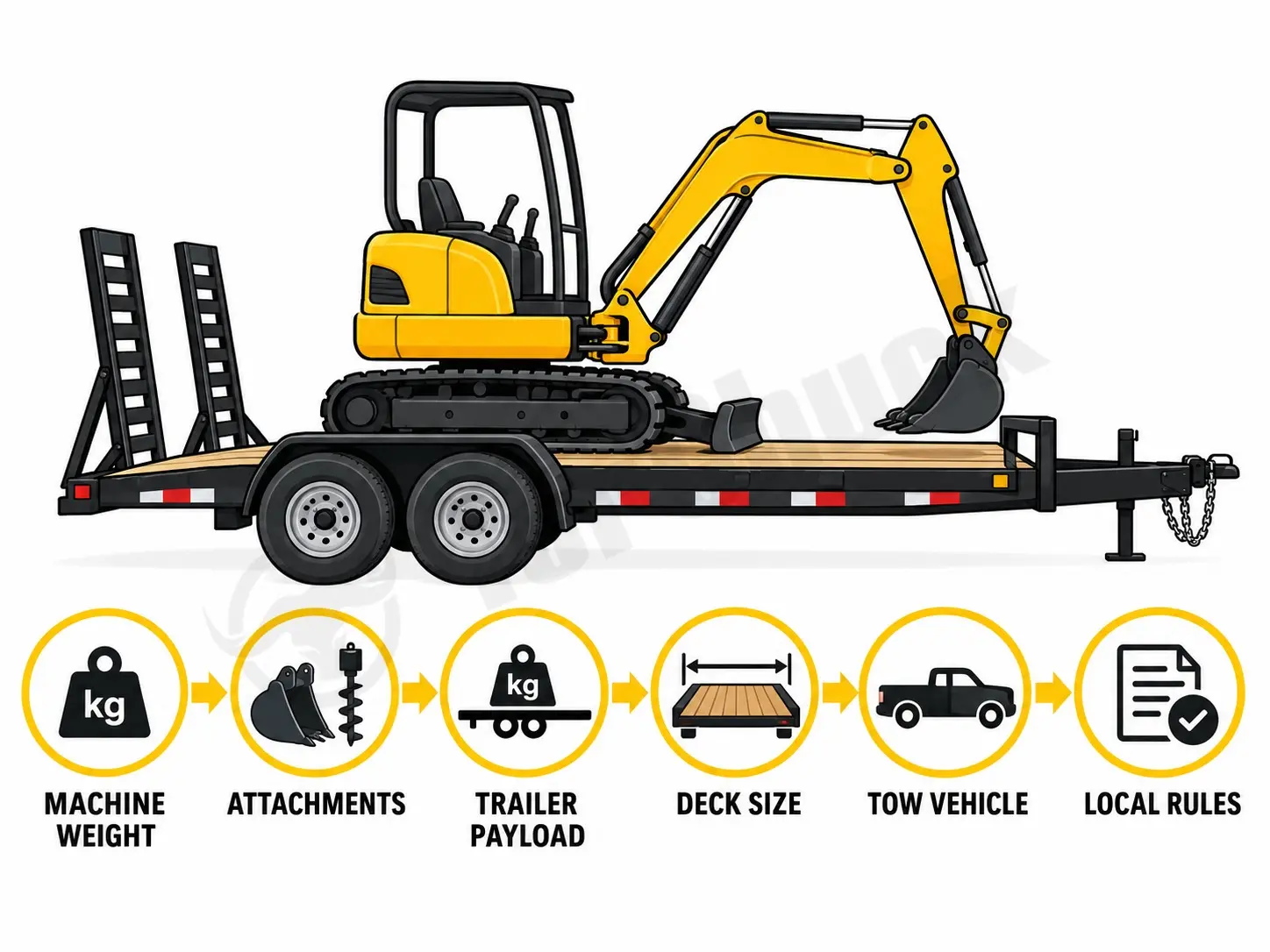
Choose a mini excavator trailer from the actual machine and transport setup, not from the excavator’s ton class alone. Check machine weight, attachments, trailer payload, deck dimensions, loaded height, and tow vehicle ratings before buying.
If you are choosing a Torchuck mini excavator, send us the model, attachments, and any trailer or towing limits you already have. We can provide the machine specifications you need to check the transport setup before the order is finalized.