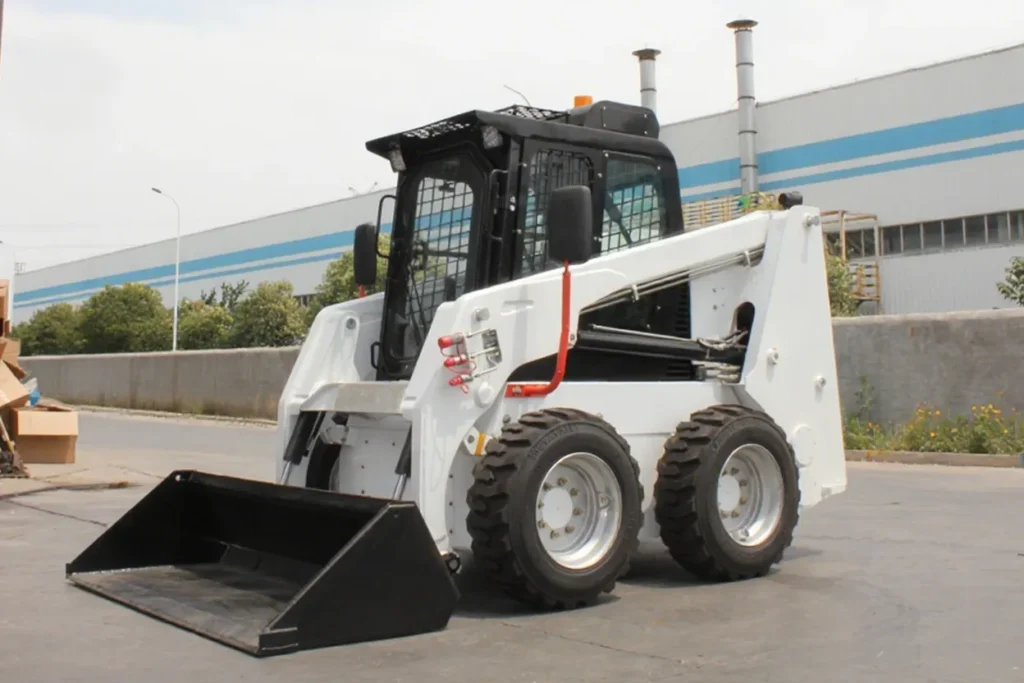
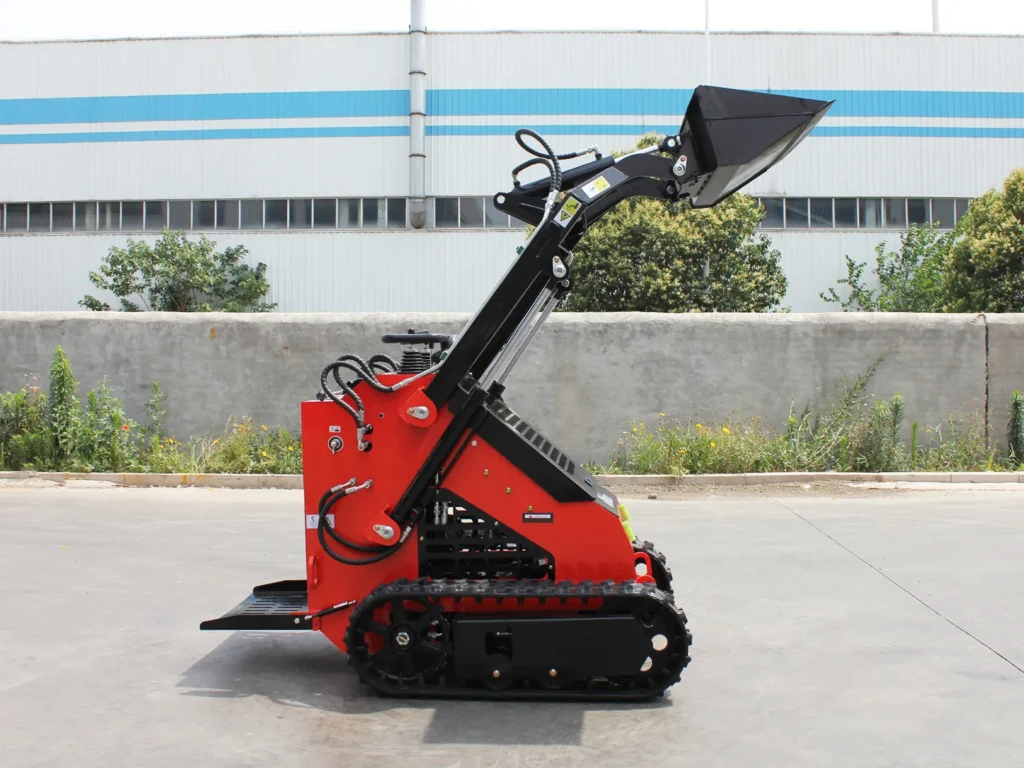
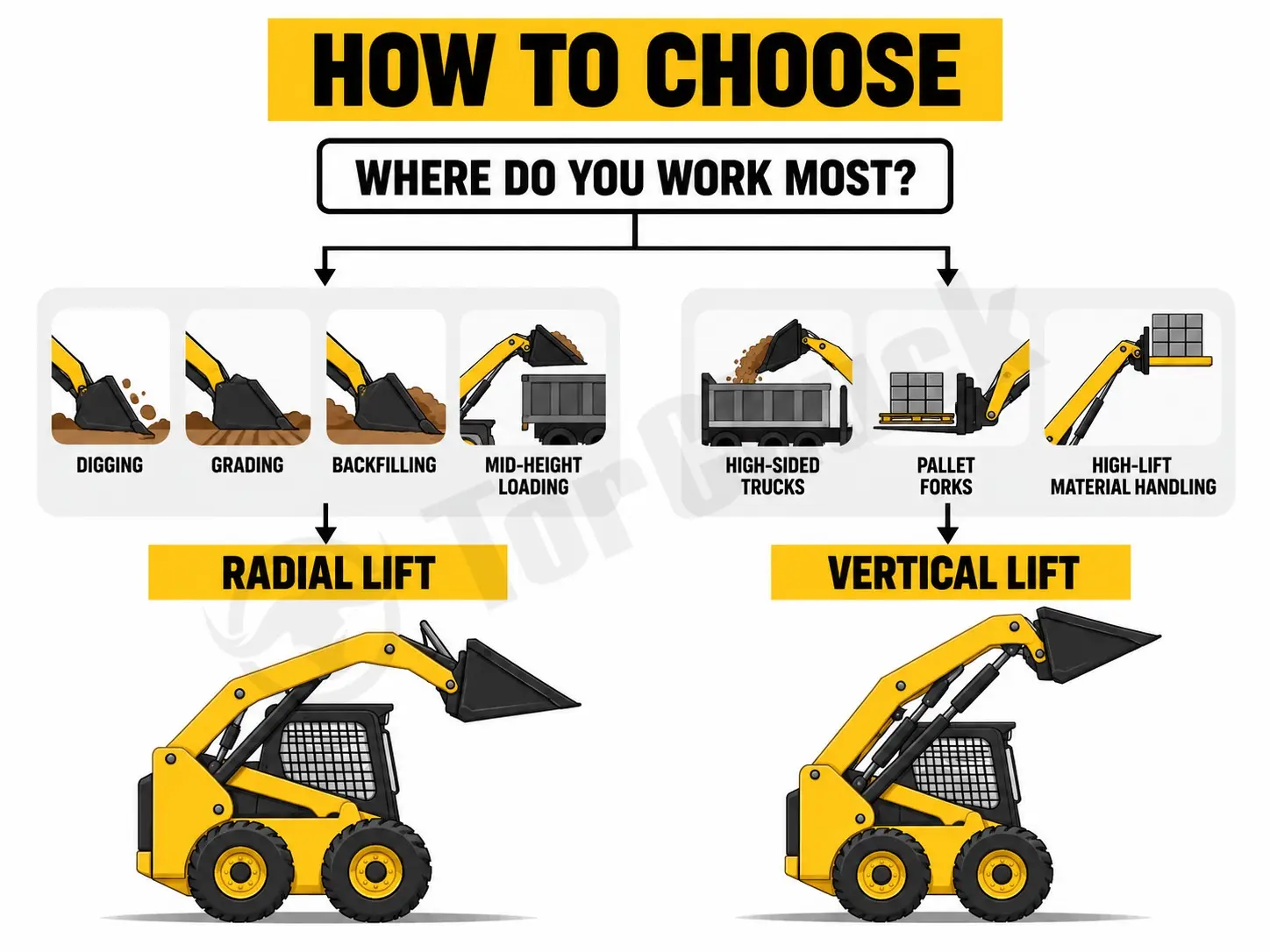
Choose radial lift when most of your work happens from ground level to mid-range height, such as digging, grading, backfilling, and loading lower trucks. Vertical lift becomes more useful when the machine regularly raises material near full height, loads high-sided trucks, or places pallets at elevated positions.
The main difference is the path the attachment follows as the loader arms rise. That path changes where the machine has useful forward reach. It does not make one lift type automatically stronger or better for every job.
Torchuck offers both radial and vertical lift skid steer configurations, together with wheel and track models, Standard and High-Flow hydraulics, and more than 50 attachment options.
What Is a Radial Lift Skid Steer?
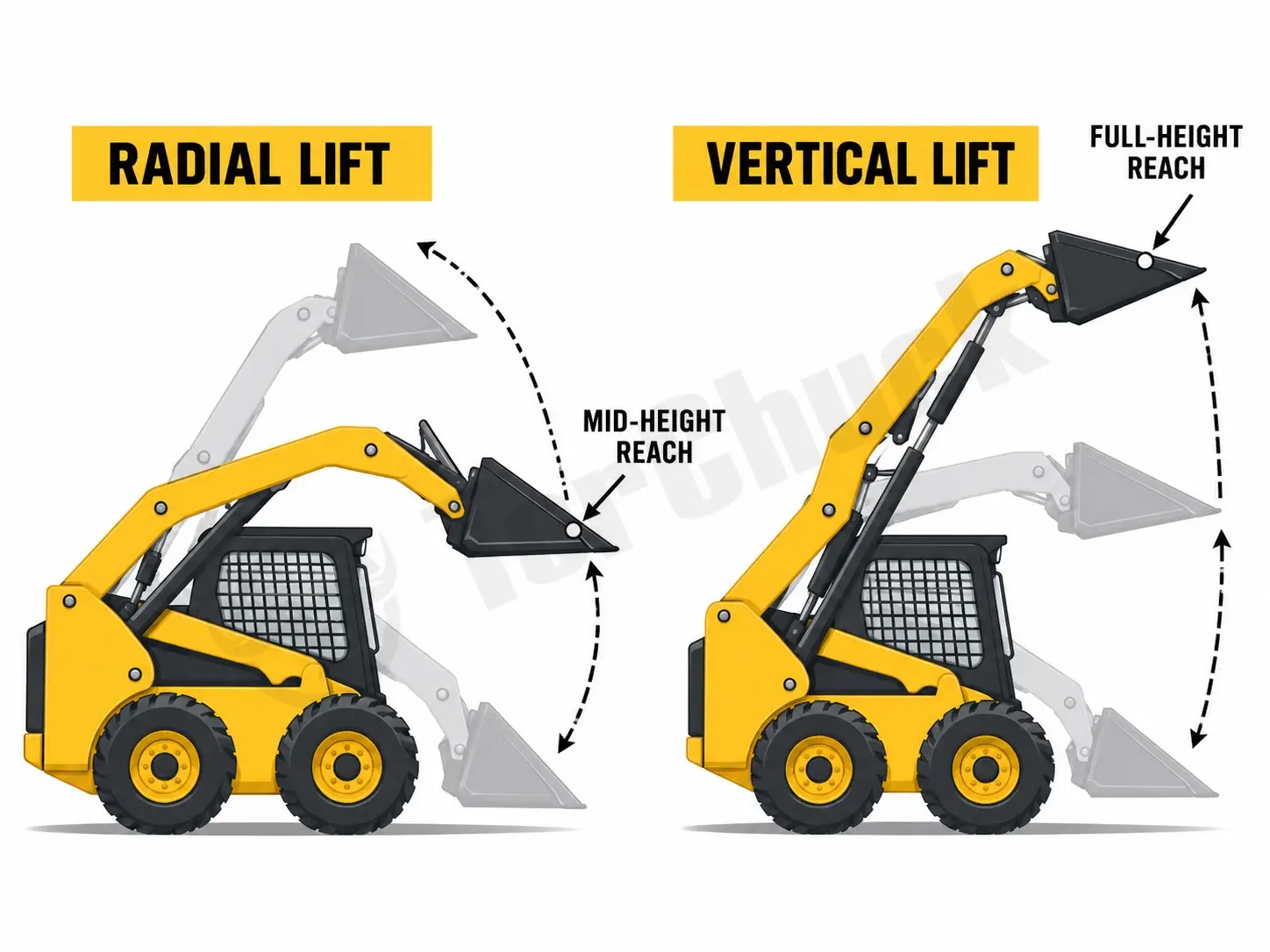
A radial lift skid steer moves the attachment through an arc as the loader arms rise. The bucket starts close to the machine, moves farther forward through the middle of the lift cycle, and then moves back toward the machine as it approaches full height.
This geometry gives radial lift one of its main advantages: useful forward reach around the middle of the lift range. Industry guidance on radial and vertical lift geometry describes maximum radial-lift reach as occurring around the middle of the arc rather than at full lift height.
That working range fits many jobs where the bucket stays relatively low. Digging into a pile, grading, backfilling, site cleanup, and loading a lower trailer all happen well below maximum lift height.
Radial lift should not be understood as a machine that only works near the ground. It can still raise and dump material. The real difference is where the lift path gives the operator the most useful reach.
What Is a Vertical Lift Skid Steer?
A vertical lift skid steer uses additional linkage to change the movement of the loader arms. The attachment follows a more upright path as it rises and keeps more useful forward reach near the upper part of the lift cycle.
That difference becomes important when the machine needs to dump into a high-sided truck, load a hopper, or place a pallet at an elevated position.
Technical coverage of vertical-lift loader design makes the same distinction: radial lift provides strong mid-range reach, while vertical lift is designed around material handling at higher positions.
The word “vertical” does not mean the attachment travels in a perfectly straight line from the ground to maximum height. Different manufacturers use different linkage designs. The important point is that vertical lift keeps the load in a more useful position near the top of the working range.
Where Does Each Lift Path Give More Reach?
Reach changes throughout the lift cycle, so one maximum-reach figure does not explain the whole machine.
With radial lift, the attachment moves farther away from the skid steer as it rises through the middle of the arc. A contractor loading a low trailer, working over a short wall, or backfilling beside a foundation may spend much of the working cycle in this range.
Vertical lift moves differently. Its linkage keeps more useful reach in the upper part of the lift cycle. That becomes important when the bucket needs to clear a high truck side or when pallet forks need to place a load at an elevated position.
This is why maximum lift height by itself can be misleading. Two skid steers may both lift high enough to clear a truck, but their buckets may sit at different forward positions when they reach that height.
Buyers should therefore ask two questions together: how high does the attachment need to go, and how much forward reach does it need at that height?
Which Lift Is Better for Digging, Grading, and Backfilling?
Radial lift is commonly associated with ground-engaging work because digging, grading, and backfilling mostly happen from ground level through the middle of the lift range.
This is where radial geometry gives useful reach. The operator can work into a pile, move material close to the ground, and raise the bucket through the middle of the arc without depending on maximum high-lift reach.
However, lift path should not be confused with digging force. A radial lift machine is not automatically stronger than a vertical lift machine.
Breakout force depends on the complete skid steer design, including the hydraulic system, cylinder size, linkage, machine weight, bucket geometry, and traction. Modern vertical-lift machines can also perform digging and grading work effectively.
Industry comparisons make the same point: both lift styles can perform loading, clearing, and general site work. The main difference is where each lift path provides its most useful reach.
If most of your work happens near the ground, radial lift deserves attention. That does not mean vertical lift becomes unsuitable for the same jobs.
Which Lift Is Better for Loading Trucks?
Truck height changes the answer.
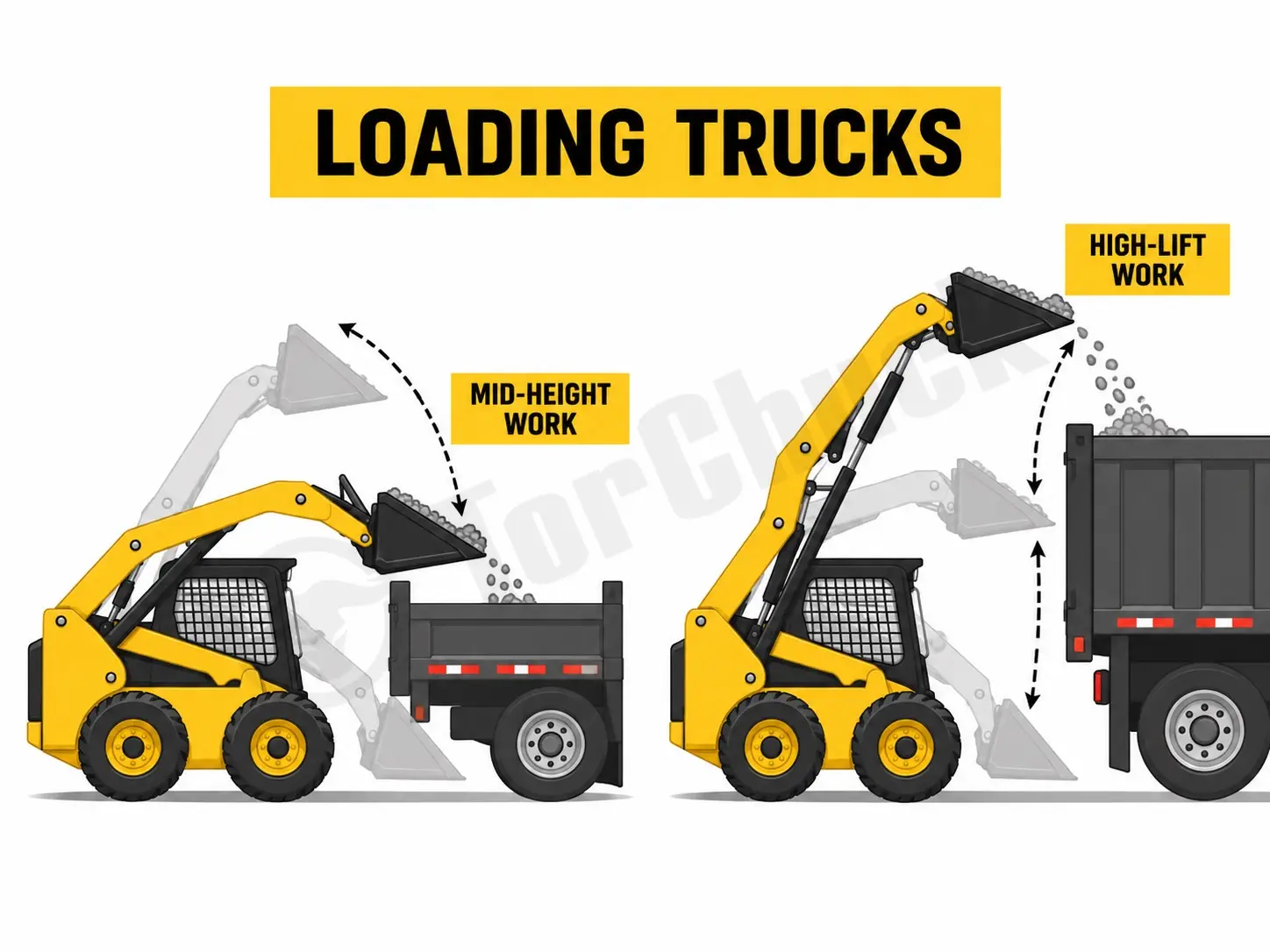
A radial lift skid steer can work well with lower trucks, flatbeds, and trailers because these loading points often sit near the middle of the lift range. The bucket can take advantage of the forward reach available through the radial arc.
A high-sided dump truck creates a different requirement. The bucket has to rise farther, clear the truck side, and still reach forward enough to place the material inside.
This is where vertical lift becomes more useful. Its upper lift path keeps the attachment in a better position near full height. Industry guidance on choosing skid steer lift types similarly notes that radial lift provides useful midpoint reach, while vertical lift provides more reach and height near maximum lift.
Do not choose from the words “truck loading” alone. One contractor may load a low landscape trailer, while another loads high-sided dump trucks every day.
Measure the normal loading height and compare it with the skid steer’s hinge-pin height, dump clearance, and forward reach at that position.
Those figures tell you more than the lift-path name by itself.
What About Pallet Forks and Material Handling?
Vertical lift becomes especially relevant when pallet handling happens regularly at higher positions.
A pallet on forks needs to remain controlled while the operator raises it toward a truck bed, platform, or elevated placement point. More useful reach near the top of the lift cycle helps when the load has to move forward at that height.
Still, not every machine using pallet forks needs vertical lift. If pallets stay close to ground level, lift path may matter less than rated capacity, stability, overall machine size, and available working space.
The attachment itself also matters. Forks add weight, and the position of the pallet changes how the load acts on the loader.
OSHA’s skid-steer loader safety guidance recommends following the manufacturer’s instructions and specifications when operating skid steers and maintaining their safety systems.
For buyers, that means pallet handling should be discussed with actual numbers. Share the pallet weight, pallet dimensions, required lift height, and where the load needs to be placed.
“Using pallet forks” by itself is not enough information to choose the lift path.
Does Vertical Lift Mean More Lifting Capacity?
Not automatically.
Vertical lift and rated operating capacity describe different things. Lift path describes how the attachment moves. Rated operating capacity describes how much the specific machine is rated to handle under the manufacturer’s stated conditions.
Many larger skid steers use vertical-lift designs because those machines are often purchased for material handling and high-lift work. That market pattern can make it look as if vertical lift itself automatically creates higher capacity.
The comparison is more complicated than that.
Machine weight, wheelbase, counterweight, frame structure, hydraulic system, tires or tracks, and attachment weight all affect the final machine rating. Industry analysis also notes that loader size and lift design are often related, which makes simple cross-model comparisons unreliable.
A large vertical-lift machine and a smaller radial-lift machine are not a clean test of lift geometry. Several specifications have changed at the same time.
Always compare the published rated operating capacity of the exact models you are considering.
Vertical lift should be understood as a lift-path advantage for high-level material handling, not as another word for “more powerful.”
Does Radial Lift Mean Better Digging Performance?
Not automatically either.
Radial lift fits the working height used for many digging and grading jobs, but lift geometry alone does not determine breakout force.
Hydraulic pressure, cylinders, loader-arm geometry, bucket design, machine weight, traction, and the overall structure all contribute to digging performance.
Modern vertical-lift machines have also narrowed the performance gap in ground-engaging work. Industry coverage notes that newer designs can provide digging performance and durability closer to radial-lift machines than older comparisons sometimes suggest.
So avoid another shortcut:
Radial lift = stronger digging.
That statement is too broad.
A better conclusion is that radial lift often places useful reach in the part of the lift cycle where digging and grading happen. Buyers should still compare breakout force and other specifications separately.
Don’t Choose by Lift Type Alone
Lift path is only one part of skid steer selection.
Start with the actual job. Check the normal load weight, where the material starts, and where it needs to be placed. Then compare rated operating capacity, hinge-pin height, forward reach, machine width, overall size, and attachment requirements.
Hydraulics need a separate decision as well. A machine can have the correct lift path and still be the wrong configuration for a hydraulic attachment.
Penawaran Torchuck Standard and High-Flow skid steer hydraulic configurations along with Vertical and Radial Lift options. The current heavy skid steer range also includes wheel and track configurations and more than 50 attachment options.
Attachment selection should happen at the same time as machine selection. Torchuck’s machinery accessories range includes loader and excavator tools for different applications, so you can consider the planned attachment before finalizing the skid steer configuration.
Wheel versus track is another separate question. Ground conditions, traction, travel pattern, surface damage, and undercarriage requirements do not come from the lift path.
If you are still comparing compact loader structures, our guide to skid loaders and other loader types explains how steering style, wheels, tracks, access, and travel distance change the selection.
When Is a Radial Lift Skid Steer the Better Choice?
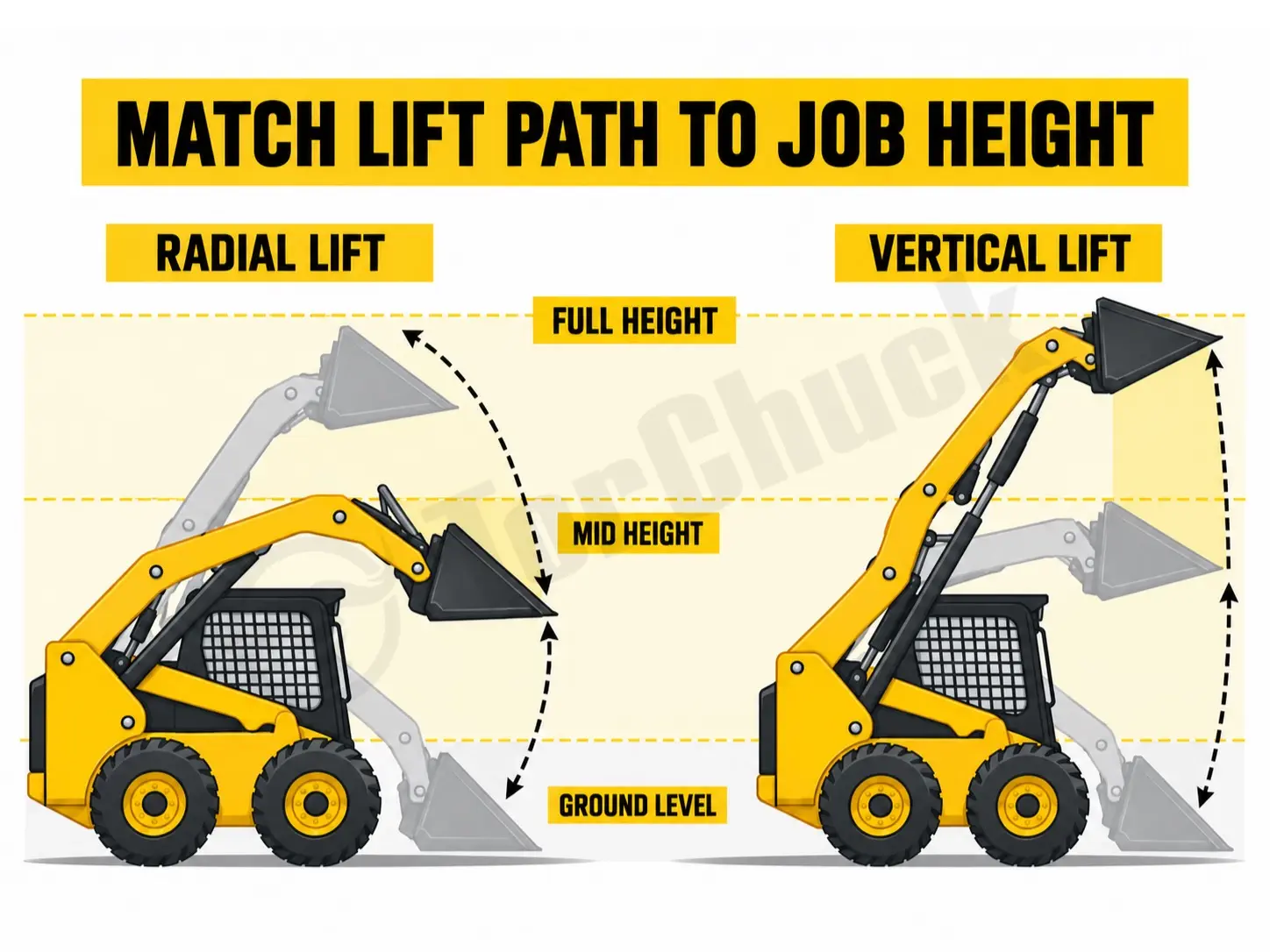
Radial lift is a strong choice when the attachment spends most of the working day from ground level through the middle of the lift range.
This often includes digging, grading, backfilling, site preparation, landscaping, cleanup, and general bucket work. These jobs normally do not depend on maximum forward reach at full lift height.
Lower loading points can also fit radial lift well. If your normal truck or trailer does not require the loader arms to rise close to their maximum position, mid-range reach may be more useful than extra upper-level reach.
Radial lift should therefore not be viewed as the “basic” version of a skid steer. For the right work pattern, the lift geometry places useful reach exactly where the operator needs it.
If the bucket rarely works near full height, judge the machine mainly on the part of the lift cycle you actually use.
When Is a Vertical Lift Skid Steer the Better Choice?
Vertical lift makes more sense when high-level material handling is a regular part of the job.
High-sided trucks are the clearest example. Elevated pallet placement, hopper loading, and other work near full lift height also make upper-range reach more important.
This is where vertical lift geometry provides a practical advantage. The attachment remains in a more useful forward position near the top of the lift cycle.
Rental companies and equipment dealers may also prefer to include vertical-lift models when customers frequently request pallet handling or high-sided truck loading.
However, vertical lift should still be checked together with rated capacity, hydraulic requirements, machine dimensions, and attachments.
Choosing vertical lift simply because it sounds like the higher specification creates the same problem as buying High-Flow hydraulics when none of the planned attachments require them.
Buy the feature because the work needs it.
How Torchuck Helps Match the Right Lift Path
Torchuck offers both Radial and Vertical Lift configurations, so the selection does not need to start by pushing one design.
Start with the work instead. Tell us what material the machine handles, the normal load weight, the truck or loading height, the main attachments, the ground conditions, and how often the loader works near full height.
Torchuck can then compare lift path together with rated operating capacity, hydraulic flow, wheel or track configuration, attachment interface, engine requirements, and jobsite access.
This approach also helps dealers build the right product mix. A market focused on landscaping, grading, and ground work may need a different configuration mix from one serving material yards, high-sided truck loading, or pallet handling.
The goal is not to choose the lift system with the more impressive name. The goal is to place the useful part of the lift path where the machine actually works.
Pertanyaan yang Sering Diajukan
Is Radial Lift or Vertical Lift Better on a Skid Steer?
Radial lift is usually a good fit for work at lower and mid-range heights, including digging, grading, backfilling, and lower loading work.
Vertical lift becomes more useful when the machine regularly works near full lift height, such as loading high-sided trucks or placing elevated loads.
Neither lift path is better for every job.
Is Vertical Lift Better for Loading Trucks?
Vertical lift is usually more useful for high-sided trucks because the attachment maintains more useful reach near the upper part of the lift cycle.
Radial lift can still work very well with lower trucks, flatbeds, and trailers where the loading point sits closer to mid-range height.
Is Radial Lift Better for Digging?
Radial lift geometry fits digging and grading work well because those jobs mainly happen from ground level through mid-range height.
Actual digging performance still depends on breakout force, hydraulics, bucket design, traction, and machine weight.
Does Vertical Lift Have More Lifting Capacity?
Not necessarily.
Rated operating capacity belongs to the exact skid steer model. Lift geometry alone does not determine capacity.
Always compare the ROC and other specifications of the actual models you are considering.
Which Lift Path Is Better for Pallet Forks?
Vertical lift is often more useful when pallets need to be placed at elevated positions because it maintains more useful forward reach near full lift height.
For low-level pallet movement, machine capacity, stability, and size may matter more than lift path.
Can Radial and Vertical Lift Skid Steers Use the Same Attachments?
Many skid steers use common quick-attach systems, but compatibility still needs to be checked for the exact machine and attachment.
Coupler type, hydraulic flow, hydraulic pressure, attachment weight, and machine capacity all matter.
Should I Choose Vertical Lift Because It Is More Advanced?
No.
Vertical lift solves a specific high-lift reach requirement. If most of your work happens around ground level or mid-height, that advantage may add little practical value.
Choose the lift path around the work, not around which specification sounds higher.
Kesimpulan
Radial lift works well when your skid steer spends most of its time digging, grading, backfilling, or working through lower and middle lift heights. Vertical lift becomes more useful when high-sided truck loading, elevated pallet handling, and full-height reach are regular parts of the job.
If you are choosing a skid steer, send Torchuck your normal load, working height, attachments, and jobsite conditions. We can match the lift path and machine configuration to the work instead of simply recommending the higher specification.