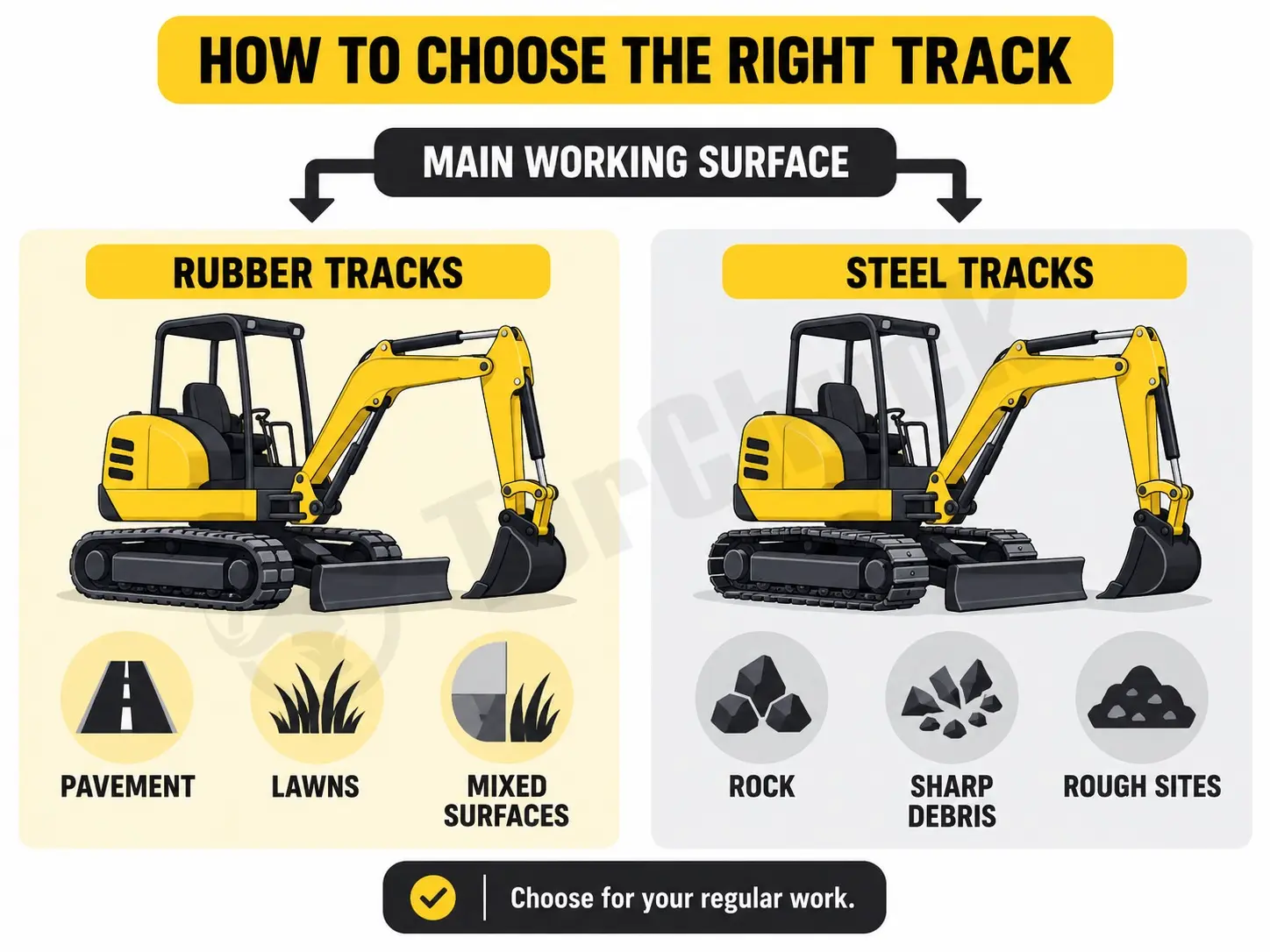
Rubber tracks are usually the better choice for landscaping, residential work, pavement and jobs where the excavator moves between different surfaces. Steel tracks make more sense when the machine regularly works around rock, demolition debris or other ground that can cut and damage rubber.
The important word is regularly. Do not choose steel tracks because one future job may be rough, and do not choose rubber tracks only because they are common on small excavators. The best track is the one that matches the ground your machine works on most.
What Is the Main Difference Between Rubber Tracks and Steel Tracks?
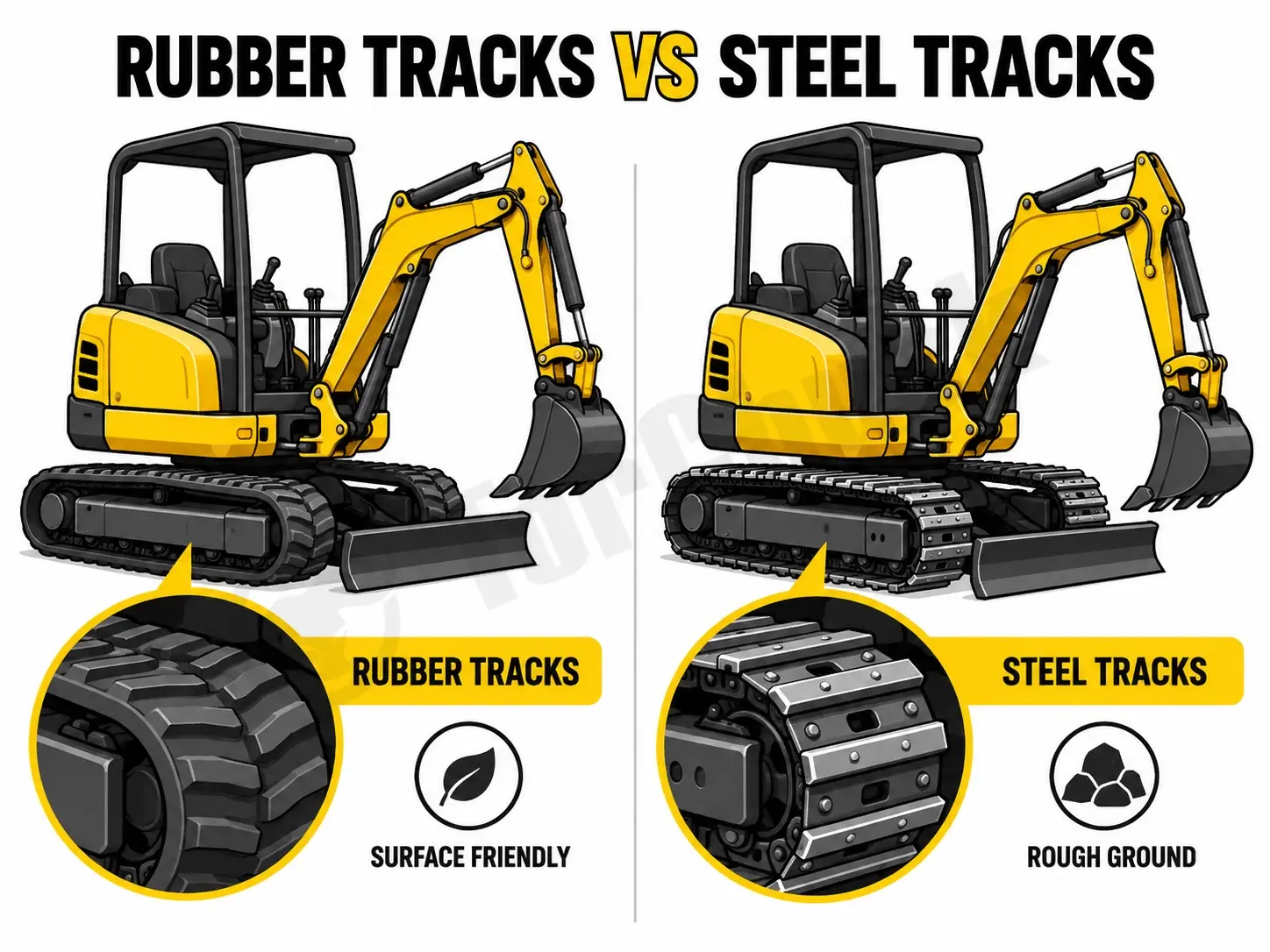
Both track types support and move the same basic machine, but the material changes how the undercarriage interacts with the ground.
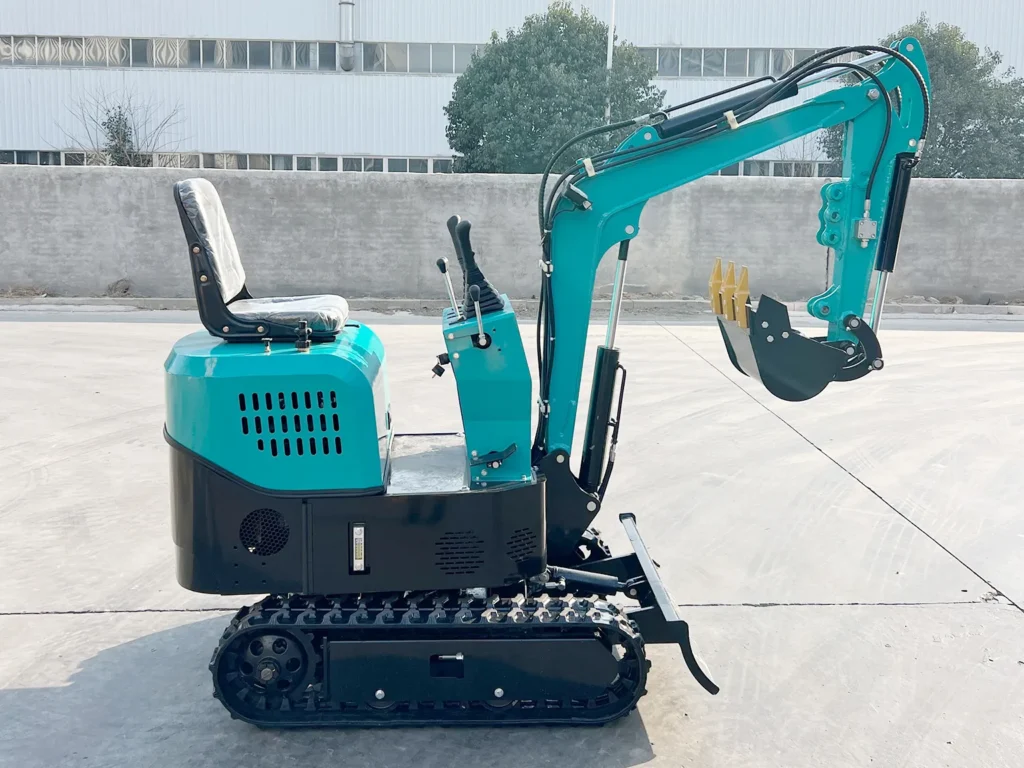
Rubber tracks use reinforced rubber around an internal structure. Their softer outer surface makes them well suited to concrete, paving, lawns and other finished areas where surface damage matters. Torchuck’s 12K, for example, uses engineering rubber tracks as standard, while steel tracks are available as an option. Torchuck specifically positions the rubber undercarriage for pavement protection and lower vibration. Ekskavator Mini Torchuck 12K
Steel tracks use metal shoes and are built for more abrasive working conditions. Torchuck offers steel-track options on several compact excavators, including the 17Q, where steel tracks are positioned for rough sites. Torchuck 17Q Mini Excavator
This does not mean rubber is the “light-duty” choice and steel is the “heavy-duty” choice in every situation. Ground type, machine size, track width, tread pattern and daily workload all matter.
Which Track Is Better for Pavement and Landscaping?
Rubber tracks are normally the easier choice when the excavator works around homes, gardens, sidewalks, driveways or finished commercial sites.
Steel shoes place hard metal directly against the surface. Turning a tracked excavator on concrete, paving or grass can leave marks or damage the surface, especially when the operator makes tight turns.
Rubber creates a softer contact surface. The University of Minnesota notes that rubber tracks cause less damage to pavement and grass than steel tracks, which is one reason rubber is useful where ground disturbance matters. University of Minnesota equipment and ground-pressure guidance
Torchuck uses the same logic on its compact models. The 10Q has a narrow rubber-track undercarriage intended to protect lawns and paving, while the 12K uses rubber tracks for pavement protection and smoother travel. Excavator Mini Torchuck 10Q
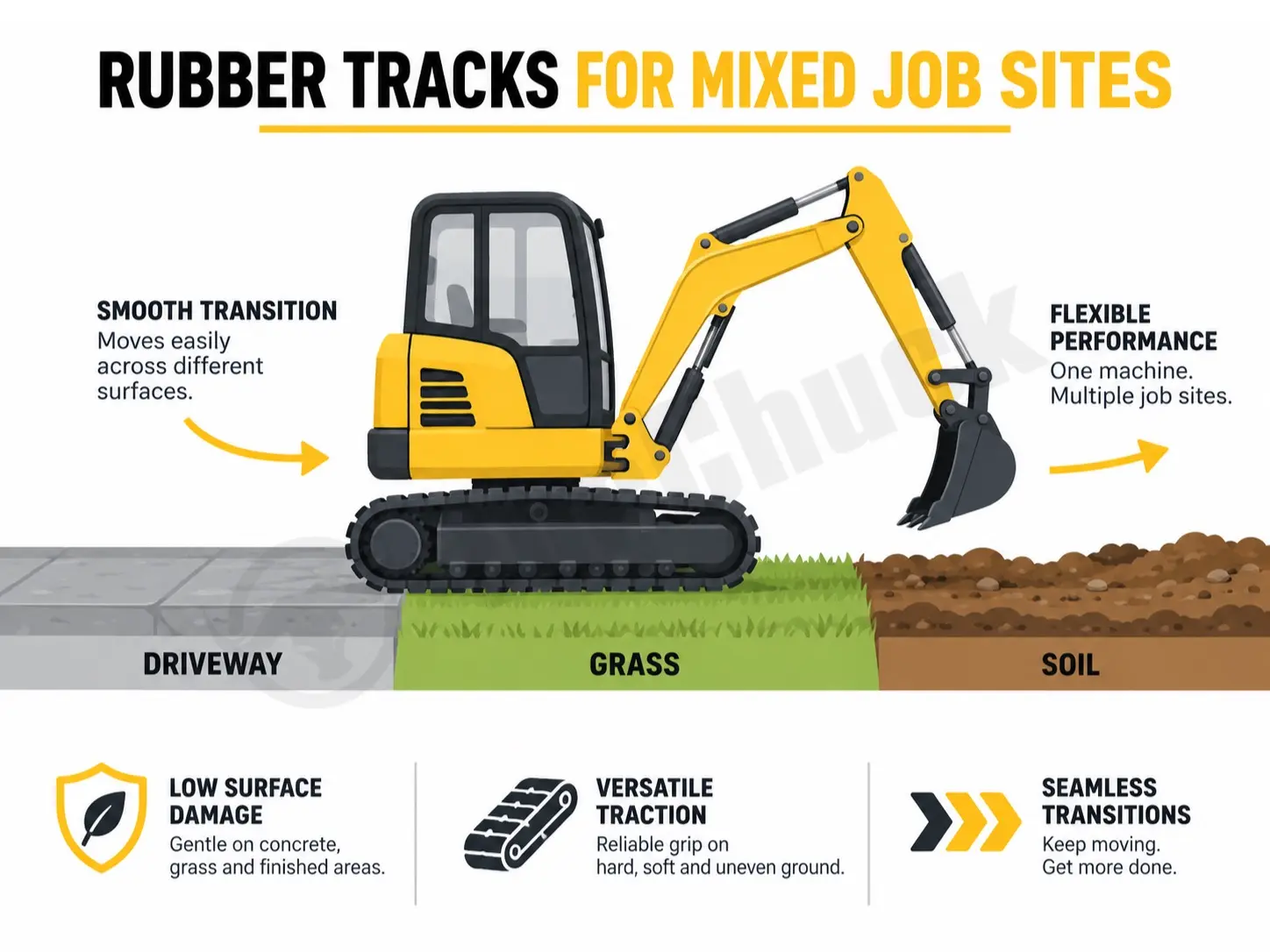
For landscaping companies, residential contractors and rental customers, this versatility matters. The machine may dig in soil in the morning, cross a driveway, work beside a building and then move over grass later in the same day.
Steel tracks make those transitions more difficult because the operator has to think more carefully about the surface underneath the machine.
Which Track Is Better for Rocks, Debris and Rough Ground?
Steel tracks become more attractive when rough ground is the normal working environment.
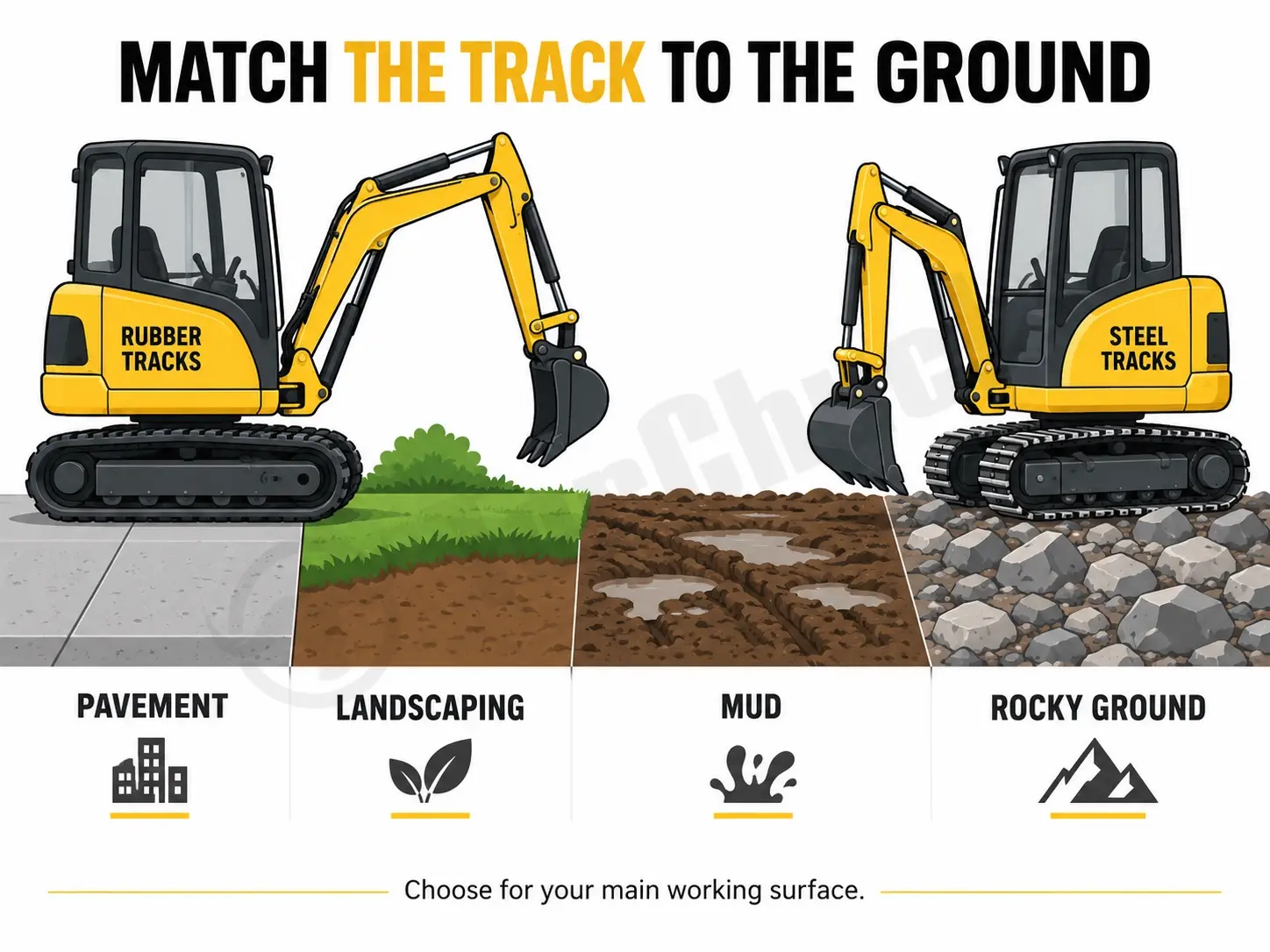
Sharp stone, broken concrete, demolition debris and similar materials can cut, tear or damage rubber. A steel shoe does not have the same exposed rubber surface, so it can be a better fit where abrasive material is unavoidable.
Torchuck therefore offers steel tracks as an option on several models intended for varied work. The 17Q offers wear-resistant rubber tracks or steel tracks for rough sites, while the 25K lists steel tracks as an option for harsher terrain. Ekskavator Mini Torchuck 25K
Durability is one reason for this choice. University of Minnesota guidance also notes that steel tracks generally last longer, particularly on larger equipment, while rubber has advantages on pavement and grass.
That still does not mean one rocky job justifies ordering steel tracks.
Consider frequency. If a landscaping contractor works on lawns and paved surfaces most weeks but occasionally enters a rocky site, rubber may still suit the business better. If a demolition contractor spends most days around broken concrete and sharp debris, steel deserves much more consideration.
What About Traction in Mud and Soft Ground?
This is where oversimplified comparisons become unreliable.
It is common to see claims such as “steel always has better traction” or “rubber always grips better.” Track material alone does not determine traction.
Track pattern, shoe design, track width, machine weight, soil condition and whether the surface is wet, loose or compacted all affect grip. University of Minnesota guidance notes good traction from rubber tracks in its equipment discussion, but that should not be turned into a rule for every excavator and every terrain.
The 10Q rubber-track design, for example, is designed to shed mud and provide steady traction in wet soil. That is a feature of the complete undercarriage and track design, not simply proof that rubber is always better in mud.
For buyers, the practical approach is to describe the ground properly. “Farm work” is not enough. Wet clay, loose gravel, hard dry soil and broken stone create very different track requirements.
Do Steel Tracks Always Have Lower Ground Pressure?
No. Steel versus rubber should not be used as a shortcut for ground-pressure comparison.
Ground pressure depends on the machine’s total weight and how that weight is distributed through the track footprint. Track width and undercarriage design therefore matter as well.
Penn State’s guidance on soil compaction points out that tracked machines have a large contact area, but average contact pressure does not tell the whole story. Local pressure under the undercarriage can still be significant, and total machine load remains important. Penn State guidance on soil compaction
This matters when buyers compare two different excavators. A small rubber-track machine and a much heavier steel-track machine are not a useful test of “rubber vs steel.” Machine weight, track width and chassis design have changed at the same time.
If protecting soft ground is important, ask for the complete machine specification rather than choosing by track material alone.
Durability Depends on What Damages the Track
Steel has a clear advantage against cuts and sharp material, but track life is not determined by material alone.
Rubber tracks can be damaged by sharp debris, exposed reinforcement, rough concrete edges and other objects that cut into the belt. Repeated operation in this type of environment makes steel tracks easier to justify.
Steel tracks have their own wear points. Pins, bushings, rollers, sprockets and track shoes still form part of a working undercarriage. Steel does not make the undercarriage maintenance-free.
Operator habits matter too. Excessive high-speed travel, aggressive turning and running with incorrect track tension can increase wear regardless of track material.
This is why publishing a simple claim such as “steel lasts twice as long as rubber” would be misleading. Actual life depends too heavily on ground conditions, machine use, maintenance and track quality.
What About Noise and Vibration?
Rubber tracks can make a compact excavator feel smoother when it travels across hard ground.
Torchuck specifically lists reduced vibration as one of the benefits of the 12K rubber undercarriage. The softer contact between rubber and hard surfaces also avoids the direct metal-to-surface contact produced by steel shoes.
This can matter for urban repair, residential work and jobs around finished buildings.
However, track choice is only one part of operator comfort. Seat design, machine isolation, undercarriage condition and the actual surface also affect vibration. A worn rubber track on broken ground will not suddenly make a rough job smooth.
For buyers, comfort should therefore be treated as another reason to prefer rubber for mixed urban work, not as an absolute performance rule.
Think About How the Machine Moves Between Jobs
Track selection is not only about what happens while the bucket is digging.
A mini excavator may need to cross concrete, paving, grass and compacted soil before reaching the actual excavation point. Rental machines are even more likely to move between different surface types because the next customer may use the machine for a completely different job.
Rubber tracks give this kind of machine more flexibility. That helps explain why rubber undercarriages are common across Torchuck’s compact excavator range. Models such as the 10Q and 12K use rubber tracks as their normal configuration, while several models offer steel as an option for buyers who need it.
For machines that rarely leave a quarry-like, demolition or very rough work environment, surface versatility matters less. In that case, protecting the track from cuts and abrasive ground can become the higher priority.
Don’t Choose Steel Tracks Just Because They Look Stronger
Steel tracks can look like the obvious upgrade. They appear tougher, so a buyer may assume that ordering steel automatically means getting a better excavator.
That is the wrong way to make the decision.
Suppose most of your work is residential trenching, landscaping, garden construction and utility repair. In that environment, a track that handles finished surfaces well can be more useful than a harder track designed around rough ground.
Now change the application. If the machine works around broken concrete, sharp rock or demolition debris every week, protecting rubber from cuts becomes a real concern. Steel may then be the more practical configuration.
The question is not:
“Which track is stronger?”
The useful question is:
“Which track causes fewer problems in the work I do every day?”
That difference matters when buying a mini excavator.
When Are Rubber Tracks the Better Choice?
Rubber tracks make the most sense when the excavator works across several types of surface and avoiding ground damage is important.
Landscaping, residential construction, utility maintenance, farms, paved properties and rental fleets are common examples. Rubber lets the same compact excavator move between soil and finished surfaces without the direct metal contact of steel shoes.
This is also why small machines such as Torchuck’s 12K are supplied with rubber tracks while still offering steel as an option. The normal configuration fits broad compact-excavator work, while buyers with rougher applications can change the undercarriage specification.
Rubber should not be chosen because it is “cheaper” or because it is standard. It should be chosen because its surface characteristics match the customer’s work.
When Are Steel Tracks the Better Choice?
Steel tracks deserve consideration when harsh ground is part of the machine’s normal working environment.
Rocky sites, demolition work and areas with sharp debris place different demands on a track than a lawn or driveway. Where cuts and tearing are a regular concern, the harder track construction can be more useful.
Torchuck offers this option on compact machines including the 17Q and 25K specifically for buyers working in rougher terrain.
The important point is not to turn “rough terrain” into a vague sales phrase. Tell the supplier what is actually on the ground. Rock, broken concrete, mud, compacted soil and gravel should not automatically receive the same track recommendation.
How Torchuck Helps Match the Track to the Job
Track choice should be confirmed at the same time as the excavator model.
Torchuck's jajaran ekskavator mini covers several compact machine classes and configuration options. Rubber tracks are used across many of the standard compact models, while steel-track options are available on suitable machines for rougher applications.
Before requesting a quotation, describe the normal surface, not only the toughest surface the machine may encounter. Also tell us the machine size, required digging depth, working width, attachments and whether the excavator needs to cross finished pavement or landscaping.
Torchuck can then match the excavator and undercarriage configuration together instead of treating the track as an afterthought.
Pertanyaan yang Sering Diajukan
Are Rubber Tracks Better Than Steel Tracks for a Mini Excavator?
Rubber tracks are better for many mixed-use mini excavators because they work well on pavement, lawns, soil and residential sites with less surface damage.
Steel tracks are more suitable when rough rock, sharp debris or other abrasive ground is a regular part of the work.
Do Steel Tracks Last Longer Than Rubber Tracks?
Steel can offer better resistance to cuts and abrasive conditions, and University of Minnesota guidance notes longer service life for steel tracks in its equipment discussion. Actual life still depends on machine size, ground conditions, operation and maintenance.
A fixed number of operating hours should not be assumed without data for the exact track and application.
Are Rubber Tracks Good in Mud?
They can be. Track pattern, width, machine weight and soil condition all affect traction, so material alone does not decide performance.
Some Torchuck rubber undercarriages are specifically designed to shed mud and maintain traction in wet soil.
Will Steel Tracks Damage Concrete?
Steel tracks can mark or damage hard finished surfaces, particularly during turning. Rubber tracks are normally a better choice when the machine regularly crosses concrete, paving or landscaped areas.
Can I Order a Mini Excavator With Steel Tracks?
Yes, selected Torchuck mini excavators are available with steel-track options. The 12K, 17Q and 25K are examples of models whose current product information includes rubber and steel-track configurations.
Confirm the option for the exact model when requesting a quotation.
Should a Rental Company Choose Rubber or Steel Tracks?
Rubber is often more flexible for rental fleets because customers may use the machine on lawns, pavement, soil and other mixed surfaces.
However, a rental fleet serving demolition or consistently rough applications may also have a reason to stock steel-track machines. The customer base should determine the configuration.
Kesimpulan
Rubber tracks are the better fit for many landscaping, residential and mixed-surface mini excavator jobs. Steel tracks make more sense when rough ground, sharp stone or demolition debris are part of normal daily work.
Choose the track for the surface your machine will work on most. Send Torchuck your job conditions, machine size and main applications, and we can match the mini excavator and track configuration together.